Public school owners across the Pacific Northwest continue to increase investment in sustainable educational facilities as districts pursue modernization programs that incorporate resilient construction methods, energy efficiency and long-term operational performance. The Cleveland High School replacement project in Portland reflects growing adoption of mass timber systems in large-scale institutional construction.
Skanska recently broke ground on the Cleveland High School modernization program for Portland Public Schools. The redevelopment will replace the existing high school campus with a new approximately 300,000-square-foot facility while also upgrading the athletics stadium and Powell Park fields.
Construction is expected to begin in July 2026, with project completion targeted for summer 2029.
The new campus is being developed on the existing Southeast Portland school site. During construction, students and staff will temporarily relocate to Marshall High School.
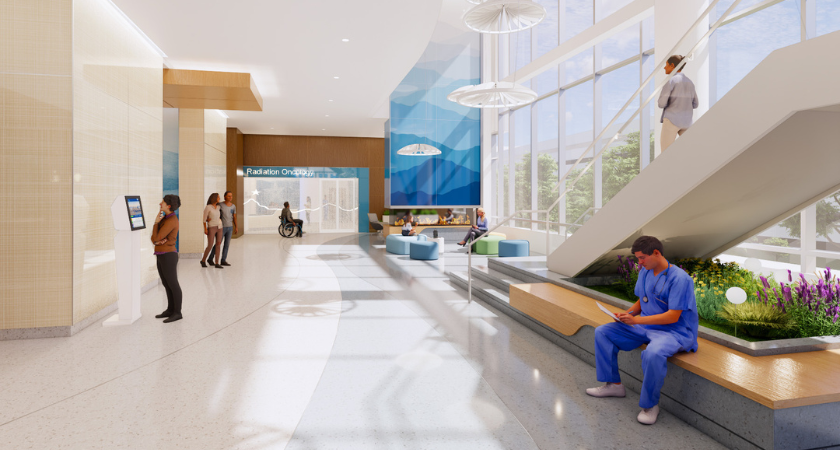
The redevelopment includes two four-story academic and community-use wings connected by a skybridge. Classroom and laboratory spaces will be located in the north wing, while the south wing will house performing arts, events and shared community functions.
Planned amenities include a student health center, two gymnasiums, dance and wrestling studios, a performing arts theater and a black box theater. The project also incorporates secure outdoor gathering areas and recreational space for students.
Separate after-hours access points are planned for portions of the campus to support community use of facilities such as gymnasiums and theater spaces.
The construction program also includes street and accessibility improvements between the school campus and the Cleveland High School stadium.
Designed by Mahlum Architects and Studio Petretti, the project will incorporate approximately 870,000 board feet of Pacific Northwest-sourced mass timber. Project officials stated the facility is expected to become one of the region’s largest K-12 mass timber developments and the first local school designed to the Type IV Heavy Timber construction standard.
The structural system combines Acoustic Dowel Laminated Timber roof decking, glulam beams and columns, structural steel and low-carbon concrete.
Several building components are being prefabricated to support schedule efficiency and reduce weather-related installation risks. Prefabricated elements include exterior wall systems, roof panels and long-span steel trusses for gymnasium and theater spaces.
The project team is targeting LEED Gold certification and evaluating eligibility for Oregon Green Energy Technology credits.
Project planners also incorporated resilience measures intended to support emergency operations and long-term building performance.
The south building, which houses the gymnasiums, is being designed to Risk Category IV structural standards that exceed conventional educational facility code requirements. Portions of the campus will also include emergency backup power systems intended to maintain operations during emergency events.
Skanska identified several local trade partners participating in the project, including Just Right Heating and Cooling, O’Neill Construction Group, Interior Exterior Specialists, Kodiak Pacific Construction, South Town Glass, Anning Johnson, Fought/Refa, Prairie Electric and Total Mechanical.
For construction owners, architects and contractors, the Cleveland High School modernization project demonstrates continued momentum behind mass timber adoption in institutional construction, particularly within the education sector.
The project also reflects broader industry trends involving prefabrication, low-carbon materials and resilient building standards in public-sector procurement. Contractors specializing in educational construction, timber systems and sustainable building delivery may see additional opportunities as school districts continue pursuing modernization and decarbonization initiatives across the western United States.
Source: Skanska.