RAPID CITY — South Dakota has long held the troubling distinction of incarcerating women at a higher rate than any other place in the world, according to a recent analysis by the Prison Policy Initiative. With a second women’s prison rising in Rapid City, the expanded capacity might seem like reinforcement of that pattern. But state leaders insist the project marks a new direction aimed at reducing incarceration — not increasing it.
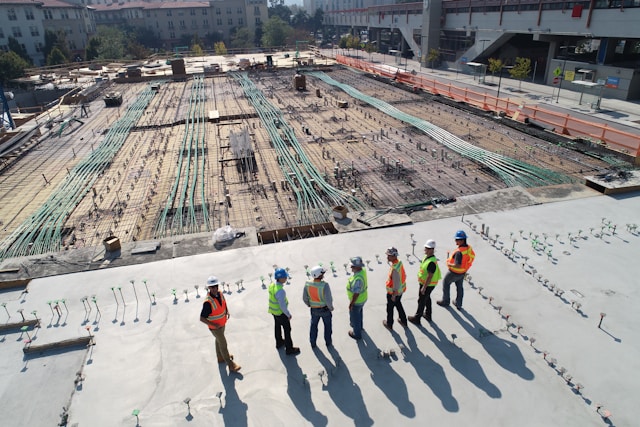
Newly appointed Department of Corrections Secretary Nick Lamb said he believes the facility will ultimately lower the number of women behind bars. Standing at the construction site Thursday morning, Lamb acknowledged the state’s high ranking but emphasized that the expanded programming and rehabilitative approach will take time to show results.
“It’s not going to show overnight,” Lamb said, “but it will show in a few years. You’ll see a substantial decrease.”
The new Rapid City facility is designed with a strong focus on recovery, behavioral health, and skill-building — all areas state officials say have been historically under-resourced. Lamb noted that increased staff, dedicated treatment areas, and education spaces inside the new campus will support women in stabilizing their lives and preparing for successful reentry. A governor-appointed task force on rehabilitation is also developing new policies to help formerly incarcerated individuals avoid returning to the justice system.
Lamb stepped into the secretary role just last month after being appointed by Republican Gov. Larry Rhoden. He replaces Kellie Wasko, who served three and a half years before stepping down. Lamb’s arrival coincides with significant infrastructure investments in South Dakota’s correctional system — including this prison and a separate $650 million replacement for the aging men’s penitentiary in Sioux Falls.
During Thursday’s press conference, South Dakota Searchlight asked Lamb and Rhoden about the Prison Policy Initiative report, which said South Dakota incarcerates 338 women per 100,000 residents — the highest rate in America and, if counted as its own nation, the highest globally. Neither official challenged the numbers. Lamb’s prediction that the rate will reverse was the only direct response.
In prepared remarks, Rhoden pointed to the underlying issues driving incarceration trends. He said 51% of the state’s imprisoned women have drug convictions, and more than 90% have substance use disorders. Those figures apply to the combined female population at the main women’s prison in Pierre, a minimum-security unit that will close once Rapid City opens, and the extra contracted space at the Hughes County Jail. As of Thursday, there were 543 women housed across those three locations.
.jpg)
The new Rapid City prison is designed for up to 300 women in minimum- and medium-security settings. It will feature three housing units, dedicated programming spaces, and a specialized 12-bed unit for mothers with babies — a feature intended to support family bonding and reduce the trauma that can contribute to recidivism.
“This is an area we have to do better,” Rhoden said, “and this facility will allow us to.”
State officials expect the prison to open in July. Construction costs total $87 million, and Rhoden has requested $13 million for first-year operations plus $2.4 million in one-time training funds. The facility will require a new workforce of 139 staff members — 96 in security roles, 23 in health care and 20 in education, administration and programming.
A large services building on the campus will house the kitchen, laundry and spaces for behavioral health treatment, educational classes and spiritual programs. Another building will contain administrative offices and a visitation area designed to foster more meaningful, trauma-informed family interactions.
Officials say these features mark a shift toward rehabilitation-centered corrections, contrasting with the state’s historical reliance on incarceration without robust support services. Supporters also see the project as part of a statewide effort to rethink corrections more broadly. In addition to the Rapid City build, South Dakota is advancing plans for a major new men’s facility in Sioux Falls, replacing penitentiary buildings dating back to 1881 — a sign that leaders are investing in modern infrastructure and updated approaches.
For advocates and lawmakers critical of the state’s high incarceration rate, the question remains whether these new investments will translate into measurable change. State leaders say the answer will depend on programs, staffing and consistent long-term commitment — but they believe the foundation is now being laid.
Originally reported by Seth Tupper in South Dakota Search Light.