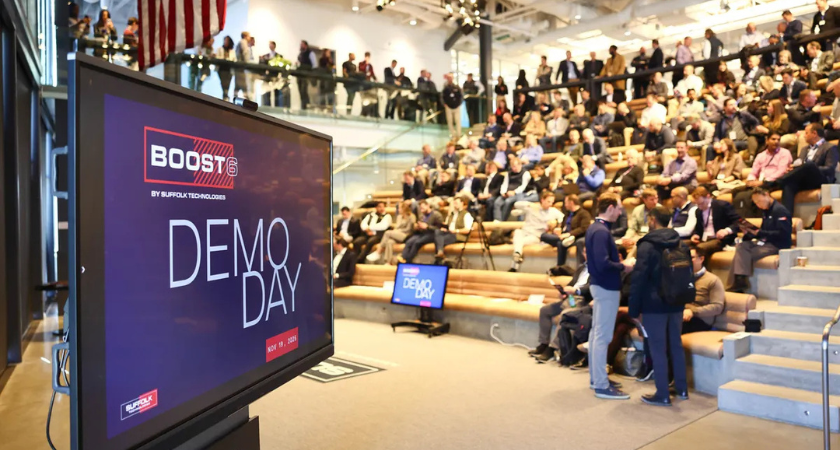
Suffolk Technologies, the venture capital arm of Suffolk Construction, closed out its sixth BOOST contech accelerator with a high-energy Demo Day in Boston, giving eight emerging startups a platform to pitch to a packed room of investors, industry leaders, and technology partners. The Nov. 20 event marked another milestone for the program, which continues to shape the next generation of construction innovation.
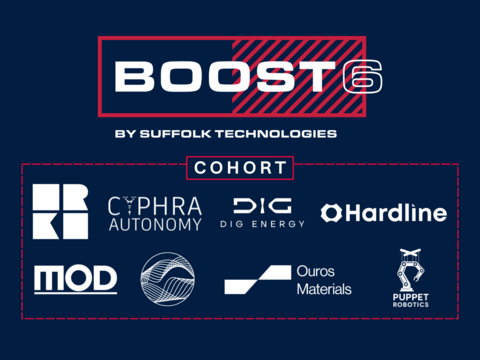
Launched in 2020, BOOST has become a significant pipeline for high-impact construction technology companies. The accelerator has now graduated 38 startups — including notable alumni such as Trunk Tools and Kaya AI — that collectively have raised more than $700 million, according to the company. This year’s selected companies showcased solutions spanning artificial intelligence, robotics, geothermal drilling, prefabrication optimization, and advanced material science.
A major part of BOOST’s appeal comes from the access it provides. Suffolk tapped into its network of 55 partner organizations to offer cohort companies real-world exposure through client introductions, pilot opportunities, and investor engagement. Of those partners, 28 were construction firms, and 10 conducted active pilots with at least one BOOST startup, according to a Suffolk spokesperson. The accelerator also placed participating companies directly onto Suffolk jobsites, giving them an opportunity to test their tools in the field.
This year’s class includes a range of cutting-edge companies working to solve longstanding challenges in construction:
Each startup receives $100,000 on a post-money SAFE in exchange for 3% equity, a mechanism that allows Suffolk Technologies to convert its investment into shares during a future financing round. The firm also holds the right to invest in up to 20% of the next qualified fundraising round for each participant.
The 2025 Demo Day arrives at a moment when construction technology is maturing beyond early-stage experimentation. More builders are investing directly in startups, and later-stage funding rounds — particularly Series B financings — are growing. The momentum is driven largely by artificial intelligence, which continues to reshape workflows across the industry.
Last year, Jit Kee Chin, Suffolk’s chief technology officer, predicted that the industry was entering a period where “the rubber would hit the road” as AI adoption accelerated. While many firms have embraced the technology, Suffolk notes that others have been slower to integrate AI tools despite acknowledging their value.
Still, Suffolk’s BOOST program signals how far the industry has come — and how much potential remains for firms willing to deploy new solutions on real-world projects.
Originally reported by Matthew Thibault in Construction Dive.