TerraPower’s effort to build a next-generation nuclear power plant in southwest Wyoming has taken a major step forward, with federal regulators completing their final safety evaluation — one of the last requirements before a construction permit can be issued.
.jpg)
The project, located just outside Kemmerer, aims to demonstrate a first-of-its-kind nuclear technology backed by Bill Gates. If approved, the plant could ultimately provide additional clean power to the region while operating with fewer emissions than older nuclear systems or many traditional energy sources.
The Nuclear Regulatory Commission (NRC) announced on Dec. 1 that its staff wrapped up the safety assessment “a month ahead of our already accelerated schedule” — a timeline driven in part by a presidential executive order. In its findings, the NRC said staff identified “no safety aspects that would preclude issuing the construction permit.”
This brings TerraPower significantly closer to construction authorization for its Natrium reactor, which uses liquid sodium coolant instead of the high-pressure water systems used in traditional nuclear plants. The company says the design is not only more efficient but also safer, and that its energy-storage capability allows the system to “quickly ramp up when demand peaks.”
However, the speed and substance of the review are raising alarms among nuclear safety advocates. The Union of Concerned Scientists (UCS), which has scrutinized the Natrium design for years, criticized the accelerated process and the NRC’s preliminary conclusions.
“Make no mistake, this type of reactor has major safety flaws compared to conventional nuclear reactors that comprise the operating fleet,” said Edwin Lyman, UCS director of nuclear power safety. “Its liquid sodium coolant can catch fire, and the reactor has inherent instabilities that could lead to a rapid and uncontrolled increase in power, causing damage to the reactor’s hot and highly radioactive nuclear fuel.”
The NRC also noted limitations in the current review, acknowledging that staff “did not come to a final determination of the adequacy and acceptability of functional containment performance due to the preliminary nature of the design and analysis.” Officials say a full determination will come later — when an operating license is considered.
That gap worries Lyman as well. He cautioned that “even if the NRC determines later that the functional containment is inadequate, it would be utterly impractical to retrofit the design and build a physical containment after construction has begun.”
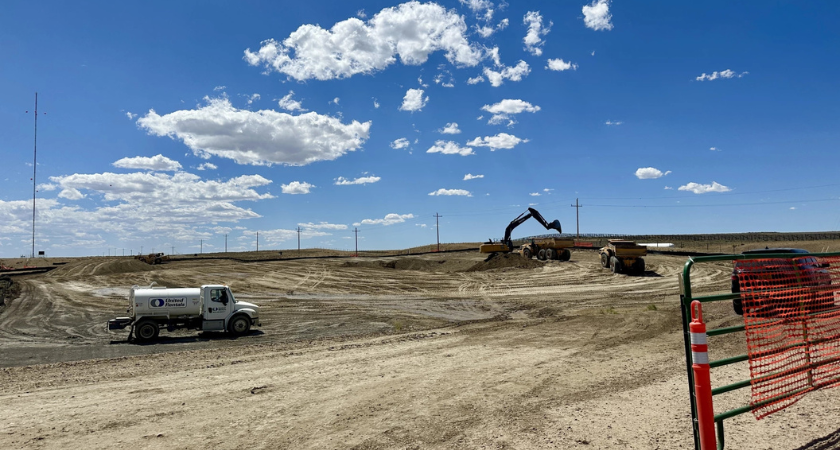
Despite the debate, TerraPower is continuing preparatory work, including construction of a training facility already underway at the site. The company has maintained an ambitious schedule, aiming to have the plant operational by 2030, although regulatory and technical challenges could shift that timeline.
Next, the NRC staff will deliver its full safety review to the commission. “The Commission will determine whether the staff’s review supports the findings necessary to issue the permit,” officials said. Once deliberations conclude, the commissioners will vote on whether to direct staff to issue the construction permit.
Even if the permit is approved, TerraPower will still need a separate operating license before it can begin producing energy — a process that will involve further technical reviews and public scrutiny.
If successful, the Natrium project could become one of the most closely watched nuclear deployments in the country, representing both a test of advanced reactor technology and a key milestone in the push for low-carbon energy solutions.
Originally reported by Caitlin Tan in Wyoming Public Media.