IDAHO FALLS – Fifty years after the Teton Dam collapse, the disaster continues to shape lives across eastern Idaho. For former Rexburg resident Richard Robison, the memory is deeply personal. His uncle, Robert Robison, oversaw construction of the dam in the 1970s and was the last man standing on its crest moments before it failed.
Richard, now 63 and living in Cincinnati, was just a teenager when he witnessed the event that would become one of the most studied civil engineering failures in U.S. history. He recalls how proud his family was when his uncle arrived in Rexburg to manage the massive federal project.
“I can still remember how exciting it was when dad told us Uncle Bob was moving to Rexburg,” Richard says.
He describes Robert as charismatic and larger than life—someone the family looked up to.
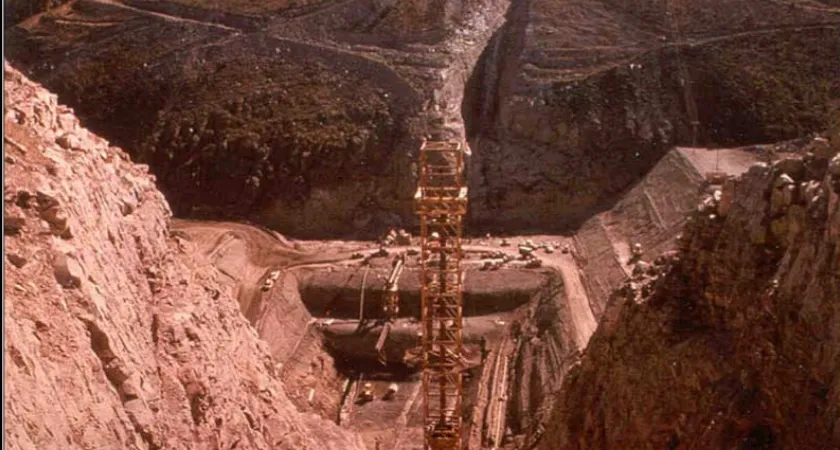
Richard remembers frequent visits to the construction site with his father, watching the enormous excavation unfold.
“I remember standing at the top of the canyon looking down and Robert showing us the massive excavation that was going on to put in the foundation,” Richard recalls. “The enormousness of the excavation … was just unbelievable. It was the coolest thing an 11-year-old boy could see.”
Despite excitement surrounding the project, concerns simmered beneath the surface. Political delays had stalled the dam for years, and even after funding was approved in 1971, doubts about the geology and design persisted.
“It was just hubris and overconfidence in their design,” he says.
Richard, a retired engineer who has studied the failure for decades, explains that the Bureau of Reclamation had built thousands of dams without incident, creating a sense of invincibility.
“The design they’d chosen for the Teton Dam was a pretty standard embankment design,” says Richard. “The design group didn’t feel like they needed to make any significant changes to compensate for the difficult geology.”
Robert voiced worries from the beginning, but communication barriers between designers and contractors left little room for change.
By the morning of June 5, 1976, the reservoir was nearly full, yet critical outlet structures were unfinished. Seepage appeared along the dam’s face, and Robert feared the worst.
“Bob was fairly certain at 9 a.m. that morning that the dam was going to collapse,” says Richard.
Crews desperately tried to stop the leak.
“They were pushing what they called riprap — large boulders — into the whirlpool that developed. They hoped it would plug up the pipe,” says Richard.
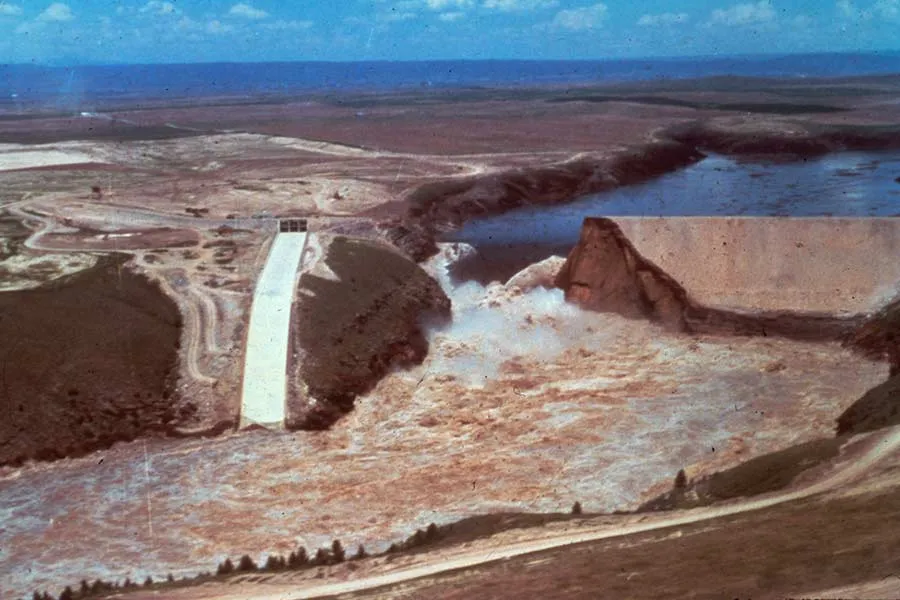
Their efforts failed. At 11:55 a.m., the dam gave way, unleashing a wall of water that destroyed communities from Wilford to Rexburg. Eleven people died, 13,000 head of livestock were lost, and roughly 3,000 homes were damaged or destroyed.
The financial toll reached $2 billion at the time—more than $11 billion in today’s dollars.
In the chaotic weeks that followed, Robert helped coordinate recovery efforts from a trailer set up in the family driveway.
“I was feeling a lot of despair, and then my uncle showed up. They set up a trailer and radio systems,” Richard recalls. “(Robert) was completely professional in doing his job to manage the crisis.”
Yet the burden was heavy. The family received threats, and Robert became a symbol of a national embarrassment that halted major dam building across the country.
“Our country lost its stomach to go out and build major dams like that again,” Richard says.
Although Robert never spoke openly about the emotional toll, his nephew believes the tragedy stayed with him.
“It traumatized him, but it never impacted his productivity or his role as a father or uncle,” says Richard. “He passed away at age 93, so that’s a long time to carry that weight.”
Today, momentum is growing behind a proposal to rebuild the Teton Dam. Idaho Sen. Kevin Cook has championed the idea, citing studies that suggest a modern structure could be safely constructed at the original site.
“The Bureau had the necessary information available (in 1976) to develop an adequate defensive design. A safe dam could have been built at the site utilizing design concepts that were known at the time,” the report said.
Supporters argue the project could store 350,000 acre-feet of water, making it the most productive option for regional water security.
“It gets the most bang for the buck,” says Richard. “So that really is the cornerstone project.”
For him, rebuilding would represent more than infrastructure—it would complete a promise left unfinished.
“It was meant to be a promise to the Snake River Valley for water security and irrigation resilience. Fifty years later, it represents unfinished business and an unkept promise,” he says.
Richard plans to return to Rexburg this summer to mark the 50th anniversary and continue advocating for the dam’s future—hoping history can be transformed into progress.
Originally reported by Rett Nelson in East Idaho News.