Public school districts in rapidly growing suburban markets continue to invest heavily in campus replacements and facility modernization as student populations expand and aging infrastructure reaches capacity limits.
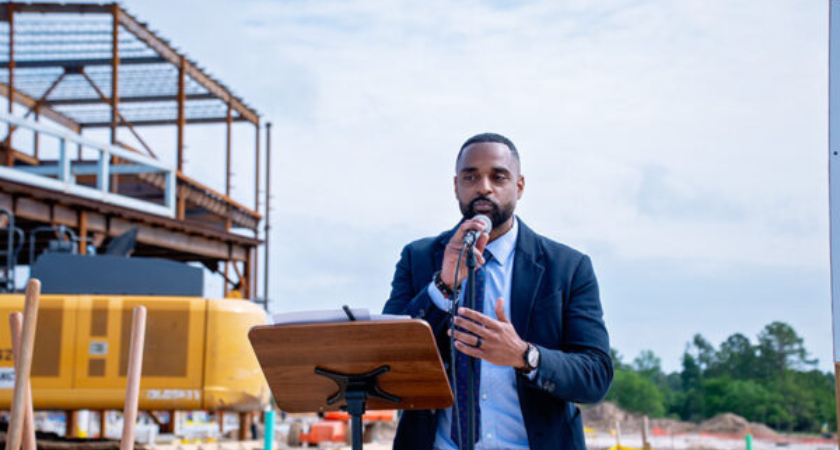
In one of the latest developments, Satterfield & Pontikes Construction has officially started construction on a new middle school campus for Humble Independent School District in Texas.
.jpg)
The project will replace an existing aging facility with a new 215,820-square-foot campus designed to support approximately 1,302 students in grades six through eight. The school is located in Humble, a growing suburban area northeast of Houston that continues to experience residential development and enrollment pressure across its school system.
The new facility is designed to consolidate academic, arts, science, and athletics programming into a single modern campus. Planned features include academic neighborhoods, science and career and technical education laboratories, performing arts spaces, a competition gymnasium, dining facilities, and outdoor athletic fields.
The project reflects a broader trend in K-12 construction where districts are moving away from traditional large-scale institutional layouts and toward flexible learning environments. These newer designs emphasize adaptable classroom spaces, collaborative learning areas, and technology-integrated instructional zones intended to support evolving education models.
Architectural planning for the campus also incorporates local context, drawing design influence from regional history and industrial development themes tied to the surrounding community.
For contractors and construction managers, K-12 projects of this scale continue to represent stable public-sector workloads, particularly in high-growth regions where school districts are responding to long-term enrollment forecasts and infrastructure replacement cycles.
The project is scheduled for completion in August 2027, positioning it within a multi-year construction timeline that includes phased coordination of academic, athletic, and site development components.
For construction owners and public sector developers, school replacement projects like this highlight the continued demand for large-scale education infrastructure investment in suburban growth corridors. These projects typically offer predictable funding structures but require long-term coordination, strict scheduling, and careful phasing to align with academic calendars and district operational needs.
Originally reported by Satpon.