TSMC is moving quickly to scale its U.S. manufacturing presence, unveiling plans to accelerate construction across its growing semiconductor hub in Phoenix, Arizona. The update was shared during the company’s latest earnings call, where the foundry also reported record profits, underscoring the strong demand driving its expansion.
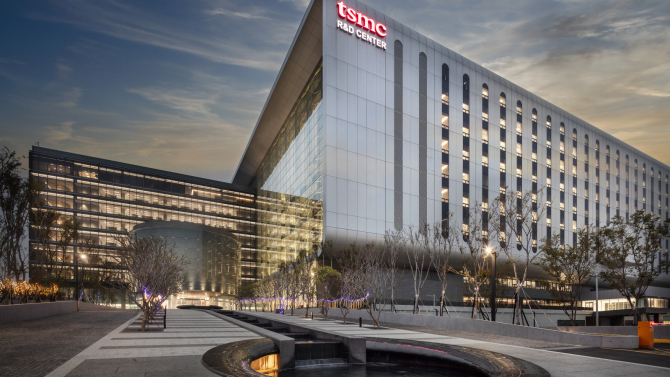
According to Reuters, the company plans to fast-track fab construction, add a chip packaging facility, and begin early work on a fourth fabrication plant. The Arizona site—widely known as Fab 21—has become a cornerstone of TSMC’s strategy to support an expanding roster of U.S. chip designers amid surging demand from artificial intelligence data centers.
One of the Arizona fabs is already operational, while construction on the second facility is well underway. TSMC is now accelerating the timeline for that second fab to reach mass production. FocusTaiwan reports the company aims to begin volume manufacturing there in 2027, rather than the previously expected 2028. TSMC also said it plans to start installing equipment at the third fab before the end of this year.
In addition, TSMC has acquired more land near the Phoenix campus, providing room to expand capacity further as demand grows from customers such as AMD, Apple, Nvidia, and other major U.S. chip designers. The additional acreage opens the door for future fabs as well as advanced packaging operations, which are increasingly critical for AI and high-performance computing workloads.
.jpg)
The existing Arizona facility is believed to be operating at or near full capacity, producing an estimated 24,000 300mm wafers per month. Production is largely focused on 4-nanometer chips, while later phases of the campus are expected to support more advanced 2-nanometer-class processes and beyond.
TSMC has pledged to invest at least $165 billion in the United States, and the Arizona expansion reflects both the scale of that commitment and the strength of current market demand. At the same time, the company has signaled a measured approach to future investments. CEO C.C. Wei indicated that TSMC is investing carefully, acknowledging questions about whether AI-driven demand could eventually soften.
The expansion is also benefiting suppliers across the semiconductor ecosystem. ASML, which manufactures the advanced lithography systems used in chip production, recently reached a $500 billion market valuation, according to Reuters. The milestone was driven in part by expectations that major chipmakers like TSMC will continue to spend heavily on new fabs and equipment.
As AI workloads proliferate and U.S. policymakers push for domestic semiconductor manufacturing, TSMC’s Arizona campus is emerging as a central pillar of America’s advanced chip supply chain—one that continues to grow in both scale and strategic importance.
Originally reported by Josh Gulick in Extreme Tech.