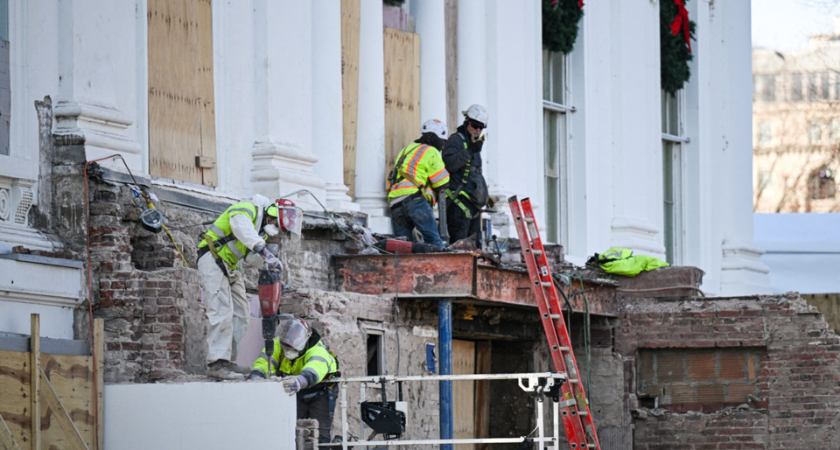
The White House is preparing to submit long-awaited architectural plans for President Donald Trump’s new ballroom, a massive addition already under construction and expected to reshape one of the nation’s most iconic properties. According to officials, the plans will be delivered to the National Capital Planning Commission (NCPC) before the end of December—approximately three months after the initial construction work began.
Will Scharf, appointed by Trump as chair of the NCPC and now a top White House aide, told the commission during its monthly meeting that he was informed the submission would happen in the coming weeks. “Once plans are submitted, that’s really when the role of this commission, and its professional staff, will begin,” Scharf said, noting that the review will move at a “normal and deliberative pace.”
The project has drawn national attention because of both its scale and its cost. Initially projected at $200 million, the ballroom’s price tag has risen to an estimated $300 million. Trump maintains that taxpayers will not bear any of that cost, reiterating that the project is fully backed by private contributors, including “patriots,” major corporations, and the president himself. The White House recently released a list of 37 donors that includes crypto leaders, philanthropic groups, sports franchise owners, financiers, and media companies.
The Administration also confirmed that a second architectural firm is joining the project as it enters a new technical phase. Spokesperson Davis Ingle said Washington, D.C.–based Shalom Baranes Architects—known for its work on iconic federal buildings such as the Pentagon and the Treasury—has been added to support the next stage of development.
“As we begin to transition into the next stage of development on the White House Ballroom, the Administration is excited to share that the highly talented Shalom Baranes has joined the team of experts to carry out President Trump’s vision on building what will be the greatest addition to the White House since the Oval Office — the White House Ballroom,” Ingle said. He added that “Shalom is an accomplished architect whose work has shaped the architectural identity of our nation’s capital for decades and his experience will be a great asset to the completion of this project.”
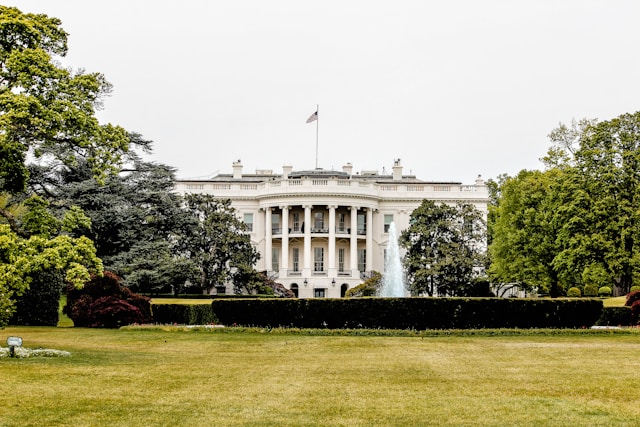
McCrery Architects, the firm originally hired, will continue as a consultant.
If completed as proposed, the 90,000-square-foot ballroom would be nearly twice the size of the White House itself and capable of hosting 999 guests. Trump has frequently noted the limitations of the current State Dining Room and East Room for large gatherings—spaces that historically struggle to accommodate high-profile events or international delegations. He has also criticized the reliance on temporary tents for major functions.
During Saudi Arabia’s Crown Prince Mohammed bin Salman’s visit last month, Trump pointed to the ballroom as a long-term solution to overcrowding at diplomatic dinners. “I only wish we had about 2,000 more seats. We would have filled every one of them two times over,” he said during remarks, adding, “But very soon you’ll be having that, and we’ll have to do another one in about two years from now.”
Despite the absence of formal NCPC approval, Trump authorized site preparation earlier in the fall, asserting that demolition and groundwork fall outside the commission’s jurisdiction. The distinction was reinforced by Scharf during recent meetings, though former NCPC chair L. Preston Bryant Jr. noted that the standard review for federal construction projects typically includes several stages, starting with an early conceptual consultation.
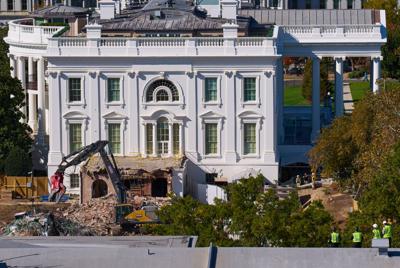
In October, the administration demolished the East Wing—traditionally home to the first lady’s office and several White House departments—to make way for the ballroom foundation. Those offices have been temporarily relocated to other areas of the White House and nearby buildings while construction noise becomes a routine backdrop to activity on the grounds.
Work on the site continues daily, with heavy machinery operating just steps from major entrances used by staff, press, and visitors. The Washington Post first reported the addition of the new architectural firm, further underscoring how quickly the project is accelerating as Trump pushes for completion before the end of his term in 2029.
Originally reported by PBS News.