California Approves Kiewit-Led Team to Install High-Speed Rail Track and Systems in Major Construction Milestone
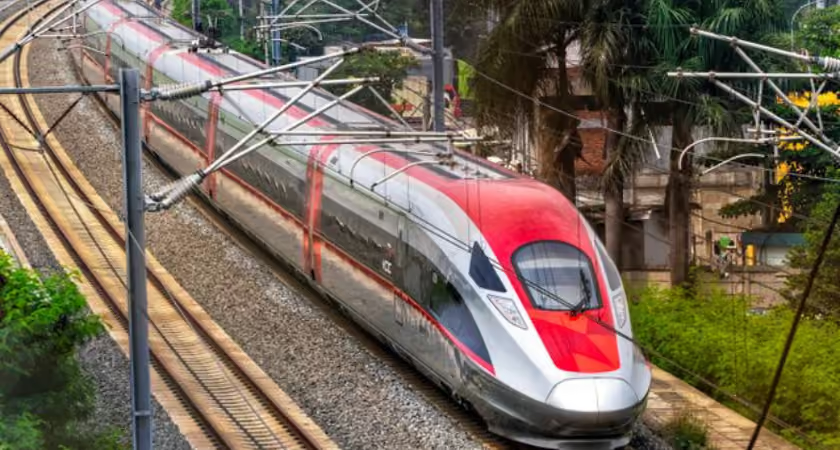
The California High-Speed Rail Authority has approved a major contract that will move the nation’s first true high-speed rail project into a new phase of construction, authorizing a consortium led by Kiewit to install track and rail systems across the Central Valley corridor.
The Authority’s Board of Directors voted to launch the initial phase of track and systems installation, selecting an American-led team comprised of Kiewit, Stacey Witbeck and Herzog to deliver critical railway infrastructure. The contract includes installation of electrified track, overhead contact systems, train control technology and communications infrastructure needed to transform completed guideway segments into an operational high-speed rail network capable of reaching speeds up to 220 mph.
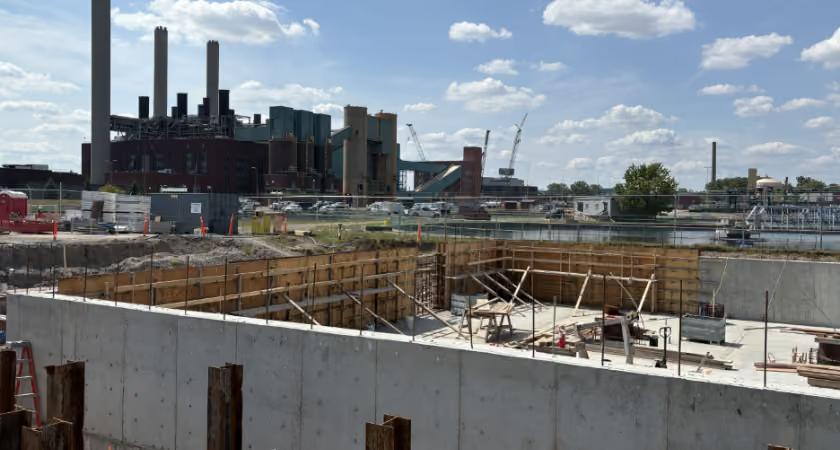
The approval represents a significant milestone for the long-running project, marking the transition from large-scale civil construction activities to railway systems installation.
According to the Authority, the contract covers 119 miles currently under construction in California’s Central Valley and will eventually extend into future connections serving Merced and Bakersfield. Officials said the phased approach will allow rail systems work to begin as individual civil construction segments are completed, helping maintain project momentum and accelerate delivery.
“Bringing on board the team that will build California’s high-speed rail track and systems marks the moment this program transforms from major civil construction into delivering an operating railway. With the railhead track installation complete and many critical rail materials already under contract, we are now accelerating toward installing the first true high-speed rail track ever built in the Western Hemisphere and doing it in a way that delivers for California quickly, and economically,” said Ian Choudri, Authority CEO.
The contract award follows completion of track installation at the project’s 150-acre southern railhead facility in Kern County. The site will function as a staging and distribution hub for materials and equipment required for track installation throughout the corridor.
Project officials said the facility is prepared to receive freight shipments of rail, ballast, concrete ties and other long-lead materials that have already been procured by the Authority. Direct procurement of key materials was implemented as part of an effort to reduce costs and minimize schedule delays.
The track and systems contract emerged from a competitive procurement process launched in November 2025 after the Board authorized one of the largest rail infrastructure contracts in the United States to move forward.
In addition to construction requirements, the contract includes goals designed to increase participation by small and disadvantaged businesses. The Authority established a 25% small business participation target, including a 3% microbusiness component, along with a 3% disabled veteran business enterprise goal. The selected contractor team has committed to meeting those requirements.
Construction activity continues across the broader high-speed rail program. The Authority reports that 171 miles of the system are currently under design and construction between Merced and Bakersfield. More than 80 miles of guideway have been completed, while 60 major structures are finished and another 30 remain under construction across Madera, Fresno, Kings and Tulare counties.
Statewide, environmental clearance has been completed for 463 of the planned 494 miles connecting San Francisco with Los Angeles and Anaheim, positioning much of the corridor for future construction.
Officials also highlighted the project’s economic impact, reporting that construction has generated nearly 19,200 jobs, most of them filled by Central Valley residents. The Authority estimates the program has contributed nearly $25 billion in economic activity across California, with as many as 1,700 workers reporting to construction sites on a typical day.
As track and systems installation begins, the project enters a critical stage that will bring California closer to operating the first true high-speed rail service in the United States.