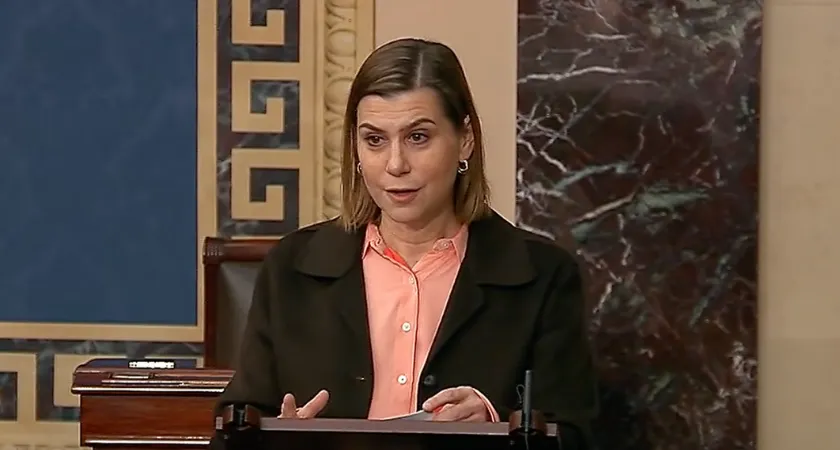
WASHINGTON, D.C. — U.S. Senator Elissa Slotkin (D-Mich.) has introduced new legislation that would require the President to declare a national housing emergency and use the full authority of the federal government to accelerate housing production across the country.
The National Housing Emergency Act of 2026 calls for invoking the Defense Production Act (DPA) to expand domestic manufacturing of key building materials and services with the goal of constructing and rehabilitating 4 million homes nationwide. The bill is aimed at addressing long-standing supply shortages that have pushed housing costs beyond the reach of many middle-class Americans.
“There is nothing more fundamental to the American Dream than owning your own home, and it has become increasingly difficult for middle class Americans to do this,” Slotkin said. “The United States is in a housing crisis, and we need to act now. That’s why my bill declares a national housing emergency, cuts regulations that get in the way and uses the full weight of the U.S. government to increase our housing supply by 4 million homes.”
Slotkin first called for declaring a national housing emergency during her Economic War Plan speech in June 2025, and the new legislation serves as a direct follow-up to that proposal.
Under the bill, the housing emergency would remain in effect until the 4-million-home target is reached. During that period, the federal government would use the DPA to direct domestic industries to increase production of essential housing materials, including lumber, steel, and manufactured housing components, to speed up construction and rehabilitation projects.
The legislation also ties federal housing and infrastructure funding to local growth policies. Communities that adopt pro-housing reforms would be prioritized for federal dollars, while jurisdictions that restrict new development would face increased accountability measures.
In addition, the bill seeks to reduce regulatory barriers at the state and local level. It pushes governments to revise zoning and land-use laws by allowing commercial properties to be converted into housing, eliminating single-family-only zoning, and permitting accessory dwelling units such as in-law suites and granny flats.
During the emergency declaration, the legislation would also prevent states and local governments from enacting new laws or regulations that impose additional burdens on housing construction or rehabilitation.
Supporters of the bill say the proposal represents a comprehensive federal response to the housing shortage, combining material supply, regulatory reform, and funding incentives to increase housing availability while controlling costs.
A summary of the legislation and the full bill text have been released alongside the announcement.
Originally reported by Elissa Slotkin, U.S. Senator For Michigan.