If you run a construction company, you already know the field and the back office don't always speak the same language. What you may not see is how much that gap costs you, all the way up to your bonding capacity.
That's the gap Julie Brown works to close. Julie, CPA, CMA, CSCA, is a financial executive with broad experience in accounting, auditing, and financial management. She has worked in construction, manufacturing, and not-for-profit organizations, and she has sat on both sides of construction, including time as an owner's rep. Her specialties include implementing information systems, budgeting, financial analysis, and strategic planning.
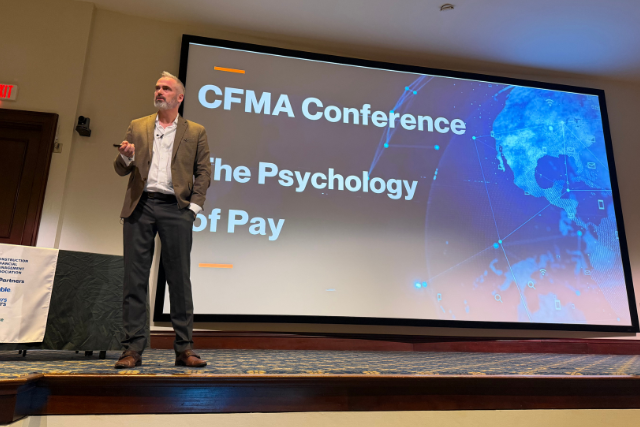
At the CFMA Virginia conference, Julie led a session titled How Project Management Behavior Shapes a Contractor's Financial Strength: From Jobsite Decisions to Borrowing & Bonding Capacity. It tackled a question every contractor should be asking: how do the choices made on the jobsite end up on the financial statements?
After the session, Caroline Raffetto, editor of Constructionowners.com, sat down with Julie for a live, in-person episode of CO Pod to break down the silos between finance and the field.
Caroline: You had a session at the conference. Tell us about it.
Julie: It was really great. We talked about how the field and finance come together, and how everything that happens out in the field ends up on your financial statements and impacts your bonding capacity. The goal is to break down the silos between finance and the field so information flows better.
Caroline: Whenever I think of finance and the field, there always seems to be a disconnect between what's going on in the field and what we see in the finances. Where does that come from?
Julie: It's not unique to construction. It happens in a lot of places. I've worked for different types of construction companies, on both sides of construction, and as an owner's rep. No matter where you go, those silos are there.
Finance people are a unique breed. We have our ways. We like our things. And oddly enough, project managers and estimators are exactly the same way, just in a different way. They have different vocabularies. So the work is getting them to speak the same language and understand each other, because we're all trying to get to the same goal. Someone has to take that first step to get those relationships going.
Caroline: What are the things in the field that really impact the back office and the bottom line?
Julie: It's not rocket science. Everybody knows it.
First, accurate forecasts, so you know what's coming down the pike. We all know project managers tend to hold money back in their projects so they're covered if something happens. That's fine. It can be there. But be honest with me about what's there so we can be open about it.
Then it's getting bills in on time so we can pay them, getting our bills out so we can get paid, and working with owners to get change orders done as quickly as possible.
And the big one, the one I have yet to see a construction company do well, is getting off the jobsite.
Every day you spend on the jobsite is money against the job. The faster you can get in and get out, the more you save on general conditions.
Every construction company I've worked for or known has a hard time getting off the jobsite. Those punch lists can last forever.
When you start working on these things, you see how they impact both finance and project management, and each side has different goals. I try to find what I call the "qualified yes" between them, so each side understands what the other is trying to accomplish. Then information flows more accurately and freely. The financial statements become more accurate, which builds trust and credibility with both the bank and the bonding company. That's where your bonding capacity comes from.
Caroline: We heard in the keynote this morning how important communication is. It seems like getting data from the field to the back office is a big chunk of this.
Julie: That is the key to everything. The more you communicate, the more information you have. Hold meetings, monthly or weekly, so finance understands what's going on at the jobsite. The more you understand the field's problems, what might be coming down the pike, and what their risks are, the more you understand the forecasts and how you can make their life easier. That's what we're here to do.
Caroline: We're in a huge technology boom. You can walk through any expo hall and see AI everywhere. What tools have you found that help with communication from the field to the back office?
Julie: It's tough for the construction industry. We're actually behind a lot of other industries on tech, because what we do is very different. A lot of tools other industries use just don't fit. Now more tech companies are getting into the construction space and adjusting their products so they work for us.
The tools that help are the ones that let the field get information in accurately, then get it back out in a way that supports decisions: analyzing it, understanding what it means, and working with the accounting team to bring it all together. I've seen several, and there are many here at this conference.
People talk about AI making jobs go away. I don't believe that.
Caroline: I don't think so either.
Julie: The jobs are going to change, and the types of people you need will change. You won't need data entry clerks for accounts payable anymore. But you'll certainly need someone who watches those transactions go through and makes sure they're coded correctly, complete, and accurate. To me, that's a higher-value person.
Project managers will become more important, because they'll have more data at their fingertips to make decisions and communicate back to finance. Hopefully that means making more money, which builds your working capital, which builds your bonding capacity. That means growth and happiness for everybody.
Caroline: And then everyone's smiling. Your session was great today. Anything you'd like to add?
Julie: I'm happy to talk to anybody, anytime. The more the construction industry talks to each other, the more we help each other grow. Subcontractors, contractors, and general contractors all work together. The better we all get together, the better it goes for the industry.
In construction, the financial statements tell the story of what happened in the field. Julie's point is that the story is only as good as the information behind it. When the field and finance work in separate silos, forecasts get padded, bills run late, change orders stall, and jobs drag on. All of it shows up in the numbers.
The fix isn't complicated. It starts with honesty: accurate forecasts and openness about the contingency project managers keep in their back pockets. Then come the basics done on time: bills in, bills out, change orders approved. And the hardest one of all is getting off the jobsite. Every extra day on site is general conditions cost charged against the job.
None of this works without communication. Regular meetings between finance and the field, weekly or monthly, help both sides find the "qualified yes," where each understands what the other is trying to accomplish. Technology built for construction can make that flow easier, and it will change jobs more than it eliminates them.
The payoff is real. Better information leads to better decisions and more profitable jobs. More profit builds working capital. Accurate, credible financial statements earn trust from the bank and the surety. That's how a contractor grows its borrowing and bonding capacity.
And as Julie put it, the whole industry gets better when contractors keep talking to each other.
Julie Brown, CPA, CMA, CSCA, is a financial executive with experience in construction, manufacturing and not-for-profit organizations. She specializes in implementing information systems, budgeting, financial analysis and strategic planning. She's happy to talk with anyone in construction about bridging the gap between the field and finance.