

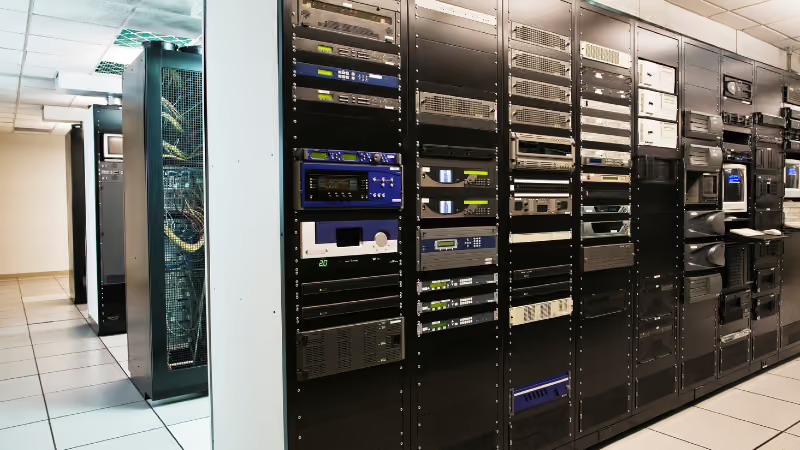
The AI Data Center Boom
Data center construction in the United States surged to an annual rate of over $50.7 billion in April, rising around 23% YoY. This expedited boom has made data centers the largest sector of private construction, outpacing general office buildings, and even exceeding the country's combined annual spending on transit, roads, and water infrastructure.
This rapid data center development growth isn’t expected to slow anytime soon, with the largest cloud and AI operators projected to spend almost $700 billion on AI infrastructure in 2026.
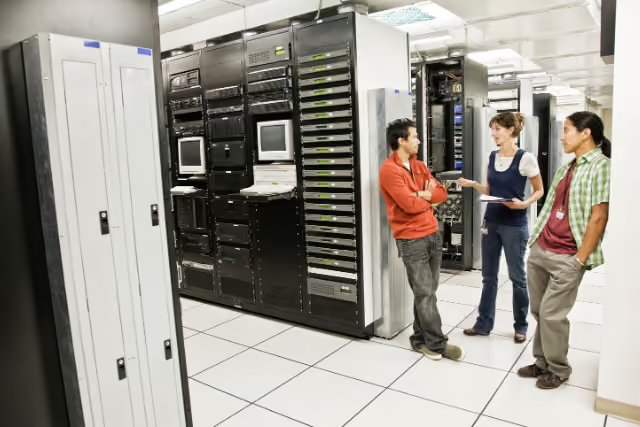
While states across the country have mixed policy on the data center campuses popping up, and 70% of Americans refusing to have them built in their neighborhoods, it’s without question that these data centers aren’t disappearing anytime soon. Like it or not, this means there is a very real and urgent need for skilled labor to take these in-demand hyperscale facilities from start to finish.
Aside from the large tech corporations leading the charge for these build outs, there are other people who can stand to benefit financially from data centers: entry-level college grads who are increasingly becoming wary of AI taking over traditional white-collar positions.
Trades Over the Corner Office
75% of Americans believe jobs that require hands-on experience are less likely to be replaced by AI. This shift from viewing trade school as the Scarlet A option, to a career that is becoming far more reliable and lucrative than climbing the corporate ladder, has created a new “toolbelt generation” amongst Gen Z that is eager to get their hands dirty.
And the proof is in the pudding, with data center construction jobs specifically offering a 32% pay increase over traditional trade work, with specialized tradesmen and women qualified for these projects raking in salaries of up to $280,000. Companies like Meta are sweetening the pot further to attract Gen Z to data center work, pouring millions of dollars into new programs designed to train this generation straight out of college, including covering tuition in full, providing lodging, a daily stipend, and more.
NVIDIA CEO Jensen Huang recently predicted that the skilled trade segment of the economy is going to continue to grow, and that admittedly, he too would have gone into a more hands-on industry if he had the choice again. Technical colleges can offer the younger generation a six-figure salary with no university debt, backing up Huang’s claim that America's next generation of millionaires will be those in the trades: carpenters, plumbers, and electricians.
My wife and I go back and forth when we think of the future career paths of both our young daughters. Is a traditional four-year university degree even a sensible option anymore?
Hesitancy around entering the trades has started to diminish over the past few years, with not only tech CEOs advocating for the trades but 35% of parents believing that a technical education or career is best suited for their children. While AI is limiting what entry-level college grads can do in their fields, and white-collar employers shedding over 20,000 jobs per month, construction firms are adding 20,000+ positions.
Moratoriums, Delays, and On-Site Jobs at Risk
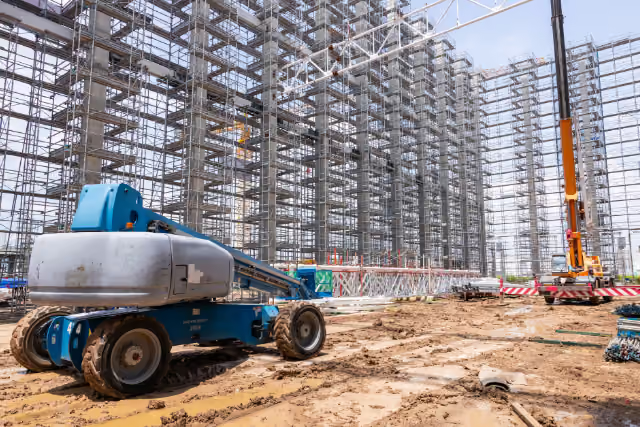
While the financial prospects coming from data center build outs are encouraging, this doesn’t come without pitfalls to consider.
The acreage required and energy used to keep data centers up and running is of an unprecedented nature, resulting in state governors signing moratoriums and pauses on environmental permits, developments, or grid interconnections. Most notably, New York State became the first to enact a statewide moratorium pausing environmental permits for new hyperscale centers for up to a year. Texas Governor Greg Abbot directed a grid interconnection freeze, auditing water usage and energy demands, which places around 20% of the data center pipeline at risk of delay.
Data center developments were already facing several delays due to supply chain backlogs, material price volatility, and slow planning and bidding. With even more bottlenecks and pushback, what might this mean for Gen Z who is hedging their bets on data center work? While the trades will remain a lucrative, safe path, Gen Z also needs to explore the other facets of trade work besides the typical hammer-and-nail positions.
The Jobs Behind the Jobsite

Jobs in the trades go far beyond the “dirty and dangerous” physical labor on a jobsite. There are a myriad of back-office tech jobs that without a project would never break ground. As the industry continues to digitize workflows and thus fuel more office positions, the next “toolbelt generation” has the opportunity to take on more technical roles as estimators, takeoff professionals, or project managers.
As Gen Z, who grew up with technology at their fingertips, enter the workforce, they’ll come to expect AI and other digital tools to be woven into their roles, making manual processes more efficient. The back-office, preconstruction roles are the unsung heroes of the construction process, ensuring profitability and on-time projects. As data centers face delays or statewide moratoriums, the cloud providers who are funding data center facilities will still expect bids, plans, and budgets for when the work does begin. The young, tech-savvy generation has the opportunity to enter the trades at a pivotal time, where AI takeoffs and integrated estimating can save hours and ensure accuracy before a million-dollar bid is placed.
As a member of the board of the Boys and Girls Club for nearly 10 years, I have a firsthand look into the potential that the next generation can bring to the industry. The shift to the trades is a reliable one filled with longevity, as long as we work with Gen Z to make them aware of all the options available for them in the industry.
Recent partnerships like the Lowe’s Foundation’s $8 million in Gable Grants or the Alliance for America’s Skilled Trades expands vocational training and visibility for these roles, building a talent pipeline that can rid us of the ongoing labor shortage threatening project timelines. The billions of dollars in data center investments will only become a reality if we nurture Gen Z’s curiosity for the trade world, and encourage them to take advantage of these opportunities.


TOP STORIES
View AllRECOMMENDED

.avif)

