

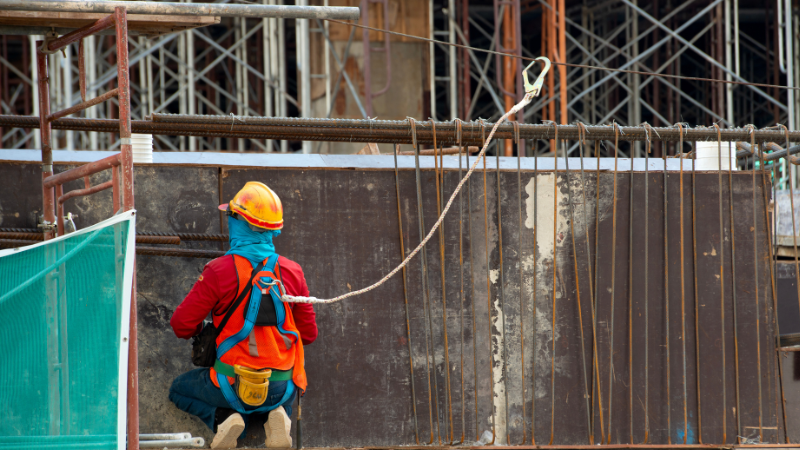
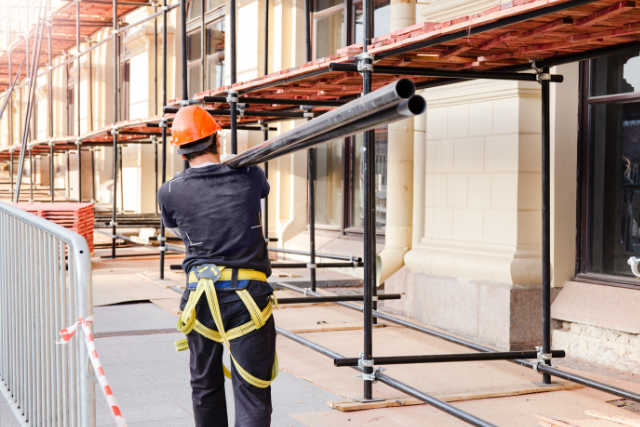
Why New York's Scaffold Law creates unique exposure for construction owners and why contracts, insurance, and safety procedures may not fully protect them.
For construction owners, few New York laws create as much potential exposure as Labor Law §240, commonly known as the Scaffold Law.
The statute requires owners, contractors, and their agents to provide specified safety devices for workers performing certain construction, demolition, alteration, repair, painting, cleaning, and pointing work. When a covered accident results from a failure to provide the required protection, liability can be imposed without the worker having to prove ordinary negligence.
That distinction makes §240 fundamentally different from the liability rules many owners encounter elsewhere in the Northeast. It also creates a common problem: owners may assume that hiring a general contractor, requiring insurance and including indemnification provisions in their contracts will protect them when a construction accident occurs. It has not.
For owners working in New York, treat §240 as a project-level business risk from the start. The biggest mistakes usually happen long before a lawsuit is filed.
Why Section 240 Is Different
The easiest way to understand §240 is to think about gravity.
The law protects workers from elevation-related hazards, including falls from ladders, scaffolds, and elevated work surfaces, as well as certain injuries caused by falling objects. The statute identifies equipment such as scaffolding, hoists, ladders, slings, hangers, blocks, pulleys and braces.
New York courts have consistently held that the duty imposed on owners and general contractors is nondelegable. An owner therefore generally cannot eliminate its statutory responsibility simply by hiring a contractor to manage the work.
The law also limits the usefulness of comparative negligence in these cases. When a violation of §240 is established, and that violation was a proximate cause of the injury, a worker's own negligence generally does not provide a defense.
That does not mean every construction accident automatically produces owner liability. A worker still has to establish that the accident falls within the statute and that a statutory violation caused the injury.
The important point is that the usual question of “Who was negligent?” can become much less important once §240 applies.
New York Is a Different Risk Environment
This becomes especially important for companies that operate across state lines.
An owner may have projects in New Jersey, Connecticut, or Pennsylvania where comparative-fault principles play a central role in liability analysis. That owner may reasonably assume that the same contracts, safety procedures, and insurance requirements will provide comparable protection in New York.
The legal environment is different.
New York's approach to elevation-related accidents has also become part of a broader debate over construction insurance costs and liability reform. Lawmakers continue to consider changes to the Scaffold Law, while industry groups argue that the current system creates significant insurance and development costs.
Whatever happens with reform, owners still have to manage the law as it exists today. For multistate companies, that means treating New York projects differently for construction risk.
The Mistakes Owners Keep Making

1. Assuming the General Contractor Has Taken Over the Risk
This is perhaps the most consequential misunderstanding.
A general contractor may control day-to-day site operations, coordinate subcontractors, and implement safety procedures. But that does not automatically eliminate the owner's statutory obligations under §240.
Owners should therefore ask a more precise question than, "Who is responsible for safety?"
The better question is, "Which responsibilities can actually be delegated, and which legal obligations remain with the owner regardless of the contract?”
Address that distinction during contract negotiations, not after an accident.
2. Treating Indemnification as a Substitute for Risk Management
Indemnification provisions can provide important protection, but they do not prevent a New York construction accident claim from being brought against an owner in the first place.
They also do not guarantee that another party will ultimately have the financial ability or legal obligation to reimburse the owner.
New York's workers' compensation law places significant restrictions on third-party contribution and indemnification claims against an injured worker's employer. As a result, an owner cannot simply assume that the subcontractor employing the injured worker will reimburse the owner for a §240 judgment.
The practical lesson is straightforward: review indemnification provisions and insurance requirements together.
A contract may provide a right to seek reimbursement. That right is only as useful as the circumstances, coverage, and parties behind it.
3. Treating a Certificate of Insurance as Proof of Protection
A certificate of insurance confirms the existence of insurance. It does not tell the entire story about what that insurance actually covers.
Owners should understand the applicable policy limits, exclusions, additional-insured provisions, deductibles, retentions, and other conditions that could affect a construction claim.
This matters when multiple tiers of contractors and subcontractors are involved. A subcontractor may satisfy the project's stated insurance requirement while still having a coverage limitation that creates a problem when an owner expects the policy to respond to a serious claim.
Insurance compliance should therefore be based on the actual policy and endorsements, not simply the certificate sitting in the project file.
4. Assuming Workers' Compensation Eliminates the Owner's Exposure
Workers' compensation and third-party liability are separate issues.
New York's workers' compensation system generally provides benefits to an injured employee without requiring proof that the employer was negligent. At the same time, an injured worker may have a separate claim against certain third parties, including a construction owner.
That can leave an owner facing a separate lawsuit even though the injured worker is also receiving workers' compensation benefits through an employer.
For owners, understanding that distinction is critical. A project can involve a workers' compensation claim, a Labor Law claim, and contractual indemnification disputes at the same time.
5. Failing to Preserve Evidence After an Accident
After a serious accident, the instinct is often to make the site safe, clean up the area, and resume work. Preserving evidence needs to be part of that response.
Owners should have a process for preserving photographs, video, equipment, inspection records, daily logs, safety documentation, witness information, and relevant project communications. The condition of a ladder, scaffold or other piece of equipment can become central to a §240 claim, and that condition may change quickly after an accident.
Recent New York cases illustrate how fact-specific these disputes can be. Courts continue to examine whether an appropriate safety device was provided, whether it was properly used, and whether its failure proximately caused the accident.
The lesson is practical: preserve the evidence before someone else changes it.
What Owners Should Do Before Construction Begins
The best time to manage §240 exposure is before the first worker arrives.
Start by identifying activities that create elevation-related risks. That includes obvious hazards such as scaffolds and roof work, but also ladders, temporary platforms, hoists, and work involving materials that can fall from an elevated position.
Next, establish clear responsibility for selecting, supplying, installing, and inspecting safety equipment. Those responsibilities should be reflected in the project's written agreements and supported by actual site procedures.
Owners should also coordinate contract and insurance reviews. An indemnification provision that looks strong on paper is considerably less useful if the insurance program does not provide the expected financial protection.
Finally, make sure project executives understand the limits of the statement that "the contractor handles safety." That may describe the contractor's operational role. It does not necessarily describe the owner's legal exposure.
What Happens After an Accident Also Matters
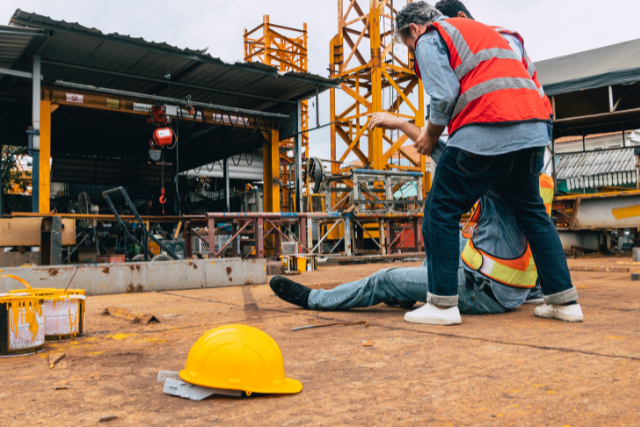
When a serious accident occurs, owners should resist the temptation to reach an immediate conclusion about liability.
Instead, focus first on preserving the facts.
Secure the site as appropriate, preserve relevant equipment, collect photographs and video, identify witnesses, and notify insurers. Also gather project contracts and insurance documents before memories fade or records become difficult to locate.
Owners should avoid informal conclusions such as “the worker was careless” or “the subcontractor is responsible.”
Those statements may not answer the legal question presented by §240.
The more relevant questions may be whether an adequate safety device was provided, whether it was properly placed and operated, and whether its inadequacy caused the accident.
The workers' compensation component also deserves early attention. Owners should determine whether contractual indemnification rights exist and whether the law limits potential claims against the injured worker's employer.
Reform May Come. Owners Must Still Manage Today's Risk.
Section 240 remains the law even as lawmakers debate changes.
Supporters of reform argue that the current system creates disproportionate liability and contributes to construction insurance costs. Opponents argue that the law provides an important incentive for owners and contractors to protect workers from some of the industry's most serious hazards.
Owners do not need to take a position in that debate to manage their projects effectively. Until the law changes, the existing rules control.
The Bottom Line for Construction Owners
For owners working in New York, Labor Law §240 should not be treated as a legal issue that begins after a worker is injured. The risk starts much earlier, with project structure, contract language, insurance requirements, and decisions about who is responsible for safety equipment and site operations.
The biggest mistake is assuming those decisions automatically shift the risk away from the owner.
They may reduce the risk. They may create contractual rights against another party. They may provide valuable insurance protection. But none should be viewed as a substitute for understanding the owner's own exposure under New York law.
For companies operating throughout the Northeast, that distinction matters most. The liability framework that makes sense on a project in another state may not translate cleanly to New York.
Treat §240 as its own risk category. Address it during pre-construction planning, coordinate the contract and insurance reviews, document safety responsibilities, and establish an evidence-preservation process before an accident occurs.
That approach cannot eliminate every claim. It can, however, prevent one of the most expensive mistakes an owner can make: discovering after a serious accident that the risk was never actually transferred in the first place.



TOP STORIES
View AllRECOMMENDED

.png)

