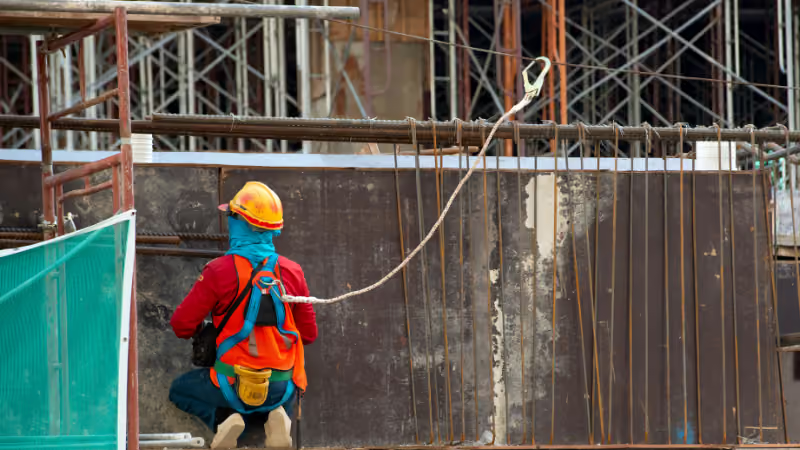

At the start of this year, it was reported that the construction industry needed to attract nearly 350,000 new workers in 2026 to meet demand for construction services. Next year, that number climbs to 456,000.
As data center projects and other AI-infrastructure demands continue to mount, the urgent need for trade and construction labor is compounding. You'd assume this creates a wide-open door for Gen Z and younger millennials, who are facing an uncertain job market and threats of AI steamrolling their chances at entry-level white-collar positions.
Yet 92% of U.S. construction firms report that they're struggling to find workers, revealing clear cracks in the recruiting system. In my eyes, this is rooted in our inability to effectively engage, educate, and recruit the next generation of trade workers early enough. We need to reach students when they're still navigating what career path is right for them and show them that the reputation of trade work is rapidly evolving, and the stereotypes that may have once turned them off are irrelevant to what the job means today.
And from there, once they've been convinced the trades might be a lucrative profession for them, we can't just leave them hanging. To prepare the next generation of AEC professionals, we need to give students career-ready digital skills for an AI-enabled, automation-first workforce that didn't exist in the trades a decade ago.
Many trades are increasingly being recognized as attractive, AI-resistant career paths compared to white-collar roles, but even in hands-on roles, knowing the right software is now essential to get your foot in the door and avoid steep learning curves.
Attracting the "toolbelt generation"
Gen Z (born between 1997 and 2012) is redefining what career success looks like, seeking out opportunities with attractive wages, career stability, and upward mobility. Even as the construction industry adopts new technology to automate various aspects of the job, humans with their boots on the ground of the job site cannot be replicated by AI. This "toolbelt generation" is eager to dive in and fill the demand for positions within the construction industry, but they need support to do so.
STACK’s Construction Knowledge Gap report found that 82% of entry-level construction professionals said they would be more likely to stay with an employer long term if it invested in modern technology to capture and share knowledge. Among respondents ages 18–25, that figure rose to 90%. When a veteran's know-how lives in shared tools instead of one person's head, new hires can actually learn the job. Technology will be a talent-retention tool across industries, but especially those like construction, as infrastructure demands continue to put pressure on the current trade workforce and require restructuring to avoid costly project delays.
Not just hiring talent, but training

But the talent pipeline for the construction industry shouldn't start on the jobsite. It should start in the classroom, where this next generation can experience technology through hands-on opportunities. We need to build a bridge between education and employment, introducing tools of the trade as part of the curriculum. Those tools no longer include just a hammer and a tape measure. Technology is a huge part of the future of construction, so providing students access to digital estimating and preconstruction workflows as part of their classroom training pays off the day they step onto the jobsite.
Our STACK Academic Program gives a free STACK account to any student in an applicable course, so they arrive with skills they can use on day one.
This program and others like it also point to a larger shift happening across the industry. A career in construction is not just physical labor anymore. Technology is creating an opportunity for office roles and even expanded field roles that didn't really exist before. This is helping with the long-term outlook for a career in construction. It's no longer 30 years of hammering nails. It's a career that can grow across every phase of a project.
Where to start
I've sat on the Board of Governors of Boys & Girls Clubs of America for nearly a decade. The organization provides a safe environment for over 4 million youth of all backgrounds to realize their potential. Many of these kids come from low-income, underserved communities where college isn't an easy path, especially with the average student loan topping $40K.
What stays with me from that work is how much untapped potential is waiting to be developed. Construction owners are in a position to develop it. The first three places to start include:
Partnering with a local high school or trade program. Offer jobsite visits or guest instruction, or help bring estimating and takeoff software into the curriculum. Trade programs need to reflect how the work actually gets done today.
Paying apprentices a real wage. Apprenticeships let young people work and earn a living while getting an education and hands-on experience. That matters in an economy where basic needs are hard to afford, and internships that merely cover the commute aren't going to cut it.
Capturing what your veterans know. Put estimates, past projects, and lessons learned into shared tools so new hires learn from them instead of waiting on one person's memory.
The industry needs to work together to create these opportunities, as recent investments in training programs from big players like Google and Meta show.
Over the next five years, I expect the trades to become one of the most tech-forward career paths, because field workers have what no desk-bound worker can: firsthand knowledge of what’s happening on the jobsite. The next generation is ready for these careers. Let's reach them early enough to show them the way in.



TOP STORIES
View All