A key federal incentive driving energy-efficient construction and retrofits is set to sunset in 2026, creating urgency across the commercial building sector.
.jpg)
Section 179D of the Internal Revenue Code, which provides tax deductions for energy-efficient commercial buildings, will no longer apply to projects that begin construction after June 30, 2026, following changes enacted under the One Big Beautiful Bill Act.
The deduction, administered in part through guidance from the U.S. Department of Energy and the Internal Revenue Service, has become a significant financial tool for developers, contractors and building owners seeking to offset the costs of high-performance building systems.
The 179D deduction was previously expanded under the Inflation Reduction Act, which enhanced its value and broadened eligibility beginning in 2023.
The program allows tax deductions for qualifying energy-efficient systems installed in commercial buildings, including interior lighting, heating, ventilating and air conditioning (HVAC), hot water systems and building envelopes. Both new construction and retrofit projects are eligible under the program’s traditional modeling pathway, while retrofit-only projects may qualify under a measurement-based pathway.
To qualify, projects must achieve at least 25% energy savings compared with baseline standards. The value of the deduction increases with higher efficiency gains and can rise significantly for projects that meet prevailing wage and apprenticeship requirements.
For example, in the 2025 tax year, projects meeting all criteria can receive deductions of up to $5.81 per square foot, compared with a base range of $0.58 to $1.16 per square foot for projects that do not meet labor requirements.
The program offers two primary compliance routes for project teams.
The traditional, or modeling, pathway applies to both new construction and upgrades, using energy modeling to compare a building’s performance against a reference standard such as ASHRAE 90.1. This approach evaluates projected energy and power cost savings across systems including HVAC, lighting and building envelope components.
The alternative, or measurement, pathway applies to retrofit projects for buildings at least five years old. This method relies on actual energy consumption data before and after upgrades to verify reductions in energy use intensity.
In both cases, certified professionals must validate performance improvements, and deduction values scale with increased energy savings.
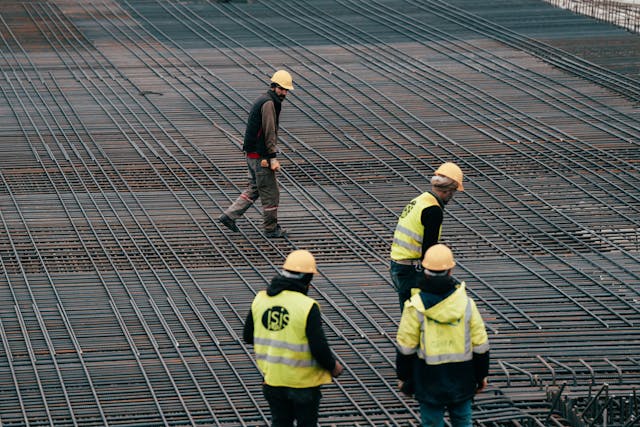
The scheduled expiration of 179D eligibility for projects beginning after mid-2026 is expected to influence project timelines and investment decisions. Developers may accelerate planning and construction starts to secure eligibility, particularly for large-scale retrofit programs and institutional buildings.
Additionally, the program allows certain tax-exempt entities—including government agencies and nonprofit organizations—to allocate deductions to designers responsible for energy-efficient systems, expanding participation across the construction value chain.
However, project teams must carefully navigate compliance requirements, including certification, modeling standards and labor provisions, to maximize benefits. Deduction amounts are also capped based on project costs and prior claims, adding another layer of complexity.
As the deadline approaches, industry stakeholders are expected to closely monitor potential legislative updates or extensions. Until then, the 179D deduction remains a critical—but time-limited—tool for advancing energy efficiency in the built environment.
Originally reported by U.S. Department Of Energy.