Long-duration energy storage is becoming an important component of electricity infrastructure planning as power demand increases and grid operators require additional flexibility. In Ontario, the proposed Ontario Pumped Storage Project is being advanced as a large-scale storage development in Meaford.
AECOM has been engaged by Worley to support the project's next phase of engineering and planning. The proposed facility is expected to provide approximately 1,000 MW of generation capacity and 10,600 MWh of energy storage.
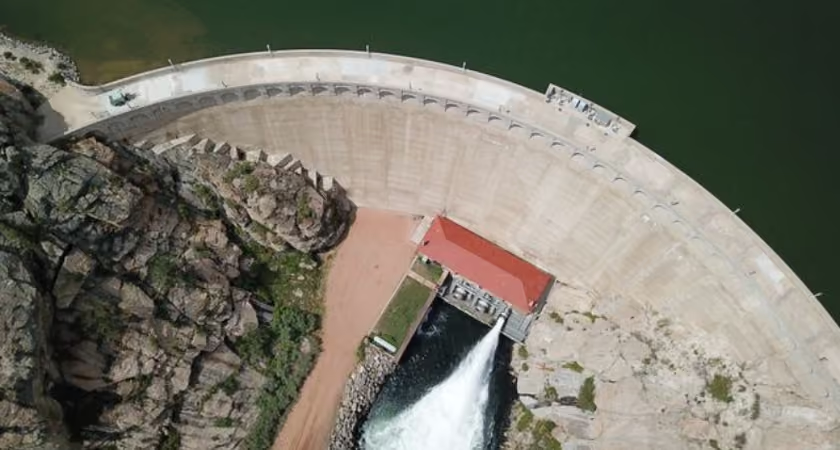
The pumped storage facility would store electricity during periods of lower demand and release it when additional power is needed. This operating model is intended to provide long-duration capacity and flexibility for Ontario's electricity system.
AECOM's responsibilities will include work associated with the project's underground infrastructure and hydraulic systems. The engineering effort will address constructability, operability and long-term performance as the project advances through planning.
AECOM will also contribute to developing project costs and schedules, assessing risks and completing other engineering activities required during the next development phase.
The project builds on AECOM's experience in hydropower and pumped storage infrastructure. For project owners and delivery teams, the engineering phase will establish additional information needed to evaluate construction requirements, project risks, costs and scheduling before the development progresses toward an investment decision.
The Ontario project reflects broader infrastructure requirements associated with increasing electricity demand and the need for flexible generation and storage resources. Pumped storage can provide extended-duration energy storage while integrating with existing and future generation resources.
For contractors and infrastructure suppliers, projects of this scale can involve specialized underground construction, hydraulic infrastructure and engineering requirements. The current phase is focused on advancing design and planning rather than construction, making cost, schedule, risk and constructability analysis important considerations before the project reaches later delivery stages.
Source: AECOM.