Workforce availability remains one of the construction industry's most persistent challenges, making developments within organized labor significant for construction owners, contractors and developers. Recent leadership decisions at the AFL-CIO indicate continued emphasis on union membership growth, workforce training and labor advocacy across multiple sectors, including construction.

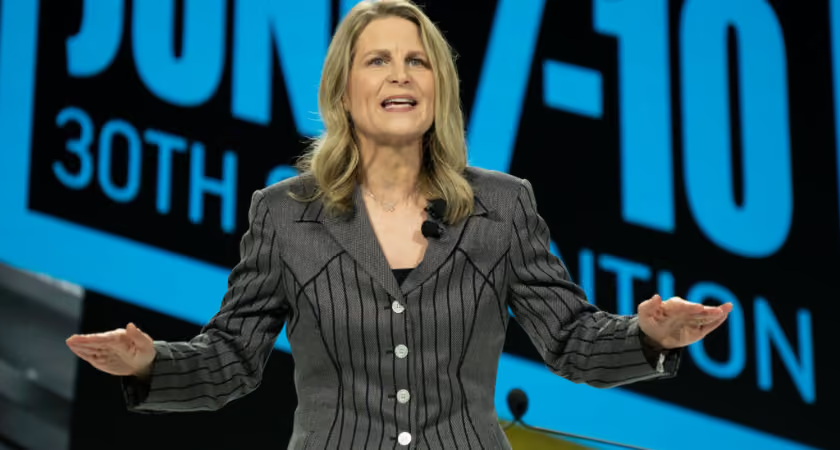
Delegates at the AFL-CIO's quadrennial convention in Minneapolis reelected Liz Shuler to serve a second term as president of the labor federation. Shuler, a member of the International Brotherhood of Electrical Workers (IBEW), first assumed the role in 2021 and was elected to a full term in 2022.
During the convention, federation leadership highlighted efforts to expand union membership and strengthen organizing activities across a range of industries. AFL-CIO officials also emphasized initiatives focused on workforce issues related to artificial intelligence, technology adoption and worker protections.
The federation reported adding new affiliated unions in recent years and outlined plans to continue expanding labor participation while increasing voter engagement efforts leading up to future federal, state and local elections.
The AFL-CIO's continued focus on workforce recruitment and retention could influence labor availability in unionized construction markets. Expanded organizing efforts may affect contractor labor strategies, workforce planning and collective bargaining activity in regions where union construction represents a significant share of project delivery.
The federation's attention to artificial intelligence and workforce technology issues also signals ongoing discussions around how emerging technologies will be integrated into workplaces while addressing employee training and labor concerns.
Labor shortages, workforce development and skilled trades recruitment remain major issues across the construction sector. Contractors, developers and public owners continue investing in apprenticeship programs, workforce pipelines and training initiatives to address long-term labor demand.
Organizations representing labor unions are increasingly focusing on technology, workforce retention and skills development as industries adapt to changing workforce demographics and evolving project requirements. These efforts can influence labor market conditions, training capacity and workforce availability across construction and related sectors.
Source: IBEW.