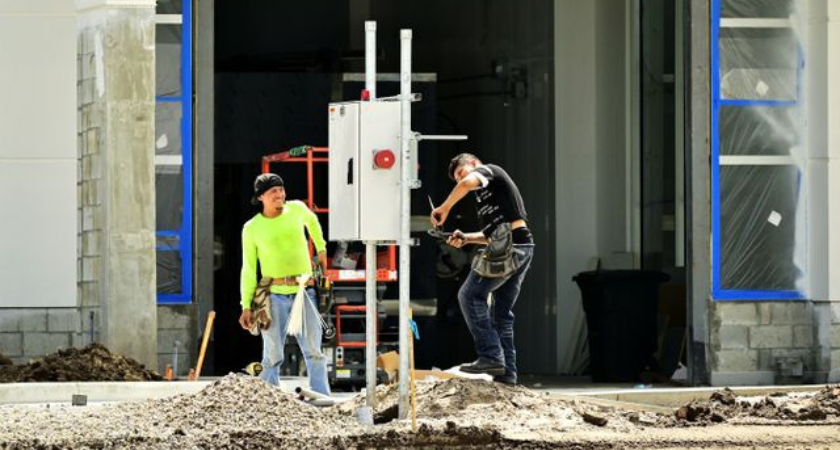
Construction employment continued to expand in June, driven primarily by nonresidential building activity and infrastructure-related work, according to an analysis of newly released federal labor data by the Associated General Contractors of America. The association said continued workforce growth could depend on timely congressional action to extend federal highway and transit funding.
Seasonally adjusted construction employment reached 8.331 million workers in June, increasing by 11,000 positions from May and by 64,000 jobs, or 0.8%, compared with the same month last year. The industry's annual employment growth exceeded the overall nonfarm payroll increase of 0.3%.
Nonresidential construction generated the strongest hiring activity during the month. Employers in the sector added 19,900 jobs in June and 113,400 positions over the past 12 months, representing a 2.3% annual increase.
Within nonresidential construction, heavy and civil engineering contractors added 2,600 jobs during June and 28,300 positions over the past year, reflecting a 2.4% increase. Nonresidential specialty trade contractors expanded payrolls by 14,100 jobs during the month and 63,700 over the year, while nonresidential building contractors added 3,200 jobs in June and 21,200 over the previous 12 months.
Residential construction continued to soften. The sector lost 8,600 jobs during June and declined by 48,800 positions, or 1.5%, compared with a year earlier. Both residential specialty trade contractors and residential building contractors reported workforce reductions.
Average hourly earnings for production and nonsupervisory employees in construction increased to $39.06 in June. Construction workers earned approximately 20.6% more than the average private-sector production employee.
Construction wages rose 4.8% over the past year, exceeding the 3.4% annual wage increase recorded across the broader private sector.
The Associated General Contractors of America noted that the strongest employment gains occurred in heavy and civil engineering construction, a market segment that depends significantly on federally supported highway, bridge and transit programs.
The association said it plans to release national and state polling on public support for new transportation legislation while urging Congress to approve a new surface transportation authorization before the current law expires on Sept. 30. Industry leaders indicated that maintaining federal infrastructure investment is important for sustaining employment levels and supporting future construction activity.
For construction owners, contractors and developers, June's employment report reflects continued demand across nonresidential markets, particularly infrastructure and civil construction. At the same time, the industry's reliance on long-term federal transportation funding underscores the importance of predictable public investment for workforce planning, project delivery and contractor capacity.
Source: AGC.