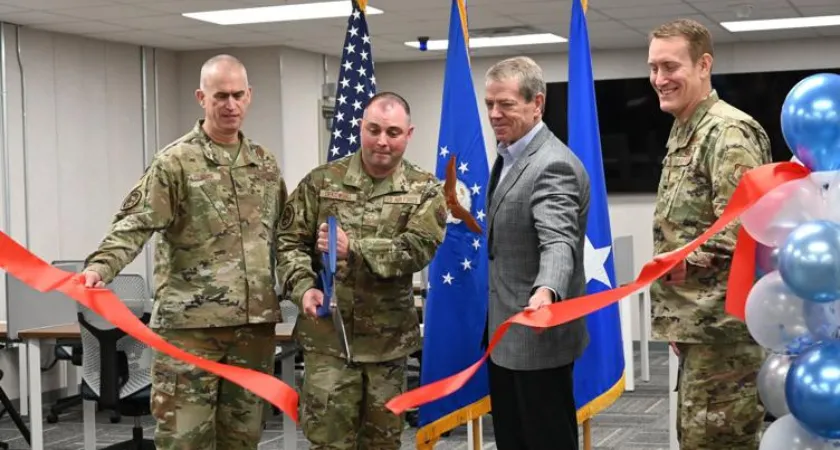
Military leaders and defense officials gathered this week at F.E. Warren Air Force Base to celebrate the completion of the first military construction project tied to the nation’s next-generation nuclear missile system.
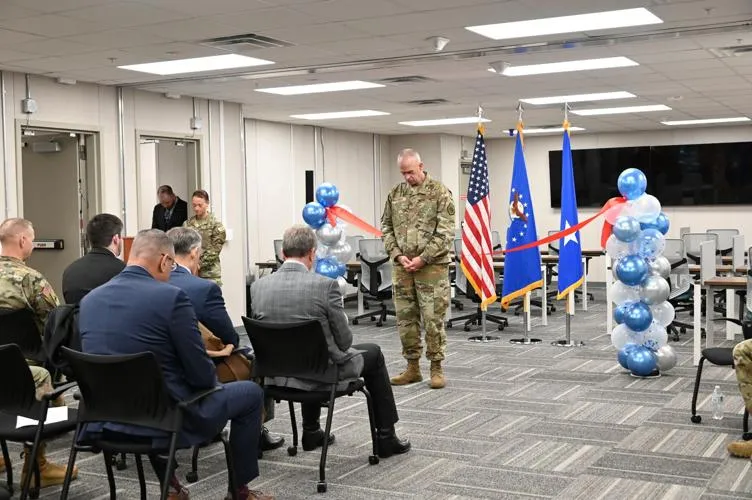
The ribbon-cutting ceremony marked the official opening of a Sentinel Task Force facility that will support operations related to the new LGM-35 Sentinel, which is intended to replace the aging Minuteman III fleet currently deployed across the United States.
Military officials say the facility will play a critical role in the coordination and integration of the new missile system as part of the nation’s long-term nuclear modernization effort.
“The work done here, at places like F.E. Warren, is the foundation for our nation’s defense,” Brig. Gen. William Rogers said. “It is our true strategic defense.”
The facility was completed as part of the broader Sentinel Intercontinental Ballistic Missile program, a sweeping modernization initiative that aims to replace more than 400 Minuteman III missiles currently stationed across missile fields in the western United States.
The Sentinel program represents one of the largest modernization efforts undertaken by the U.S. military in decades. With an estimated cost of about $141 billion, the project is designed to replace Cold War–era missile systems with modern infrastructure, technology and communications capabilities.
Despite its strategic importance, the program has faced scrutiny in Washington due to delays and rising costs. Some critics have questioned whether such a large investment in land-based nuclear weapons is necessary.
Military leaders, however, continue to emphasize that intercontinental ballistic missiles remain a vital component of the country’s nuclear deterrence strategy.
ICBMs form the land-based portion of the U.S. nuclear triad — alongside submarine-launched ballistic missiles and nuclear-capable bombers — and are considered the most rapidly deployable component of the nation’s nuclear defense posture.
According to a news release, “The facility represents an important step in ensuring a safe, secure, and effective strategic deterrence mission.”
Although the newly completed building appears relatively modest from the outside, officials say its internal construction includes highly specialized security features designed to protect classified defense work.
The structure contains office areas and conference rooms that meet strict intelligence security requirements. Certain rooms were built using multiple layers of materials, including foil shielding and specialized wall panels, designed to prevent electronic surveillance or data interception.
Some areas are also equipped with radiofrequency protection technology, which blocks electronic signals from entering or leaving secure rooms where sensitive discussions occur.
Maj. Gen. Colin J. Connor of Air Force Global Strike Command said the facility will serve as a central hub for Sentinel program operations.
“The walls and the roof that you’re sitting in now will be the nerve center,” Maj. Gen. Colin J. Connor from Air Force Global Strike Command said. “Everything that occurs, both on base and in Nebraska, Wyoming and Colorado in the missile field of the 90th Missile Wing will be because of this building right here.”
Connor noted that the milestone carried personal significance for him as well, reflecting on his earlier service at the same installation when the Minuteman system was considered cutting-edge technology.
“They’ll write history out of what happens in this building,” Connor said. “That’s how historic this is, and it’s personal to me, obviously, because I started here, and to see this come full circle … for one day, for a couple of minutes, we get to be part of something big.”
The construction process itself required extraordinary levels of oversight and documentation to meet intelligence security standards.
Security manager Dallas Stroud of Sentinel Task Force Detachment 10 said every aspect of the building’s construction — including where materials were sourced, how they were transported and who installed them — was carefully tracked.
“We know where every material in this building has been, down to the screws,” Stroud said.
Some of the secure spaces were built to meet the strict requirements outlined in Intelligence Community Directive 705, which governs the design of Sensitive Compartmented Information Facilities (SCIFs) used across the U.S. intelligence community.
Inside some rooms, soundproofing prevents conversations from being overheard, while special security indicators are installed to alert occupants if individuals without the proper clearance enter the room.
For example, a blue ceiling light will activate if someone lacking the necessary clearance enters during classified discussions, signaling that all sensitive conversations must immediately stop.
While F.E. Warren Air Force Base will be the first installation to transition to the Sentinel missile system, other bases across the country will also be involved in the modernization effort.
Malmstrom Air Force Base and Minot Air Force Base will also play key roles in the deployment of the new missile system.
“These are the folks that are basically going to write the playbook,” said Capt. Stephen Collier, Sentinel SATAF Public Affairs Liaison, referring to the personnel who will work inside the newly completed facility.
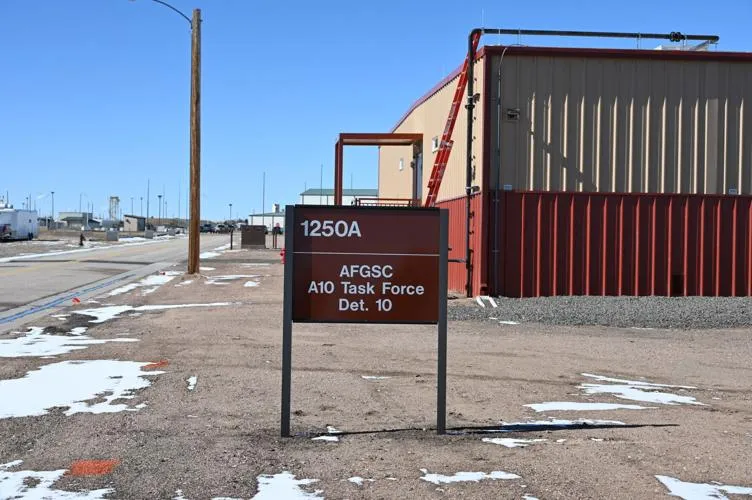
The Sentinel program was launched after the U.S. Air Force warned Congress in 2021 that the Minuteman III missile system would reach the end of its operational lifespan by 2036.
Following delays in the Sentinel program, analysts determined the aging system might continue operating until 2050, though doing so would involve increasing technical risks.
The project also faced a major financial hurdle in 2024 when cost increases triggered a review under the Nunn-McCurdy Act, a federal law requiring the Pentagon to notify Congress when major defense programs experience significant cost overruns.
After an extensive review, defense officials ultimately determined the Sentinel program should continue due to its importance to national security.
While construction of this first facility marks an important milestone, military leaders say the broader modernization effort will continue for years as the United States transitions its land-based nuclear deterrent to the next generation of missile technology.
Originally reported by Ivy Secrest/Wyoming Tribune Eagle in Wyoming News.



.png)