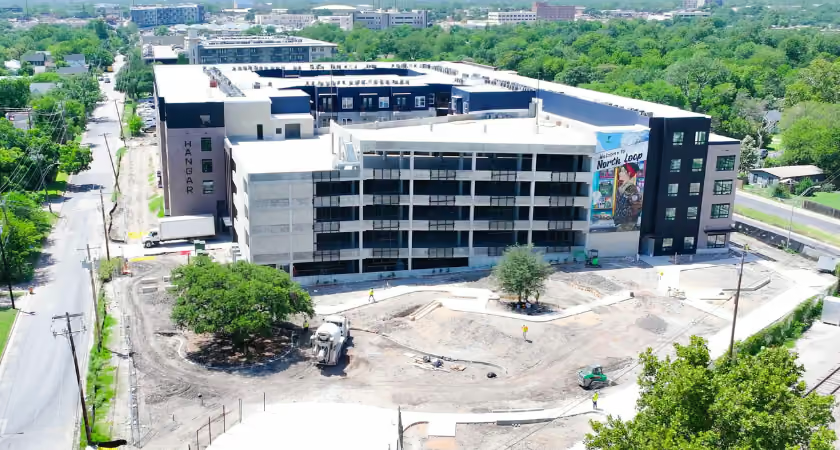
Public art and community amenities are increasingly being integrated into multifamily developments as developers seek to strengthen neighborhood connections while delivering new housing. In Austin's North Loop district, construction continues on the first phase of The Hangar development, where a large-scale mural and public park are being incorporated into the project.
Millie at The Hangar, located at 403 E. Koenig Lane, is the first phase of the planned two-phase Hangar development. Arch-Con Corporation is serving as the general contractor for the five-story, 249-unit apartment community designed by KTGY.
The approximately 265,100-square-foot development will include two landscaped courtyards, a swimming pool, bocce ball court, coworking space, resident lounge, wellness center and a 2,000-square-foot retail space.
The project also features a one-acre public park with native landscaping, recreational courts, a nature-inspired playground and a relocated heritage oak tree. A city bike trail borders the northern edge of the site.
A newly completed 50-foot mural has been installed on the parking garage wall facing the North Loop neighborhood. Created by artist Luis Angulo, known professionally as ULOANG, the artwork recognizes the area's aviation heritage and commemorates Mildred "Millie" Inks Davidson Dalrymple, a Women Airforce Service Pilots member who trained at the former Haile Airport that once occupied the site.
According to project information, the development team worked with the North Loop Neighborhood Association during planning to refine building design, affordable housing components and public open space.
The Hangar is named in recognition of the former airport, while the first residential phase honors Dalrymple's connection to the property's history.
Mixed-use residential developments increasingly combine housing, public amenities and placemaking features to support neighborhood revitalization. For construction owners and developers, The Hangar demonstrates how collaboration with community stakeholders and integration of public spaces can complement multifamily construction while preserving local history.
Source: Arch-Con Corporation.