.webp)
Arizona State University is preparing to launch one of its most ambitious construction years yet, with multiple high-profile projects set to begin across its campuses in 2026. From a next-generation medical school building in downtown Phoenix to large-scale student housing redevelopment and arena renovations, the university’s real estate pipeline signals continued investment in academic innovation and student experience.
Work on several transformative projects is scheduled to begin this year, joining a real estate lineup that includes signature new builds to support the community and renovations to modernize long-standing campus facilities.
The new ASU Health building, a 200,000-square-foot structure in downtown Phoenix, will house the John Shufeldt School of Medicine and Medical Engineering, the Health Observatory at ASU and the School of Technology for Public Health.
Construction for the ASU Health building is expected to begin in July and finish before the start of the fall 2028 semester. It will join downtown’s Phoenix Bioscience Core innovation zone.
The project budget is about $200 million for construction and equipment, according to Tim Smith, vice president for facilities development management at ASU.
“The unique thing about ASU Health is that the med school of the future is not defined. So we're trying to define that as the train is moving and the tracks are being laid,” he said.
“A lot of it will be tech driven. The augmented reality, virtual reality and ways that our students will learn are not the way that most traditional med schools have approached it.”
A related project is the $8 million renovation of the Mercado building on the Downtown Phoenix campus, which is wrapping up now because that site will house ASU Health until the new building opens.
University officials say the health-focused development reflects a broader push to integrate technology, research and hands-on learning into medical education, positioning ASU as a leader in reimagining how future physicians and public health professionals are trained.
Another iconic project for this year is the John S. McCain III Library and Museum, dedicated to the legacy of the former Arizona senator and war hero.
A ceremonial ground-breaking was held in January and construction on the $187 million project is expected to begin in late spring and finish in the fall of 2028. The 80,000-square-foot building will include an immersive museum, library, café, lecture hall, event spaces and multipurpose space for ASU and the community.
In 2012, McCain donated his archives to ASU, which will digitize the documents in the new facility.
The museum will rise on the former Community Services Building site on Curry Road, further transforming the northern edge of the Tempe campus into a civic and cultural destination.
Two student-centered projects are happening this year on the Polytechnic campus, which serves more than 6,100 undergraduate and graduate students.
The $66 million Student Union renovation will nearly double the building’s size. The project includes upgrades to dining options and the bookstore, as well as new lounges, classrooms and meeting rooms for student organizations. Construction is set to begin this summer and wrap up next summer.
In addition, ASU will build its first 3D-printed structure — a 1,200-square-foot shade and market building near the ISTB 12 facility. Developed in collaboration with Aramark, the structure will serve shuttle riders and house a small market.
Instead of traditional framing, the large-scale printer will layer coils of concrete in computer-set patterns, showcasing emerging construction technologies and reinforcing ASU’s emphasis on innovation.
An ongoing $115 million project at the Bateman Physical Sciences Center’s H-wing will modernize laboratories and infrastructure originally built in 1991.
“We’re doing a lot of the infrastructure related to the mechanical equipment, a lot of the stuff behind the walls that most people don't see,” Smith said.
“It's going to give us 17 wet labs, 15 dry labs and 24 offices. So that really improves the efficiency and the modernization, which is the primary focus of this project,” he said.
Meanwhile, Desert Financial Arena — home to Sun Devils basketball, volleyball, gymnastics and wrestling — will undergo a three-year, $100 million renovation starting this summer.
“A lot of the infrastructure that goes under the court, for all the multimedia requirements like instant replay and broadcast capabilities, will be modernized this summer,” Smith said.
“With a complete modernization, it'll have a little bit more of a 21st-century kind of feel as opposed to mid-century,” Smith said.
Planned upgrades include new padded seating, premium chairs, updated restrooms, locker room renovations, improved concessions, a new court and enhanced video boards. The project is expected to be completed by December 2029.
ASU will also demolish Best, Irish and Hayden halls — residence buildings dating back to the 1940s and 1950s — to make way for a new residential complex near ASU Gammage and the Apache Parking structure.
"These are 1940s and 1950s-era buildings, so they're pretty aged. And we're looking at including a bookstore and campus marketplace in addition to the residential complex,” he said.
The first phase will deliver approximately 800 beds by fall 2028, along with more efficient layouts and updated amenities aimed at enhancing student life.
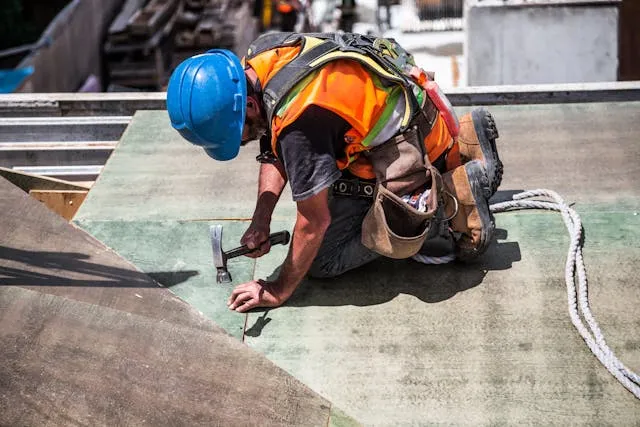
Collectively, the projects represent billions in long-term campus reinvestment and signal ASU’s continued growth across academic, residential and athletic facilities. University leaders say the 2026 construction pipeline aligns with enrollment growth, research expansion and the institution’s broader mission to serve Arizona’s evolving workforce needs.
By blending new construction with modernization of legacy buildings, ASU is reshaping its campuses to meet the demands of a technology-driven future — while preserving its ties to community, history and student-centered design.
Originally reported by BIZ Journals.