Two of the largest U.S. contractors — Bechtel and Kiewit — have been tapped to support a massive $33 billion power generation project in Ohio, part of a broader international push to expand artificial intelligence infrastructure.
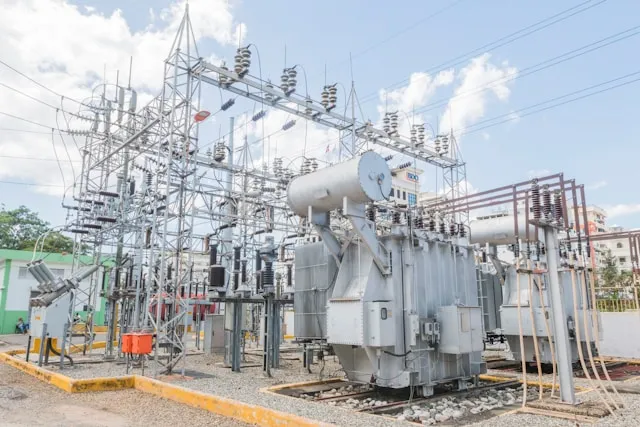
The development stems from a public-private partnership involving SoftBank Group, AEP Ohio, and U.S. federal agencies, including the Department of Energy and Department of Commerce. The project will generate up to 10 gigawatts of new energy capacity, with the majority — 9.2 GW — coming from natural gas sources.
This new power supply is intended to support a major data center campus planned in Pike County, positioning the region as a key hub for next-generation AI infrastructure.
The project will be delivered through the Portsmouth Consortium, a group of 21 companies from the U.S. and Japan collaborating on energy and AI infrastructure. Among them, Bechtel and Kiewit are expected to play a central role in executing the large-scale construction effort.
Catherine Hunt Ryan, president of Bechtel Manufacturing & Technology, emphasized the importance of integrated delivery in handling projects of this scale.
“Bechtel’s focus is integrated delivery that draws on our megaproject experience to pair gigawatt-scale data centers with power and enabling infrastructure delivered in parallel, reducing risk and bringing AI capacity online faster, more reliably, and at the pace required to lead,” Hunt Ryan said in a statement shared with Construction Dive.
The involvement of these major contractors signals that the project is moving beyond planning into active execution, reflecting broader momentum in AI-related infrastructure development.
The Ohio project is part of the larger U.S.-Japan Strategic Trade and Investment Agreement, signed in October, under which Japan committed $550 billion toward U.S. infrastructure, including energy, manufacturing and data centers.
Government leaders have described the development as one of the most significant construction efforts currently underway in the country.
“We are going to do the largest construction project in the country,” said Commerce Secretary Howard Lutnick at the project site on March 20.
The scale of the project reflects the rapidly growing demand for power-intensive AI systems, which require vast amounts of energy to operate data centers, train machine learning models and support emerging technologies.

Construction is expected to begin later in 2026, with the project anticipated to reshape both the regional economy and the national energy landscape. Pike County could see substantial job creation, infrastructure upgrades and long-term investment tied to the data center ecosystem.
The reliance on natural gas for the majority of the project’s energy output also highlights ongoing debates around balancing rapid AI expansion with sustainability goals. While natural gas offers reliability and scalability, it raises questions about emissions and long-term environmental impact.
At the same time, the project underscores how global partnerships are increasingly driving domestic infrastructure growth. With Japanese capital backing U.S. construction and engineering expertise, the development represents a new model for delivering megaprojects tied to emerging technologies.
As AI demand continues to surge, similar large-scale energy and data center projects are likely to follow, further transforming the construction and power generation sectors across the United States.
Originally reported by Zachary Phillips, Editor in Construction Dive.