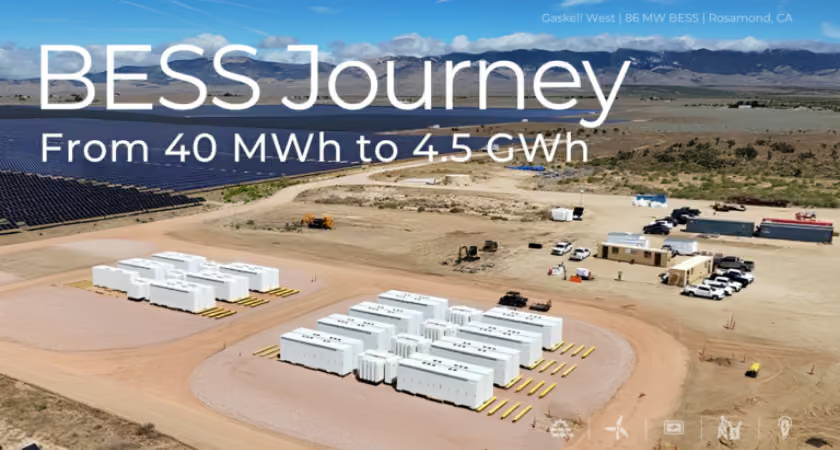
BEI Construction has expanded its utility-scale battery energy storage portfolio to more than 4.5 gigawatt-hours of capacity since entering the market in 2021, highlighting the growing construction demand for energy storage infrastructure as utilities and developers add battery systems to support grid reliability and renewable power.
The contractor's portfolio now represents nearly 1,450 battery enclosures across the Western United States, ranging from smaller behind-the-meter installations to large utility-scale facilities.
BEI entered the utility-scale battery energy storage market with a 10-megawatt/40-megawatt-hour project. Since then, its work has expanded across utility-scale, commercial, health care, education and public-sector applications.
One major project is the Reid Gardner Battery Energy Storage System in Moapa, Nevada. Developed in partnership with Energy Vault for NV Energy, the facility provides 220 MW/440 MWh of storage through 208 battery enclosures.
The project was constructed at the former Reid Gardner coal-fired generating station, incorporating the site's existing electrical substation into the new energy storage infrastructure. The redevelopment demonstrates how former power-generation sites can be adapted for emerging grid technologies while retaining portions of existing electrical infrastructure.
California's battery storage market provides a broader indication of the construction opportunity. The state's installed battery capacity recently surpassed 21 GW, up from less than 700 MW in 2019. The rapid expansion has increased demand for electrical construction, civil work, substations, interconnection infrastructure and specialized commissioning capabilities.
The expansion of battery energy storage is creating new requirements for contractors working across electrical, civil and renewable-energy construction. Larger projects require coordination among developers, utilities, equipment manufacturers, engineers and specialty contractors, while interconnection requirements can add complexity to project schedules and procurement.
Battery storage facilities also require carefully coordinated electrical and control systems, site infrastructure and safety measures. As project sizes increase, contractors with experience managing large numbers of battery enclosures and integrating storage facilities with existing grid infrastructure can play an important role in project delivery.
For owners and developers, the growth of BESS construction also increases the importance of early planning around equipment procurement, grid interconnection, site selection and construction sequencing. Battery systems must be integrated into broader power infrastructure rather than treated as standalone equipment installations.
BEI's growth from a 40 MWh project to a portfolio exceeding 4.5 GWh illustrates how quickly energy storage construction has developed into a significant segment of the renewable-energy market.
For construction owners and contractors, continued BESS deployment could create opportunities across electrical infrastructure, substations, underground utilities, civil construction and commissioning. The market also underscores the value of specialized workforce capabilities as battery projects become larger and more technically complex.
The continued expansion of storage capacity will depend on utility investment, renewable-energy deployment, transmission and interconnection requirements, project economics and the ability of the construction industry to scale specialized delivery capabilities.
Source: Bei Construction.