For renewable energy developers and contractors, access to transmission and interconnection capacity can determine how quickly new generation projects move from development to operation. The Gibson City Solar Project in Illinois demonstrates an approach that uses existing electrical infrastructure while combining automation and site-sensitive construction methods. Burns & McDonnell served as the engineer-procure-construct contractor for the 346-MW DC facility developed by Earthrise Energy.
The Gibson City Solar Project achieved commercial operation by connecting through the existing switchyard serving an adjacent natural gas-fired peaking facility. The approach allowed the solar installation to use available interconnection capacity rather than requiring a separate new grid connection.
The project spans approximately 1,700 acres in McLean and Ford counties and is expected to produce enough electricity to serve about 46,000 homes.
Burns & McDonnell provided engineering, procurement and construction services. Procurement included solar trackers, piles, cabling, inverters and electrical balance-of-plant equipment.
The project includes a 34.5/138-kilovolt collector substation with two transformers and a generation interconnection line connecting to a new line position within the existing Gibson City energy center substation.
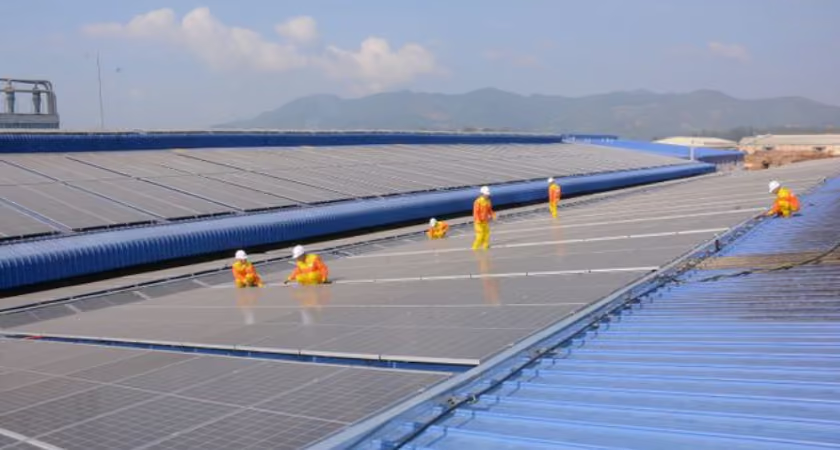
AZCO, a Burns & McDonnell construction subsidiary, performed portions of the underground electrical work, pile installation, tracker installation and solar module installation. The project was constructed with union labor under the National Maintenance Agreement.
The project also incorporated construction robotics for solar module installation. AI and robotic equipment supplied by Gritt was used to lift and position a portion of the modules, reducing repetitive manual handling during installation.
Terrain-following tracker technology from NextPower allowed the solar array to follow existing ground contours. The approach limited grading to fewer than 40,000 cubic yards and reduced grading requirements by as much as 90% compared with conventional utility-scale solar construction.
The reduced earthwork helped limit landscape disturbance, erosion exposure and reseeding requirements. A native seed mix was also established before major site mobilization.
Burns & McDonnell designed and commissioned the project's supervisory control and data acquisition system to coordinate operations associated with multiple power purchase agreements.
The Gibson City project highlights two construction considerations for utility-scale renewable projects: access to existing electrical infrastructure and control of site-development requirements. Reusing available interconnection capacity can reduce the need for additional grid infrastructure, while terrain-sensitive construction can reduce earthwork on large solar sites.
For owners and EPC contractors, the project also illustrates the growing integration of robotics and AI into repetitive solar construction activities, alongside conventional electrical, civil and structural installation work.
Source: Burns & McDonnell.