Utility-scale solar construction is creating demand for methods that can handle repetitive installation work while maintaining safety and project predictability. Burns & McDonnell and Gritt are evaluating AI-powered robotic systems that can support construction crews on large solar projects.
The companies have collaborated over the past year to assess robotic solar installation technology in active construction environments. Testing has taken place at multiple utility-scale solar sites, allowing the systems to operate under outdoor conditions rather than controlled factory settings.
Gritt develops robotic systems that attach to standard construction equipment. Its technology can be used for tasks including solar-array placement and assembly, concrete placement and rebar installation.
The systems are designed to account for changing terrain, weather and other field conditions. Data gathered during project deployments can also be used to improve how the technology performs in different construction environments.
The partnership combines Burns & McDonnell's engineering, procurement and construction capabilities with Gritt's robotics and AI technology.
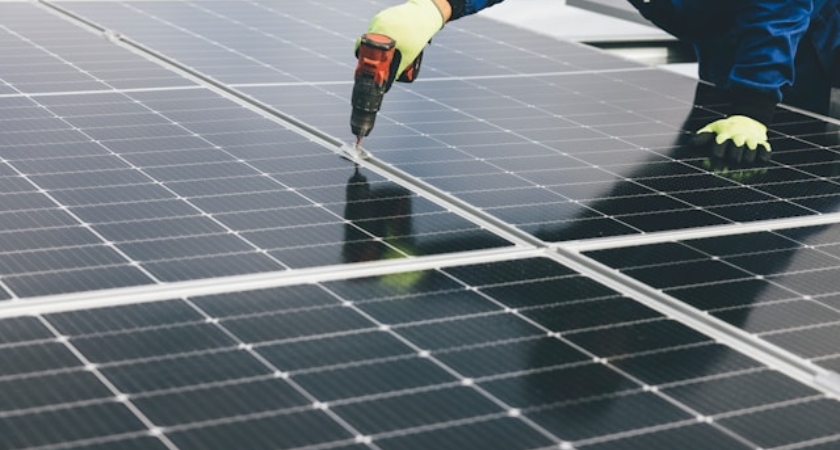
For solar contractors, repetitive module handling and installation can require substantial manual labor across large project sites. Robotic assistance could allow crews to spend more time on activities requiring direct trade expertise while using equipment to support physically demanding tasks.
The approach also relies on equipment already familiar to construction personnel, potentially reducing the need for entirely new machinery as the technology is introduced into project workflows.
Solar construction is becoming an early application area for physical AI and robotics as developers and contractors work on increasingly large energy infrastructure projects. Field deployment provides opportunities to evaluate technology against conditions such as uneven terrain, weather changes, site logistics and varying installation sequences.
For construction owners and EPC contractors, the Burns & McDonnell and Gritt partnership highlights the growing use of robotics as a workforce-support tool rather than a replacement for skilled construction personnel. The technology is being evaluated within existing construction operations, with the companies also considering applications beyond solar infrastructure.
Source: Burns & McDonnell.