Private schools across the country are increasingly investing in athletic and wellness infrastructure as part of broader campus modernization efforts, and a new project in Chattanooga reflects that trend.
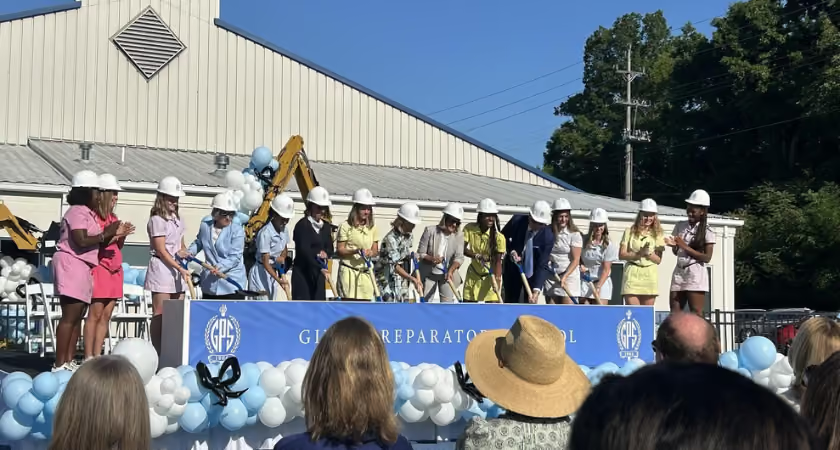
Girls Preparatory School has started construction on a significant renovation and expansion of its existing athletics complex, a project intended to enhance student wellness, athletic performance and campus connectivity while extending the useful life of existing facilities.
The initiative centers on the redevelopment of a 35,000-square-foot tennis center located on the school's lower campus. Once completed, the facility will serve as a multipurpose fieldhouse supporting athletics, physical education and student wellness programs while continuing to accommodate indoor tennis activities.
Hoar Construction is overseeing the project as general contractor, with completion targeted for spring 2027.
Rather than pursuing a completely new facility, the school elected to repurpose and modernize existing infrastructure. The project includes the creation of dedicated strength and conditioning spaces, performance and recovery areas, gathering and meeting rooms, student-focused amenities and upgraded team facilities. Exterior improvements will include landscaping enhancements, pedestrian circulation upgrades and stronger connections between different areas of the campus.
From a construction perspective, the project demonstrates how educational institutions are increasingly leveraging technology during renovation planning. Prior to the start of construction, project teams conducted a comprehensive digital scan of the facility to document existing conditions and support design coordination. The information is being used to optimize space utilization and reduce potential construction conflicts during execution.
Maintaining campus operations throughout construction is also a key component of the delivery strategy. Outdoor tennis facilities will remain operational, while project teams coordinate closely with school administrators to minimize disruptions and maintain safety for students, faculty and visitors.
For contractors and facility owners, renovation projects such as this often present unique challenges compared with new construction. Existing building conditions, active-site logistics and phased construction requirements demand detailed planning and strong communication among stakeholders.
The project also reflects continued investment in educational facilities nationwide. Schools are increasingly prioritizing athletic, health and wellness spaces as institutions compete to attract and retain students while supporting broader educational and extracurricular objectives.
For construction owners, the redevelopment offers an example of how adaptive reuse and targeted modernization can extend facility value while avoiding the costs and land requirements associated with entirely new buildings. The approach can also accelerate project delivery and improve return on investment by leveraging existing structures.
As educational institutions continue evaluating long-term capital improvement plans, projects that combine renovation, technology-enabled planning and operational continuity are becoming an increasingly common strategy for enhancing campus environments while managing costs and construction risks.
Source: Hoar Construction.