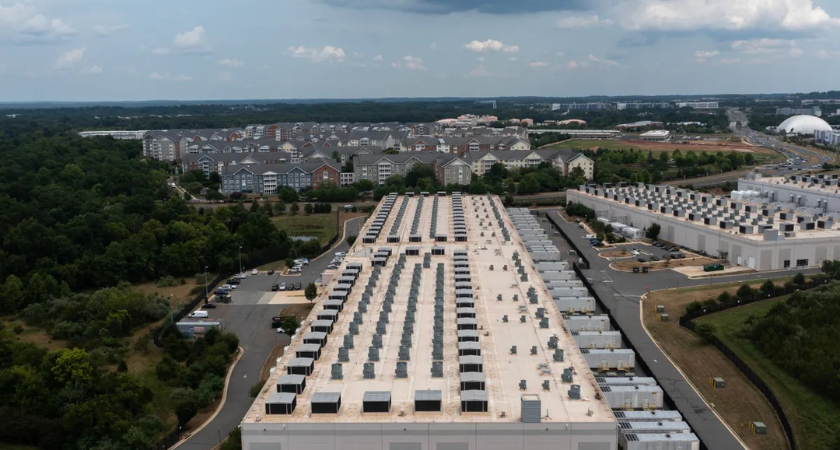
Local governments across the U.S. are facing increasing pressure to regulate the rapid expansion of data centers, but experts warn that cities may not have the authority to fully control where and how these facilities are built.
.jpg)
A recent referendum in Port Washington highlights the shifting political landscape. Voters approved a measure requiring public approval before city leaders can grant tax incentives for large-scale developments, including data centers. The vote reflects growing community concerns about the environmental and infrastructure impacts of these energy-intensive facilities.
With more than 4,000 data centers currently operating nationwide and roughly 3,000 more planned or under construction, tensions are rising between economic development goals and local opposition.
Communities are increasingly voicing concerns about the scale and impact of data center developments, particularly in regions experiencing rapid growth.
“Clearly, the public has turned against data centers as the environmental costs and impacts of them become better understood,” said Sheila Foster, a professor at the Columbia Climate School.
The referendum in Port Washington was driven in part by opposition to a proposed $8 billion data center campus. Advocacy group Great Lakes Neighbors United argued that the project would consume significant electricity and water resources, raising concerns about long-term sustainability.
Similar actions are unfolding elsewhere. Lawmakers in Maine recently approved the nation’s first statewide moratorium on data center construction, while a bipartisan group of governors has called on PJM Interconnection to require developers to bear the full cost of their impact on the power grid.
In Virginia — home to one of the largest concentrations of data centers in the world — officials continue to debate how to balance economic growth with affordability and infrastructure demands.
Despite rising public opposition, cities often face legal constraints that limit their ability to restrict data center development.
In some states, local governments cannot outright ban data centers without state approval, while others provide broader authority. This patchwork regulatory environment creates uncertainty for both municipalities and developers.
“Are you creating even more problems by not being prescriptive enough and thinking, ‘Oh, we’re wiping our hands clean of this issue,’ but not thinking five years ahead?” said Ishyan Veluppillai, an analyst tracking data center policy.
Experts caution that blunt policy tools such as moratoriums and referendums may lead to unintended consequences, including legal challenges and reduced investment.
Industry groups have also raised concerns. “A local moratorium on data centers would discourage further investment… from the data center industry and other advanced industries that depend on predictability,” said Brad Tietz of the Data Center Coalition.
Rather than outright bans, experts suggest that cities should focus on structuring agreements that ensure communities benefit from data center development while minimizing risks.
.jpg)
Community benefit agreements, for example, can require developers to contribute to local infrastructure, schools and public services. Cities can also implement policies such as large-load tariffs to ensure data centers cover the energy costs they generate.
Early engagement with residents is critical, Foster said, recommending a transparent process that allows communities to fully understand both the benefits and drawbacks of proposed projects.
“There are good examples of how cities or other political subdivisions can really work with data centers in a constructive manner,” Veluppillai said, noting that collaboration can still enable growth while addressing public concerns.
As demand for digital infrastructure continues to surge, the balance between local control, economic opportunity and environmental impact will remain a central challenge for policymakers and construction stakeholders alike.
Originally reported by Robyn Griggs Lawrence, Editor in Construction Dive.