Modernizing operating rail infrastructure requires precise coordination of demolition, structural work and equipment deliveries within limited access windows. Clark Construction's civil team completed a major phase of upgrades at Bethesda and Grosvenor-Strathmore Metro stations during a 56-day shutdown in summer 2026.
The work was delivered for WMATA and was reported as completed on schedule and within budget. Both stations serve approximately 18,000 passengers daily, making the improvements important to the region's public transportation network.
Construction Dive+1
At Bethesda station, crews advanced construction of a new mezzanine designed to connect the existing Red Line with the Maryland Transit Administration's future Purple Line light rail service. The work followed a 44-hour demolition operation and included structural steel installation, fireproofing and concrete placement.
At Grosvenor-Strathmore, Clark carried out the station's first major platform overhaul since its 1984 opening. Crews removed more than 18,000 square feet of platform tile and concrete topping slab, then replaced approximately 1,200 linear feet of track-edge components along the 600-foot platform. Remote-controlled demolition equipment helped teams work within the station's restricted areas.
Clark Construction+1
Restricted access and differences between historical drawings and actual site conditions added complexity to the work. Crews coordinated with WMATA, architects and structural engineers to resolve field discrepancies and adjust structural connections without disrupting the schedule.
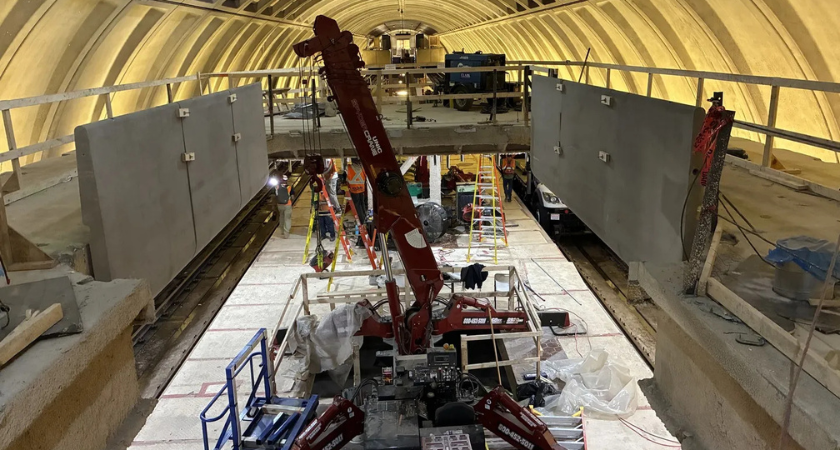
With rail power disconnected, equipment and materials were transported using diesel locomotives and flatbed rail cars. Compact spider cranes operated inside Bethesda station, while concrete placement required a 500-foot pipeline routed through access tunnels because a direct vertical pumping route was unavailable.
At Grosvenor-Strathmore, concrete pours were scheduled during early morning hours to manage high summer temperatures. These methods helped crews work within the tight shutdown period.
Construction Dive+1
The upgrades demonstrate the planning and technical coordination required to modernise ageing transit facilities while limiting service disruptions. For rail contractors, the work highlights the importance of specialised demolition equipment, flexible material logistics, accurate field verification and carefully scheduled concrete operations. Grosvenor-Strathmore's work is complete, while Bethesda's mezzanine project continues toward its anticipated 2027 completion.
Source: Clark Construction.