Construction waste management is becoming an increasingly important component of project delivery as owners pursue green-building certifications and seek to reduce material costs. Clark Construction reported more than 108,000 tons of waste recycled across 17 projects submitted for sustainability certification during 2025, with several projects exceeding their applicable LEED diversion requirements.
Clark's 2025 sustainability portfolio included 17 projects submitted for certification. Across the portfolio, more than 108,000 tons of construction waste were recycled.
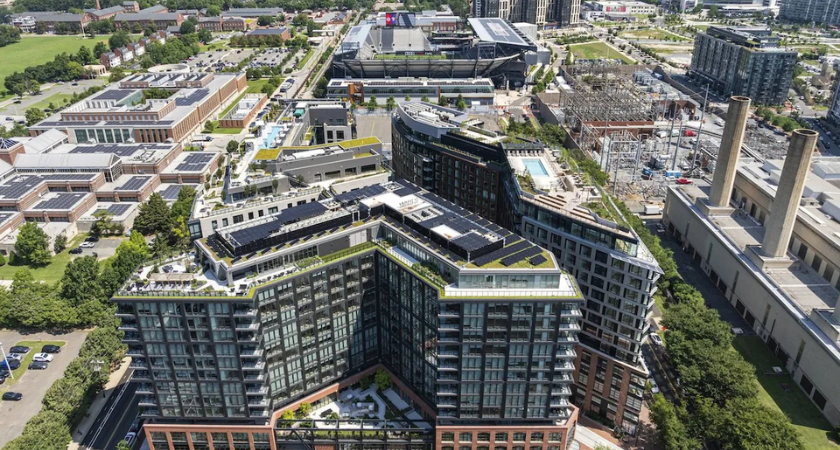
The company reported exceeding the waste-diversion thresholds required for the applicable LEED points on nearly every project. At The Stacks in Washington, D.C., each of the development's three buildings required a 75% diversion rate to earn two points toward LEED Gold certification.
Through project-level waste management, all three buildings reached a reported diversion rate of 94.85%, significantly exceeding the applicable threshold.
Clark is also incorporating direct material reuse into projects. At Western State Hospital in Lakewood, Washington, some timber columns are being manufactured from trees harvested on the site during demolition.
Material reuse is also being applied to projects outside formal LEED certification efforts. One approach involves crushing concrete removed during demolition and using the recycled material as sub-base material on the same project.
Reusing materials on site can reduce the volume of waste requiring disposal while limiting the need to purchase and transport replacement materials.
Clark developed the Wastewise application to manage the large volume of information generated through construction waste diversion. Haulers provide weight tickets for individual loads, creating project-level data that teams can use for LEED documentation and other owner-specific sustainability requirements.
The company expects waste-diversion requirements to become increasingly important as the U.S. Green Building Council moves from LEED v4 toward LEED v5.
Construction waste diversion affects both sustainability compliance and project resource management. Recycling and reusing materials can reduce landfill volumes while potentially lowering material procurement and transportation requirements.
For owners and contractors pursuing green-building certifications, systematic tracking of waste quantities can also simplify documentation and provide measurable performance data. The combination of material reuse, recycling and digital tracking gives project teams multiple ways to incorporate waste management into construction planning and delivery.
Source: Clark Construction.