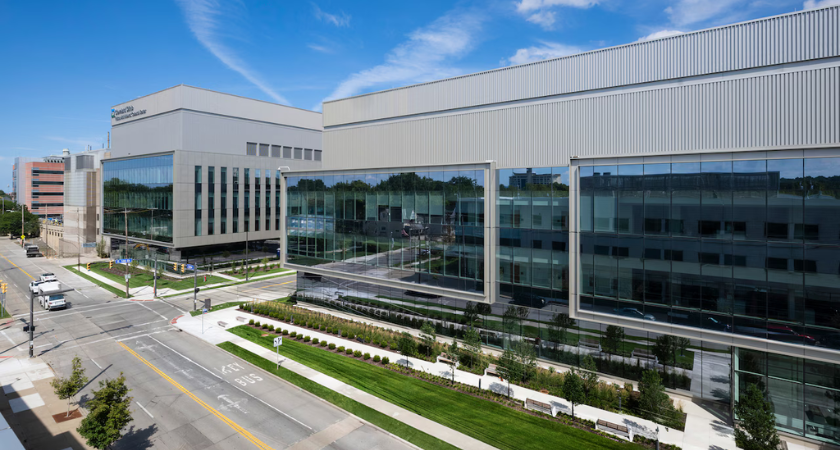
Cleveland Clinic has opened two new research buildings on its main campus, marking a major expansion of its biomedical research infrastructure and one of the largest research investments in the health system’s history.
The facilities, located near East 100th Street and Cedar Avenue, combine for approximately 300,000 square feet and include nearly 30 laboratories and core service areas. More than 700 employees are already working in the buildings.
The development forms part of Cleveland’s broader Innovation District, a public-private initiative involving the state of Ohio, JobsOhio and local health care and higher education institutions. The initiative is intended to support research, education, job creation and commercialization.
The project incorporated modular construction to help reduce construction time and costs. Forty-five modular laboratories were manufactured in Euclid, Ohio, before being transported to the Cleveland Clinic campus and installed with cranes.
Each module was approximately the size of a semi-trailer, allowing specialized laboratory components to be constructed away from the active campus site before being integrated into the new buildings.
The northeast research building contains about 170,000 square feet and includes specialized laboratories and research programs. The northwest building provides approximately 120,000 square feet of additional research space and advanced technological capabilities.
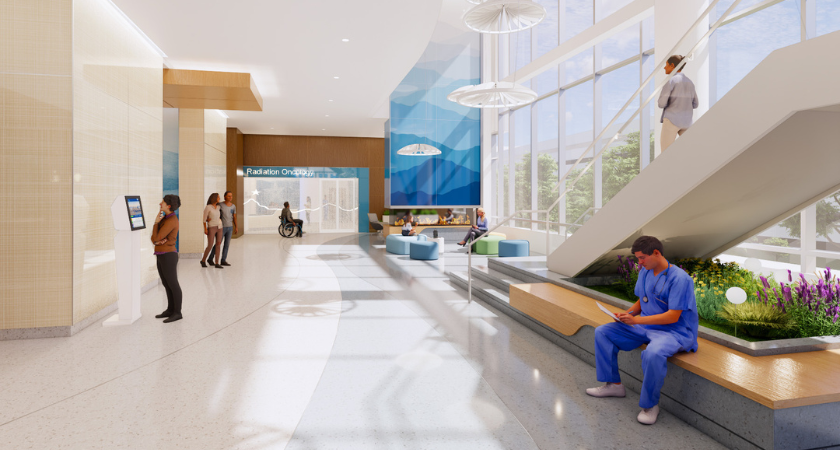
The facilities also include collaborative areas, classrooms, offices and a café intended to encourage interaction among researchers and other staff.
Research conducted in the buildings includes work on inflammation and chronic diseases such as arthritis, inflammatory bowel disease, asthma and sepsis. Researchers are also studying beneficial bacteria, the immune system and relationships between diet and the human microbiome.
The buildings contain biosafety level two and level three laboratories for research involving infectious agents. These spaces incorporate specialized safety and containment systems required for work involving moderate- and higher-risk biological materials.
Employees were relocated from older research facilities as part of the expansion. Cleveland Clinic also expects to hire between 50 and 100 additional scientists for its growing research operations.
The buildings received support from state investment through the Cleveland Innovation District, along with philanthropic contributions. Since the district launched in 2021, Cleveland Clinic said it has created nearly 2,000 jobs connected to the initiative.
The research expansion is expected to continue with the planned opening of the health system’s $1.1 billion Neurological Institute in 2027. The project will become the largest building on Cleveland Clinic’s main campus.
The new research buildings increase Cleveland Clinic’s laboratory and research capacity while supporting broader investment in Ohio’s biomedical sector. The use of modular laboratory construction also demonstrates how off-site fabrication can be incorporated into complex health care and research developments to manage construction schedules and specialized facility requirements.
Source: Cleveland.