Construction is set to begin on the long-awaited Colorado River Trail Gap project along Highway 128 near Moab, marking a major step toward improving safety and connectivity for cyclists and recreation users in the region.
.webp)
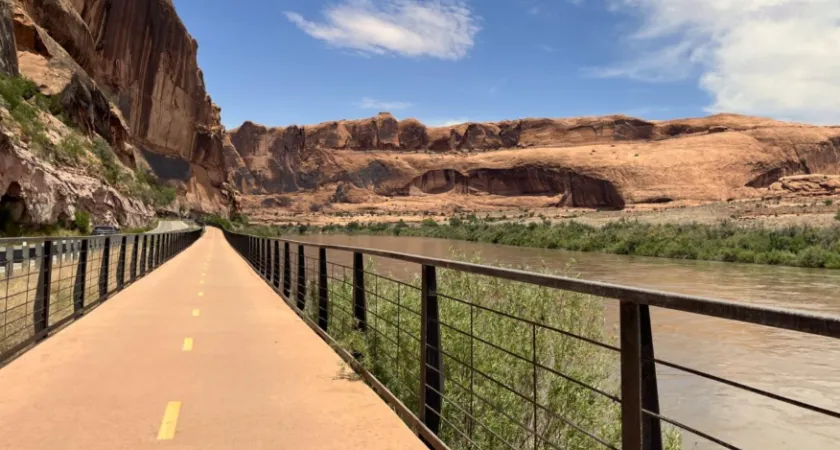
The project will extend the Colorado River Pathway by approximately 0.7 miles, closing a long-standing gap that currently forces cyclists to ride along a narrow section of highway before reconnecting with the trail near the Grandstaff Canyon Trailhead.
Officials from the Utah Department of Transportation said construction activities will begin with traffic control measures starting March 9, bringing lane restrictions and travel delays that could last for much of the project timeline.
During construction, Highway 128 will be reduced to one lane with alternating traffic signals, which could remain in place for as long as 300 days, potentially extending into early 2027.
According to Kevin Kitchen, drivers traveling through the area should prepare for delays as crews begin work along the corridor.
Drivers should expect delays of about 15 minutes from 6 a.m. to 10 p.m. and about 30 minutes from 10 p.m. to 6 a.m., according to Kitchen, though actual signal timing may be shorter depending on work zone activity and traffic moving through the area.
To protect motorists and workers, a physical barrier will separate traffic from construction zones, with designated openings allowing equipment to move safely in and out of the work area.
The Bureau of Land Management also announced that Grandstaff Campground will close from March 9 through Oct. 31 to allow contractors to use the site as a staging area.
However, access to nearby recreation destinations—including the Grandstaff Canyon Trailhead, the Porcupine Rim parking area and local restroom facilities—will remain open during the project.
The construction effort is designed to eliminate a section of trail that has long created safety concerns for cyclists.
Currently, riders traveling along the Colorado River Pathway must leave the trail and share a narrow portion of Highway 128 with vehicle traffic for about half a mile before the path resumes. The roadway runs along a winding stretch beside the Colorado River, where the shoulder narrows significantly.
These conditions often force drivers to cross the double yellow line in order to safely pass cyclists, creating potential hazards for both motorists and riders.
Local officials and recreation advocates have discussed closing this gap for many years as cycling activity in the area has increased.
State recreation data shows that roughly 30,000 cyclists travel the Highway 128 corridor annually, highlighting the importance of improving safety and accessibility along the route.
The $12.5 million project is funded primarily through the Utah Trails Network, a statewide initiative launched in 2023 that allocates approximately $45 million annually to support trail development and outdoor recreation infrastructure.
An additional $2.5 million was provided through an Outdoor Recreation Grant to help finance the project.
Kitchen said the Colorado River Trail Gap project represents the first trail project funded through the Utah Trails Network program, marking an important milestone for the statewide initiative.
“It’s a big deal from that perspective,” Kitchen said. “We’re really excited to close the gap, which I know has been a long time coming for locals, especially.”
Once completed, the new trail segment will allow cyclists and pedestrians to travel the Colorado River corridor without leaving the multiuse pathway, significantly improving safety.
The connection will also provide a smoother exit for riders finishing the popular Whole Enchilada mountain bike route, one of the region’s most well-known cycling experiences.
Local tourism officials say improvements to trail connectivity can enhance the outdoor recreation economy by making the area more accessible and appealing to visitors.
The project is expected to be completed by February 2027, when the final trail segment will officially close one of the last remaining gaps along the scenic Colorado River Pathway corridor.
Originally reported by Andrew Christiansen in Moab Times.