The November 2025 edition of the Construction Brief highlights a rapidly evolving market shaped by global trade shifts, landmark legal rulings and expanding liabilities for developers, insurers and construction stakeholders. From the impact of US-imposed trade tariffs to the growing use of Building Liability Orders (BLOs), the sector is preparing for new cost exposures, supply-chain disruptions and heightened compliance scrutiny.
The construction industry continues to feel the effects of the US administration’s sweeping trade tariffs introduced on “Liberation Day” this April, when a 10% baseline tariff was placed on most imported goods. Although the UK and US later agreed to reduce certain tariffs — including lowering the 25% levy on automobiles and parts to 10% — agreement on steel and aluminium duties remains elusive, leaving the 25% rate in place.
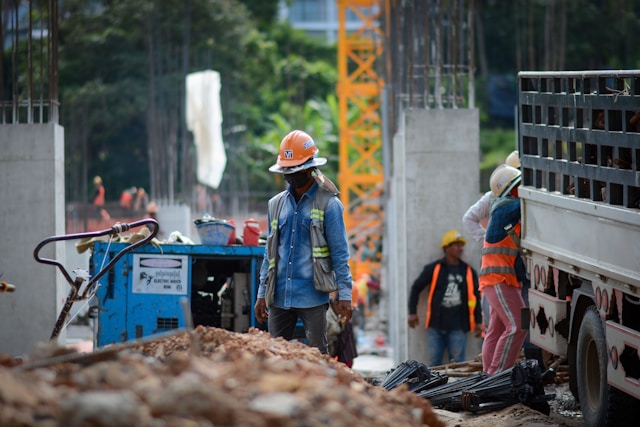
The ripple effects are broad: higher import prices are pushing material costs upward, lengthening project timelines and complicating reinstatement work. Knock-on inflation is expected, with some traditionally lower-cost exporters adjusting their prices upward in response to the tightened global market.
As the report notes, US importers “are incurring higher costs, which will likely lead to price increases in the materials in construction projects.” This raises significant questions for insurers, who must determine whether inflation caused by tariffs is considered a straightforward part of the “cost of repair” or if exclusions like “changes in law” or “trade restriction” clauses apply.
Brokers are already adjusting, introducing endorsements offering higher limits for materials affected by tariff surges. At the same time, insurers remain cautious about the long-term implications—especially as the US Supreme Court reviews whether the administration exceeded its authority under the International Emergency Economic Powers Act. Depending on the ruling, up to US$90 billion in collected duties may be on the line.
Until the Court provides clarity, insurers, contractors and developers must remain vigilant to material inflation, supply-chain delays and heightened exposure across project portfolios.
Building Liability Orders, created under the Building Safety Act 2022, are emerging as one of the most consequential legal mechanisms in modern construction regulation. A BLO allows the court to pierce the corporate veil and extend liability for building defects beyond an SPV to associated companies with greater financial strength.
As the First-tier Tribunal previously stated in the Triathlon Homes case, the association rules ensure that “a wealthy parent company… cannot evade responsibility for meeting the cost of remedying the relevant defects by hiding behind the separate personality of the development company.”
In March 2025, the first major BLO ruling in 381 Southwark Park Road RTM Company Ltd v Click St Andrews Ltd & Anor set a new precedent. Justice Jefford granted a BLO against a grandparent company on the basis that the SPV developer was thinly capitalised and could not meet remediation costs. She found it “just and equitable” to extend liability, ruling that the associated company must cover the work—even though its own financial health was uncertain.
This decision signals a new era for developers: SPVs can no longer be relied upon to isolate liability, and parent companies may face significantly greater exposure. Insurers, similarly, may experience heightened claims under CAR, professional indemnity and public liability policies. In response, some insurers have begun adding BLO exclusions, echoing the fire safety exclusions that emerged in the wake of post-Grenfell reforms.
.jpg)
A recent Upper Tribunal ruling in Almacantar Centre Point Nominee Ltd v De Valk & Others [16.09.25] has strengthened protections for leaseholders facing the cost of cladding remediation.
Paragraph 8 of Schedule 8 of the Building Safety Act provides that:
“No service charge is payable under a qualifying lease in respect of cladding remediation.”
The Tribunal reaffirmed this position after the landlord attempted to argue that the Act’s protections should be limited to post-1992 unsafe cladding installations or interpreted narrowly under the definition of “relevant defects.” The Tribunal rejected these arguments, siding with leaseholders and affirming Parliament’s intent for broad protections.
The structure of Centre Point House — a 1960s building later converted into flats — was deemed an unsafe cladding system, and thus fully within the definition of “cladding remediation.” The court made clear that the definition must be read as written, not constrained by assumptions about legislative intent.
With permission granted for appeal to the Court of Appeal, more judicial scrutiny is expected, but the ruling is already seen as a strong affirmation of leaseholder protections.
The November 2025 Construction Brief underscores a construction industry in transition. Global trade policy continues to reshape material economics and project planning, while new legal tools such as BLOs expand the landscape of liability. At the same time, the Building Safety Act is solidifying its role as a key protection mechanism for leaseholders, with courts demonstrating a willingness to interpret its provisions broadly.
Stakeholders across the sector—from developers to insurers and contractors—face an environment where accountability is increasingly transparent, inflation risks are more complex, and compliance requires deeper foresight than ever before.
Originally reported by Kennedy's Law.