Across construction sites in cities like Mexico City, Guadalajara and Puerto Vallarta, a quiet transformation is underway. Alongside the usual sounds of construction, workers are now gathering around notebooks, tablets and whiteboards—reclaiming the education many left behind years ago.
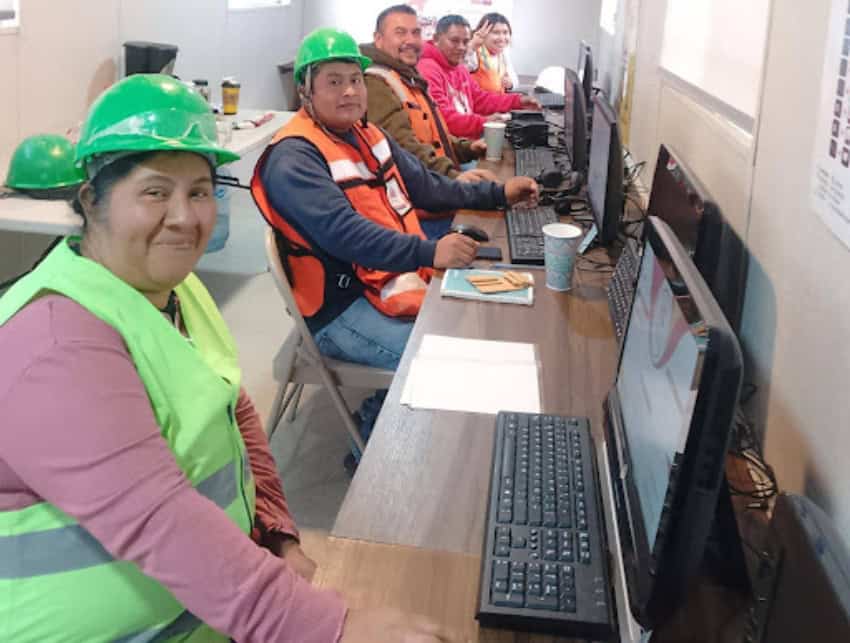
At the center of this effort is Fundación Construyendo y Creciendo, a nonprofit that has reimagined how education can reach working adults. Instead of requiring workers to attend traditional classrooms, the organization brings fully equipped learning spaces directly to construction sites, allowing laborers to study before shifts, during breaks or after work.
The approach is simple but powerful: eliminate the trade-off between earning a living and continuing education.
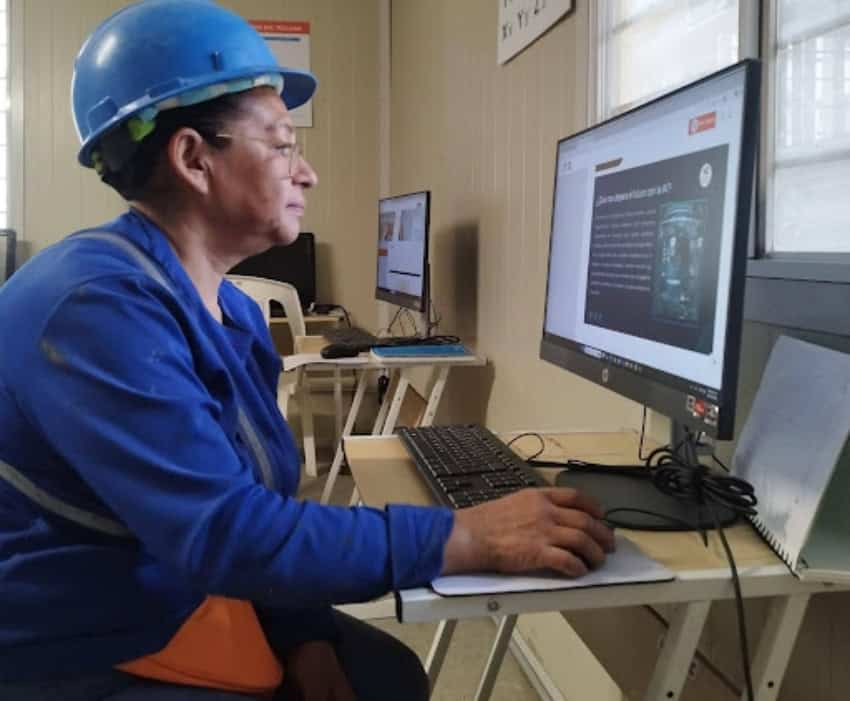
The program offers primary and secondary education, digital literacy training and personal development courses—all tailored to the realities of construction work. Lessons often incorporate real-world applications, such as measurements used on-site or safety-related reading materials.
“In Mexico, a large portion of construction workers have not completed their basic education,” said Roxana Fabris, president of Fundación Construyendo y Creciendo. “Many of them began working at a young age to support their families, which prevented them from finishing elementary or middle school. The national average level of schooling in Mexico is just over nine years, while among construction workers, it is only about five years. In fact, one out of every 10 construction workers is still unable to read or write.”
“Despite being one of the industries that contributes the most to the country’s economic development, the construction sector has the second-highest level of educational lag in the Mexican economy, only behind agriculture and fishing,” explained Fabris. “That is why this program aims to bring educational opportunities directly to job sites.”
By embedding education into the work environment, the initiative addresses long-standing barriers such as time constraints, transportation issues and financial limitations.
Construction firms play a crucial role in enabling the program’s success by providing space and flexibility for workers to attend classes.
“Construction companies play a fundamental role. They provide the space within construction sites where the classrooms can be installed and allow workers to attend classes. They also participate in activities such as inaugurations and graduation ceremonies, help strengthen the program within their projects, and make a donation that helps keep the classroom operating,” Fabris said.
“Once the space is ready, we equip it with furniture, computers, internet access and all the materials needed for the educational programs, including books, school supplies and online learning platforms,” she added.
These partnerships reflect a growing recognition within the construction sector that workforce development goes beyond technical skills—it includes education, confidence and long-term career growth.
Running classrooms on active job sites comes with logistical hurdles, particularly in remote or constantly shifting environments.
“One of the main logistical challenges is ensuring internet connectivity, since in some cases the classrooms are located in remote or hard-to-access areas within the construction site,” Fabris noted. “Even so, we do our best to ensure these spaces have everything workers need to study comfortably.”
Despite these challenges, the program has evolved through adaptable solutions such as offline learning modules, portable equipment and community volunteers who help maintain learning spaces.
The initiative goes beyond literacy and numeracy by emphasizing personal growth and mental well-being.
“We offer a variety of courses and training programs that support both personal and professional development, and a key component of our approach is our Human Development program,” said Fabris. “It provides students with tools that help them make the most of their learning experience and include topics such as self-esteem, teamwork, leadership and stress management.”
“The goal is not only to help them become better workers and students, but also better individuals, better parents, and stronger members of their communities,” Fabris emphasized.
This holistic approach has led to noticeable improvements in confidence and workplace engagement among participants.
Since its launch, the foundation has delivered tens of thousands of educational services, with more than 26,000 graduates completing programs. Around 60% of participants successfully finish their studies, despite frequent job-site relocations and demanding schedules.
“Our process begins with an initial conversation in which we assess the person’s educational background, their level of digital literacy, and their learning interests,” Fabris explained. “If someone cannot read or write, they begin with a literacy program and move on to elementary, middle and high school from there.”
One example highlighted by the foundation illustrates the program’s transformative impact:
“One of our students is Sebastián, who joined the classroom at the Real Granada site while facing serious challenges with reading,” noted Fabris. “Although he knew how to write, his schooling had stopped in the fourth grade. With guidance, patience and consistent effort, he managed to complete his elementary education and later his middle school studies as well.”
“He decided to continue with an online high school program filled with challenges and difficult circumstances that tested his determination. With the support of his advisor and the close guidance of the team, he eventually reached his goal. Today, we proudly celebrate the moment he received his high school certificate. For him, this achievement represents much more than a document; it is proof that perseverance, support and confidence can truly transform lives.”
Returning to education after years away can be intimidating, but many workers quickly rediscover their abilities and gain confidence.
“Many of them feel extremely proud and happy to return to their studies. At first, there may be some nervousness or insecurity, but over time, they begin to regain confidence in themselves. Going back to school often becomes a powerful motivation for building a better future for themselves and their families.”
These changes often extend beyond the classroom, with workers becoming more engaged at work and more optimistic about their futures.
While the program has demonstrated strong outcomes, scaling remains dependent on consistent funding and broader institutional support.
“As a nonprofit organization, we depend heavily on the support of partners and donors, and sometimes companies do not initially see programs like this as a priority investment, so we continually work to raise awareness about the positive impact education has on workers’ lives and on society as a whole,” Fabris said.
Looking ahead, the foundation aims to expand into additional industries and regions while strengthening its operational capacity.
“Our vision is to reach all construction workers who face educational gaps and provide them with the tools they need to improve their human development indicators. Not only for their own benefit, but also for their families and communities. At the same time, we aim to bring them closer to an increasingly digital world, helping close the digital divide so that, as the United Nations Sustainable Development Goals state, no one is left behind,” Fabris said.
“We have already begun installing classrooms in other industries where workers face similar educational gaps. To support this vision, we are also strengthening our institutional capacity so that our model can be replicated and scaled. In Mexico, there are still many cities where we could expand. Whenever a construction company wants to support its workers, Fundacion Construyendo y Creciendo will be there,” Fabris added.
Ultimately, the initiative highlights a broader shift in how workforce education can be delivered—flexibly, inclusively and directly within the workplace.
“I would make education more accessible and flexible for working people. Many workers genuinely want to continue studying, but long workdays and limited nearby opportunities often make it difficult. Bringing education closer to workplaces has proven to be one of the most effective ways to reduce those barriers,” Fabris stated.
As industries worldwide grapple with labor shortages and skills gaps, programs like this could serve as a blueprint for integrating education into everyday work environments—ensuring that opportunity grows alongside infrastructure.
Originally reported by Charlotte Smith in Mexicon News Daily.