Growth in the U.S. nonresidential building (NRB) sector appears strong on the surface, but a deeper analysis shows that much of that expansion is being driven by one rapidly growing segment — data center construction.
.webp)
According to new analysis from ConstructConnect, large-scale digital infrastructure projects have become the dominant force behind recent gains in nonresidential construction spending across the United States.
Since 2023, headline figures for nonresidential building construction have suggested steady industry expansion. However, when data center projects are removed from the equation, the broader market appears far less robust.
In fact, analysts estimate that data centers accounted for roughly 42% of total national NRB growth in 2025, highlighting how heavily the sector now relies on digital infrastructure investment.
Demand for cloud computing, artificial intelligence infrastructure and hyperscale data storage facilities has led to a wave of data center development nationwide.
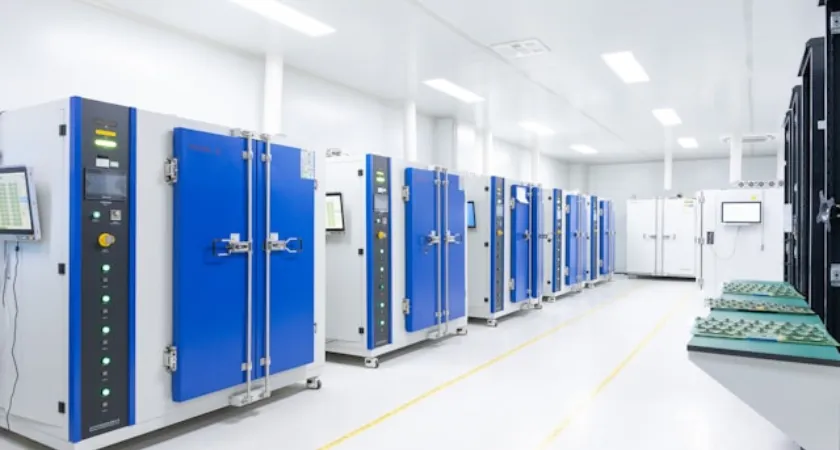
These projects require specialized construction involving high-capacity power systems, advanced cooling infrastructure and secure facilities designed to handle massive computing loads.
As a result, construction firms specializing in electrical systems, mechanical infrastructure and digital building technologies are seeing significant new opportunities.
However, economists warn that this surge in digital infrastructure investment can create the illusion of a broad-based recovery in the construction sector when, in reality, growth is concentrated in a single category.
While office construction data may initially appear stable, a closer look reveals that data centers are classified within the office category, which significantly inflates overall numbers.
When traditional office projects are isolated from the data, the outlook becomes much weaker.
Traditional office construction starts totaled $9.1 billion in 2025, representing the lowest level since at least 2020 and a 36% decline compared with 2024.
Several factors continue to weigh on conventional office development, including reduced tenant demand, rising borrowing costs and long-term workplace changes following the pandemic.
The continued adoption of hybrid and remote work models has reduced the need for new office space in many cities, limiting new project pipelines for developers and contractors.
As a result, many construction firms report a disconnect between national construction statistics and the projects they see locally.
Despite weaknesses in other commercial sectors, data centers are expected to remain a stabilizing force for nonresidential construction in the coming years.
Forecasts from ConstructConnect indicate that data center investment could prevent the NRB sector from contracting in 2026.
Without those projects, analysts estimate the nonresidential building sector would decline by approximately 3.8% next year.
Between 2027 and 2028, growth in cloud computing, artificial intelligence capacity and hyperscale digital facilities is expected to continue fueling construction demand.
In addition to the facilities themselves, the data center ecosystem is also driving construction in related areas such as:
These related projects create opportunities for a wide range of contractors and suppliers.
Industry forecasts suggest that data center construction spending could reach its peak around 2029.
After that point, investment levels may gradually slow as capacity catches up with demand.
By 2030, a potential slowdown in digital infrastructure construction could reveal the extent to which the nonresidential sector has relied on data centers for growth.
This concentration risk highlights the importance of diversification for construction firms that rely heavily on a single project category.
Construction economists say companies should closely analyze the underlying data behind national industry trends.
.avif)
Headline growth figures can mask major differences between construction sectors, meaning firms must carefully evaluate where real opportunities exist.
For many contractors, the near-term strategy may involve pursuing data center projects or related infrastructure work where possible.
However, companies that do not operate in this niche may need to identify other growing construction segments such as healthcare facilities, manufacturing plants or infrastructure projects.
The continued expansion of the digital economy is likely to keep data centers at the center of the nonresidential construction market for the rest of the decade.
But analysts caution that relying too heavily on a single construction category could create long-term volatility for the sector.
Understanding the true composition of construction growth will be essential for firms planning future investments, staffing and project pipelines.
For now, the rapid buildout of digital infrastructure remains one of the most powerful forces shaping the future of the U.S. construction industry.
Originally reported by Michael Guckes, Chief Economist in Construct Connect News.