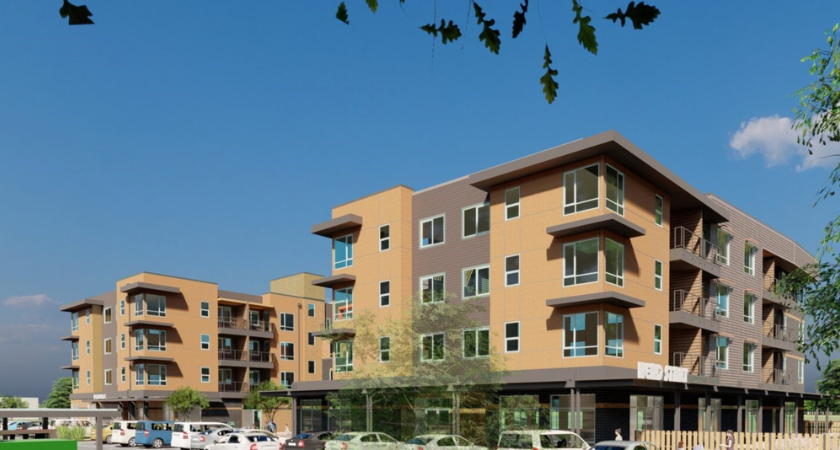
A new affordable multifamily development is moving forward in Westminster, Colorado, after Walker & Dunlop Affordable Housing Equity closed a $16,678,410 equity syndication for Verrbena, a 70-unit community being developed by Maiker Housing Partners. The transaction was structured using a 4% Low Income Housing Tax Credit (LIHTC) new-construction execution, led by Aaron Krasnow, Managing Director of Affordable Housing Equity at Walker & Dunlop.

The project will be located at 2880 West 88th Avenue in Adams County and will offer a mix of 48 one-bedroom and 22 two-bedroom units, with income restrictions ranging from 30% to 70% of Area Median Income (AMI). That income spread is designed to serve a wide cross-section of the affordable housing market — from households with very limited incomes to those in the moderate-income tier who still face affordability pressure in the Denver metro area.
What distinguishes Verrbena from a typical affordable housing development is its neuro-inclusive housing component, which will serve residents with intellectual and developmental disabilities. Such purpose-built accommodations remain uncommon in the affordable new-construction pipeline, and their inclusion signals a broader commitment by Maiker Housing Partners to address housing needs that often go unmet in standard affordability programs.
"Verrbena represents an important addition to the affordable housing pipeline in the Denver metro area, combining long-term affordability with neuro-inclusive housing and supportive services. We're grateful to Maiker Housing Partners for their partnership in delivering a community designed to serve a broad range of residents and housing needs." — Aaron Krasnow, Managing Director of Affordable Housing Equity, Walker & Dunlop
Beyond residential units, Verrbena will include approximately 11,000 square feet of non-residential space. That footprint encompasses roughly 7,000 square feet for a Head Start daycare — serving families within the community and the surrounding neighborhood — and about 4,000 square feet of exterior community space. For construction teams and developers, the mixed-use programming adds planning complexity but also positions the project favorably for community support and long-term occupancy stability.
The development will be part of The Uplands, a large-scale master-planned redevelopment transforming approximately 234 acres of former farmland in Adams County into a mixed-use residential community. Projects of this scale typically phase construction over several years, providing sustained work opportunities for subcontractors and suppliers operating in the northern Denver metro submarket.
For construction owners and developers eyeing the affordable sector, Verrbena is a case study in layered financing. The 4% LIHTC structure — as opposed to the more competitive 9% credit — is generally used for larger or bond-financed transactions, and while it requires additional equity and debt sourcing, it opens the door to projects that might not compete successfully in the 9% allocation cycle. Equity syndication deals of this type also typically involve institutional investors seeking Community Reinvestment Act (CRA) credit, which can affect deal timelines and structuring requirements that contractors and owners should factor into project scheduling.
The Denver metro area's affordable housing gap remains acute, driven by sustained population growth, rising construction costs, and limited land availability near employment centers. Projects like Verrbena — combining AMI diversity, supportive housing, and community services within a master-planned framework — represent the kind of integrated approach that increasingly characterizes publicly supported affordable developments in high-demand Western markets.
Verrbena sits within The Uplands, a 234-acre redevelopment of former farmland. For general contractors and trade partners, master-planned communities of this scale mean phased work pipelines that can span years — reducing the boom-bust cycle of one-off project bidding and allowing crews and equipment to remain mobilized across sequential contracts.
With roughly 22,000 sq ft of non-residential programming alongside 70 residential units, Verrbena is not a standard multifamily build. Daycare facilities, community gathering spaces, and neuro-inclusive housing components each carry distinct design standards, accessibility requirements, and finish specs. Contractors with mixed-use experience and ADA compliance expertise are better positioned to compete for and execute projects like this — and often command stronger pricing as a result.
Tax credit equity transactions involve institutional investors, regulatory compliance milestones, and layered approvals that can stretch preconstruction timelines. Owners and contractors entering the affordable sector need to build schedule buffers for equity close, bond issuance, and agency sign-offs — delays at any one stage can push groundbreaking by months.
The inclusion of housing specifically designed for residents with intellectual and developmental disabilities points to a growing niche in the affordable construction market. These units often require sensory-sensitive design elements, modified unit layouts, and specific common-area configurations. Contractors who develop expertise in this space early will have a differentiated advantage as demand for inclusive housing continues to grow alongside advocacy and funding from state and federal sources.
With the Denver metro area facing a persistent affordability gap driven by population growth and constrained land supply, publicly supported affordable developments are unlikely to slow down. Construction owners who build relationships with mission-driven developers like Maiker Housing Partners — and who understand the compliance demands of LIHTC projects — are positioning themselves for a steady flow of work that market-rate cycles alone cannot provide.
Originally reported by Yield Pro.