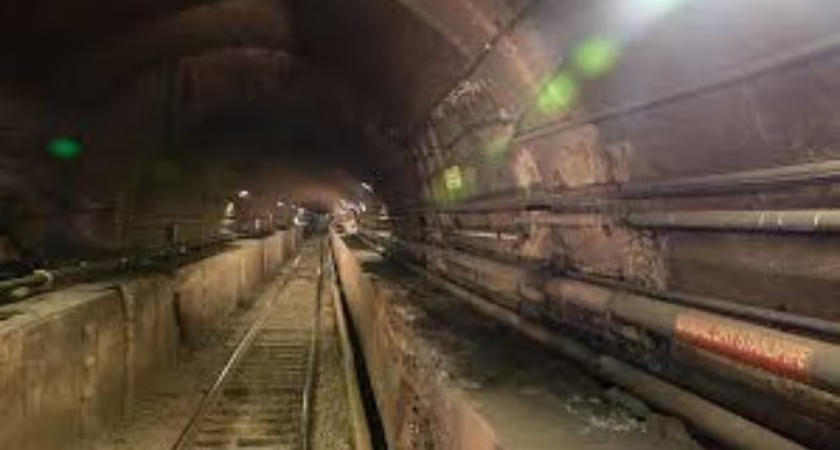
Construction on one of the nation’s most significant infrastructure projects is regaining momentum, as work on the $16 billion Gateway Tunnel moves forward following a temporary federal funding freeze earlier this year.
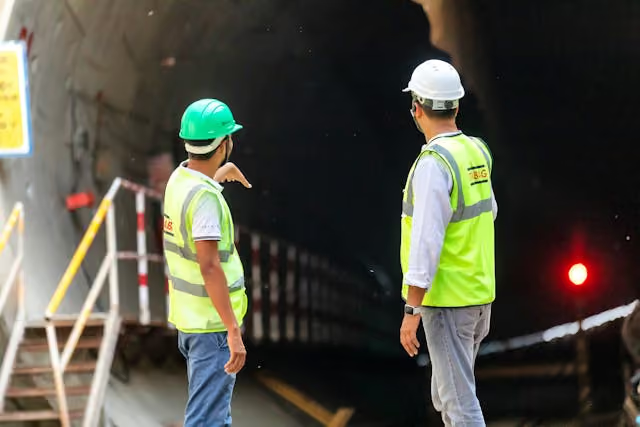
The project, which will construct a new rail tunnel beneath the Hudson River connecting New York City and North Bergen, had stalled in February 2026 due to funding uncertainties. As of April 13, however, activity has resumed, with crews preparing to lower massive tunnel boring machines (TBMs) into position on the New Jersey side.
The Gateway Tunnel is widely viewed as a critical upgrade to the aging rail infrastructure serving the Northeast Corridor, one of the busiest passenger rail lines in the United States.
With funding restored, project teams are now entering a crucial phase of construction. Preparations are underway to deploy twin tunnel boring machines that will excavate the new rail tubes beneath the Hudson River.
These machines, among the largest and most complex pieces of construction equipment in the industry, will be launched from a staging area in North Bergen. Once operational, they will carve out parallel tunnels designed to improve reliability and capacity for passenger rail service between New Jersey and New York.
On the eastern side of the project, work is also advancing at the Hudson Yards site in New York City. The concrete casing that will connect the new tunnels to existing rail infrastructure is now approximately 50% complete, marking a significant milestone for the project’s New York segment.
Together, these developments indicate that the project is transitioning from preparatory work into full-scale construction, a key step after months of uncertainty earlier this year.
Beyond its engineering complexity, the Gateway Tunnel project carries major economic implications for the region. The development is expected to support more than 20,200 jobs, spanning construction, engineering, project management and related industries.
As the largest active infrastructure project in the tri-state area, the tunnel is also generating substantial interest among contractors and subcontractors seeking to participate in various phases of the work. Bidding activity for sub-packages is expected to increase as construction accelerates.
The project’s importance extends beyond job creation. Once completed, the new tunnel will help alleviate a critical bottleneck in the Northeast rail network, improving travel reliability and reducing delays caused by aging infrastructure.
Industry observers note that the temporary funding freeze earlier in 2026 underscored the vulnerability of large-scale infrastructure projects to policy and budget shifts. However, the resumption of work signals renewed commitment to advancing the long-delayed project.
For contractors, the restart provides clarity and opportunity, as timelines stabilize and procurement efforts move forward. For commuters and regional planners, it represents progress toward a more resilient and efficient transportation system.
With tunnel boring set to begin and construction activity ramping up, the Gateway Tunnel is once again positioned as a cornerstone of U.S. infrastructure investment in 2026.
Originally reported by Gateway Program.