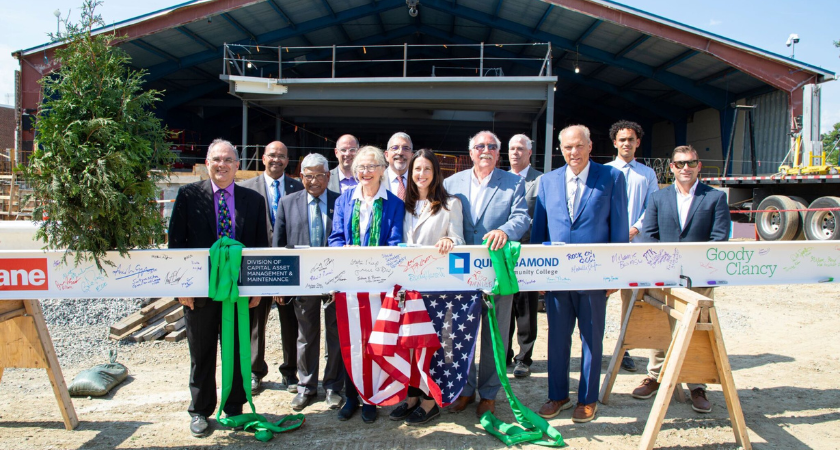
The redevelopment of higher education facilities continues to support workforce development initiatives across the United States. Gilbane Building has reached a key construction milestone on the $37.4 million renovation and expansion of the Quinsigamond Community College Center in Worcester, Massachusetts, with the completion of the project's structural steel framework.
The milestone was marked with the placement of the project's final structural steel beam, signaling completion of the building's structural frame. The project is transforming a former 1960s-era athletic facility into an approximately 57,000-square-foot academic center that will support student learning and campus activities.
Gilbane Building is serving as construction manager for the project in collaboration with Quinsigamond Community College, the Massachusetts Division of Capital Asset Management and Maintenance (DCAMM), the design team, and trade partners. The project team reported that construction continues to progress through coordinated planning and phased execution.
Once completed, the new center will include advanced manufacturing and robotics laboratories, hospitality training spaces, flexible classrooms, and renovated athletic facilities. The project also incorporates accessibility upgrades and supporting infrastructure improvements intended to enhance campus usability for students and visitors.
The facility is being designed to achieve LEED Gold certification through features that improve energy efficiency and indoor environmental quality while supporting the college's long-term sustainability objectives.
Construction is expected to conclude in time for the facility to open in fall 2027.
Community colleges continue to expand facilities that align academic programs with workforce development needs in advanced manufacturing, technology, and skilled trades. For construction owners and education sector stakeholders, the Quinsigamond Community College Center demonstrates ongoing investment in modern learning environments that combine sustainability, accessibility, and specialized training space to support regional workforce demands.
Source: Gilbane.