Adaptive reuse projects continue gaining momentum across major office markets as developers reposition underutilized commercial properties into residential housing. Gilbane Development has begun construction on a multifamily conversion project in Arlington, Virginia, transforming a vacant office building into a residential community near the Virginia Square-GMU Metro station.
The redevelopment project, named Renley, involves conversion of a 121,200-square-foot office property originally acquired by Gilbane Development in 2025.
The six-story building at 3601 Wilson Boulevard is being redeveloped into a 94-unit market-rate residential property featuring one-, two- and three-bedroom floor plans.
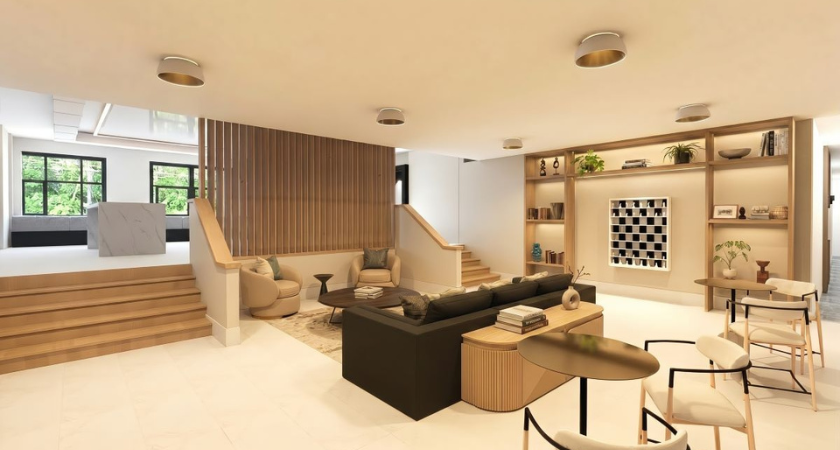
The project will preserve the existing exterior façade while fully renovating interior spaces for residential use. Planned amenities include coworking areas, a wellness center, resident lounges, storage facilities and gathering spaces intended to support mixed-use urban living.
The development will also incorporate approximately 5,637 square feet of ground-floor retail space and a below-grade parking structure containing 207 parking spaces.
Select upper-level units are planned with extended private balconies as part of the redesign.
The project is among the early developments advancing under Arlington County’s updated adaptive reuse policy framework adopted in late 2024.
Municipalities in high-vacancy office markets have increasingly introduced zoning revisions and development incentives intended to accelerate office-to-residential conversions and expand housing supply near transit corridors.
The Renley project is positioned directly across from the Virginia Square-GMU Metro station, reflecting continued demand for transit-oriented residential development within the Washington metropolitan region.
Construction is underway, with project completion anticipated in April 2027.
Developers and construction firms across the United States continue evaluating adaptive reuse opportunities as remote and hybrid work patterns reshape office occupancy levels in urban and suburban markets.
Office-to-residential conversions have emerged as a growing segment of multifamily development, particularly in transit-accessible locations where existing structures can be repositioned to support housing demand.
These projects often involve complex structural modifications, code upgrades, building system retrofits and mixed-use redevelopment planning.
For developers, contractors and property owners, the Arlington project highlights the increasing role of adaptive reuse in addressing both office vacancy challenges and residential housing demand.
The project also demonstrates how updated municipal redevelopment policies can influence construction activity tied to office repositioning, transit-oriented development and multifamily housing expansion in established urban markets.
Source: Gilbane.