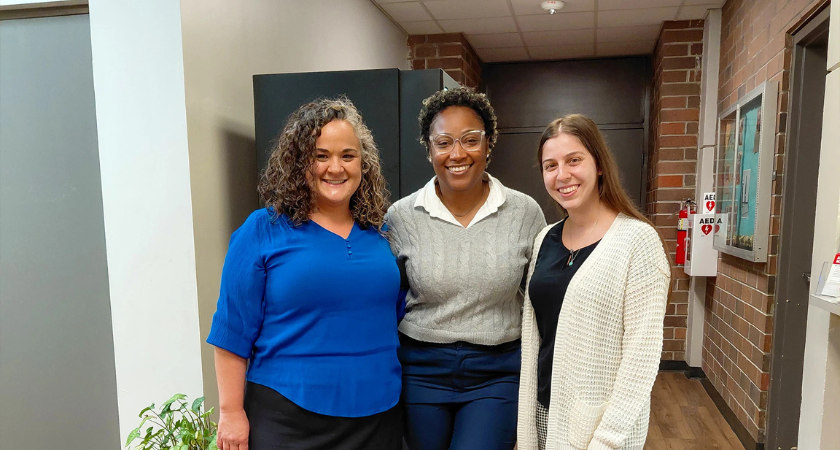
Community-based mental health programs are creating opportunities to connect people with support outside traditional healthcare facilities. In Jacksonville, Haskell healthcare architect Kristen Argalas is helping develop The SPOT, an initiative that will place trained listeners and volunteers in familiar public settings.
The SPOT is designed around designated benches where people can sit and speak with trained listeners or volunteers. The model is intended to provide an accessible point of contact for people experiencing loneliness or isolation while creating a pathway to additional support when needed.
The initiative is being developed in partnership with United Way of Northeast Florida, The Center of Hope, NAMI Jacksonville and Jacksonville's 988 Steering Committee.
Rather than developing dedicated buildings, the program uses existing community facilities. That approach allows mental health support to be incorporated into locations already used by residents.
The concept draws from the Friendship Bench model developed in Zimbabwe, which uses trained community members to provide structured support in accessible settings. The Jacksonville program is adapting the approach through local partnerships and community locations.
The first Jacksonville SPOT installation is planned for Emmett Reed Community Center in fall 2026. A second location is scheduled for Robert F. Kennedy Community Center in spring 2027.
The program has also attracted interest from healthcare organizations, community groups and churches considering additional locations throughout Jacksonville.
For the built-environment sector, the initiative illustrates how architects and healthcare professionals can contribute to community-based services without relying solely on new construction. Existing public spaces can be incorporated into programs designed around accessibility, visibility and connection.
The SPOT demonstrates an approach in which the design and use of community spaces can complement formal healthcare services. For healthcare owners, architects and community developers, the initiative provides an example of using existing facilities to expand access to support while limiting the need for new dedicated infrastructure.
Source: Haskell.