Hensel Phelps is continuing its work on Denver Water’s Hazeltine Pump Station after completing the project’s $13 million heavy civil phase in June 2026. Denver Water selected the construction team to proceed with the subsequent $21 million Buildings, Mechanical and Electrical phase without rebidding the work.
The project is part of Denver Water’s North Reservoir Complex and supports a larger program focused on expanding water storage capacity and improving system resilience along Colorado’s Front Range.
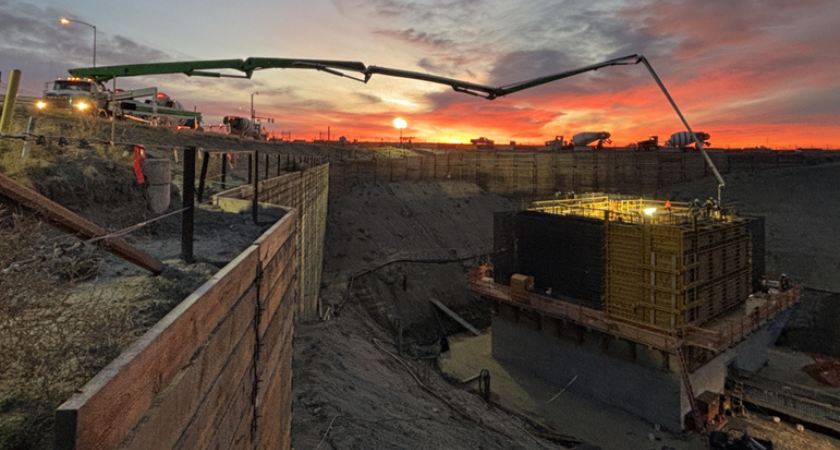
The completed first phase included construction of a 60-foot-deep reinforced concrete wet well that required excavation to approximately 70 feet, extensive dewatering and placement of 3,623 cubic yards of concrete.
The infrastructure forms part of Denver Water’s Downstream Reservoir Water Storage Program, which is planned to provide approximately 30,000 acre-feet of storage capacity across nine reservoirs along the South Platte River corridor.
The Hazeltine facility will ultimately help move water through the reservoir system and support the utility’s long-term storage and water supply operations.
The second phase will transform the completed heavy civil infrastructure into an operational pump station. Scope includes the pump station building, electrical building, medium-voltage electrical systems, instrumentation and controls, process piping, pumps, mechanical systems and related infrastructure.
Hensel Phelps is carrying knowledge from the first phase into the next stage, including information about site conditions, project constraints and Denver Water’s requirements.
The team has also begun early procurement activities for long-lead electrical equipment. Addressing procurement requirements during preconstruction provides additional time to manage equipment availability and schedule considerations.
Hensel Phelps is also working with Denver Water on other infrastructure initiatives, including a design-build Reservoir Aeration Project with Carollo Engineers. The company was additionally awarded the $63 million Marston Water Treatment Plant Disinfection Improvements Project.
Together, the projects cover different components of Denver Water’s infrastructure network and involve varying delivery methods and technical requirements.
The Hazeltine work demonstrates how continuity between project phases can allow owners and construction teams to carry forward site knowledge while adapting delivery approaches to the requirements of each stage. For large water infrastructure programs, that coordination can help address specialized equipment, complex sites and schedule constraints during planning and construction.
Source: Hensel Phelps.