COLORADO SPRINGS, Colo. — Persistent inflation, elevated borrowing costs and uneven economic growth are creating headwinds for the construction industry, according to economist Anirban Basu, who outlined a mixed outlook during a recent industry event.
.jpg)
Speaking to leaders from the metal construction sector, Basu said the U.S. economy continues to expand, but the benefits are not evenly distributed across households or industries.
“So, it’s a lopsided economic expansion with some families really benefiting, and other families really fading in terms of standard of living,” Basu said.
Basu, who serves as chief economist for the Associated Builders and Contractors and other industry groups, emphasized that construction firms must carefully assess where opportunities remain viable amid ongoing economic pressures.
A central theme of Basu’s outlook was the continued impact of inflation on construction activity. He pointed to widespread frustration among consumers and businesses, noting there is “a fair amount of angst out there regarding the economy,” along with “a fair amount of unhappiness” and “a significant amount of discontent,” largely tied to rising costs.
At the core of those concerns, Basu said, is “high and rising prices.” He noted that overall inflation has climbed 29% since May 2020, with core inflation increasing 25.7% over the same period.
Elevated inflation has kept interest rates higher than pre-pandemic levels, increasing the cost of financing for construction projects. Although the Federal Reserve raised benchmark rates to about 5.5% before easing, borrowing costs remain a challenge for developers.
“Borrowing costs go up, project financing costs go up. That’s not good for construction projects,” Basu said.
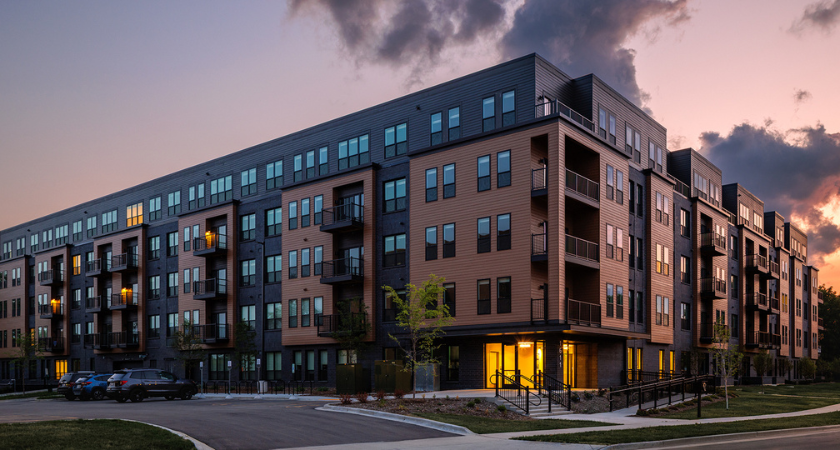
The impact is particularly visible in rate-sensitive sectors such as residential and multifamily construction, where declining permits and reduced project viability are slowing activity. Office construction also remains under pressure due to persistent remote and hybrid work trends, which continue to weigh on demand and property values.
Despite these challenges, Basu identified several areas of strength within the construction sector. He highlighted data centers and energy infrastructure as key growth drivers, fueled in part by rapid expansion in artificial intelligence and digital services.
“These two segments of construction tend to be the strongest going forward,” he said.
Large-scale investment by technology firms is accelerating demand for data center capacity and the supporting power infrastructure needed to sustain it. This trend is expected to drive significant construction activity in energy generation, transmission and related utility projects.
Public sector construction also remains relatively resilient. Basu noted that infrastructure categories such as transportation, water systems and conservation projects continue to benefit from government funding already moving through the pipeline. Contractors with exposure to civil and public works projects may see more stability compared to those reliant on private development.
At the same time, rising material costs continue to complicate project planning. Basu said construction input prices have increased 48% since early 2020, with particularly sharp gains in metals-related categories. These increases, combined with tariff pressures and supply constraints, are affecting bidding strategies and project timelines.
Labor availability adds another layer of complexity. While about 25% of the construction workforce is foreign-born, Basu noted that job openings have not surged as expected, partly due to slowing overall construction spending. Workforce challenges, including wage pressures and productivity concerns, remain critical factors for project execution.
.jpg)
Looking ahead, Basu outlined several indicators he is monitoring to gauge the risk of a recession, including geopolitical tensions, technology sector investment, stock market performance and layoff activity.
“So there are four things I’m watching to determine whether or not we’re going to enter recession,” he said.
Despite ongoing uncertainties, Basu offered a cautiously optimistic outlook.
“My forecast is for growth in 2026,” he said.
As the industry prepares for METALCON 2026 in October, the message remains clear: while opportunities exist in select sectors, high financing costs and persistent inflation continue to shape a challenging environment for construction growth.
Originally reported by Fiona Maguire-O'Shea in Roofing Contractor.