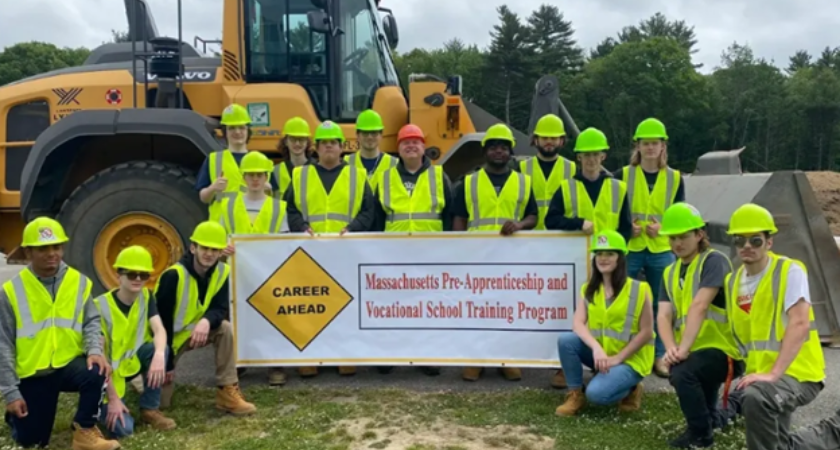
A state-supported training program in Massachusetts is expanding exposure to highway construction careers for high school students, reflecting a broader shift in how public agencies are addressing long-term labor shortages in the construction and transportation sectors.
.jpg)
The initiative brings junior-level trade students into structured pre-apprenticeship training designed to introduce foundational construction skills alongside safety certification and field-based learning. For construction owners and contractors tied to public infrastructure work, these programs represent an increasingly important feeder system for future labor supply.
The program provides students with direct instruction in core construction activities typically associated with roadway and infrastructure work. Training areas include protective equipment use, basic concrete applications, formwork exposure, demolition techniques, and emergency response certification such as CPR and first aid.
Participants also receive exposure to structured labor training environments through visits to dedicated construction training academies, where apprenticeship pathways in the trades are introduced in a controlled setting.
The curriculum is designed to simulate early-stage jobsite expectations while emphasizing safety, discipline, and foundational trade competencies.
The program is tied to broader transportation workforce planning efforts linked to multi-year capital investment programs. As state and federal infrastructure funding continues to support highway, bridge, and transit projects, agencies are increasingly pairing capital spending with workforce development initiatives to ensure labor availability.
For contractors working on public infrastructure projects, these programs can help stabilize long-term hiring pipelines by introducing students to union and non-union construction pathways earlier in their education.
Across the U.S. construction industry, skilled labor shortages remain a key constraint on project delivery timelines and cost certainty. Highway construction, in particular, continues to face workforce gaps in laborer, equipment operator, and craft roles.
In response, states, trade organizations, and industry partners have expanded pre-apprenticeship and youth engagement programs aimed at building awareness of construction careers before students enter the general workforce.
These initiatives increasingly align with union apprenticeship systems and public infrastructure funding models, creating more structured pipelines from education to employment.
For construction firms engaged in infrastructure work, pre-apprenticeship programs represent a strategic long-term workforce investment mechanism. While they do not immediately solve current labor shortages, they help stabilize future labor availability in critical trades.
Contractors and owners should anticipate:
As infrastructure spending continues to scale, workforce development initiatives like this are likely to become a standard component of project planning and procurement strategies.
Originally reported by Labor News Story Link To Patch Via MSN.com in WNY Labor Today.