Critical infrastructure projects often require balancing new construction with uninterrupted operations, a challenge that has become increasingly common across healthcare, research and utility facilities. In Virginia Beach, a major laboratory expansion for Hampton Roads Sanitation District (HRSD) recently reached an important milestone while maintaining ongoing scientific operations throughout construction.

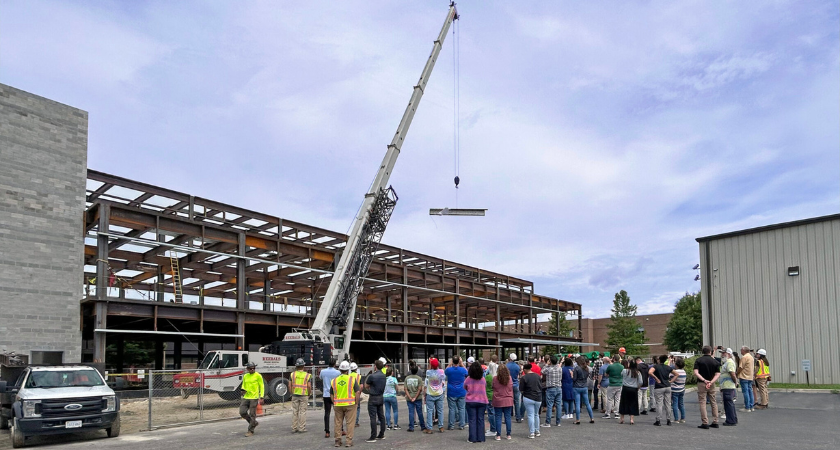
PC Construction announced the completion of the structural steel phase for the Central Environmental Laboratory expansion, marked by the placement of the final steel beam atop the new facility. The project consists of a 40,000-square-foot, multi-story addition being built adjacent to HRSD's existing environmental laboratory.
Unlike traditional greenfield projects, the expansion is being constructed immediately next to an active laboratory where environmental testing activities have continued throughout the construction process. Maintaining uninterrupted operations has required extensive planning, scheduling and coordination among the owner, design team, contractors and laboratory personnel.
Once complete, the new addition will significantly increase HRSD's environmental testing capabilities. The facility will include eight Biosafety Level 1 laboratory spaces dedicated to specialized analysis, including PFAS detection and nutrient testing.
The addition will connect directly to the existing Central Environmental Laboratory building. Following completion of the expansion, the current facility will undergo renovation and be repurposed for administrative and support functions.
The project is designed to strengthen HRSD's ability to provide water quality testing and environmental monitoring services throughout southeastern Virginia.
Building adjacent to operating research and laboratory environments requires heightened attention to logistics, safety and operational continuity. Construction teams must carefully manage noise, vibration, utility coordination and site access while ensuring sensitive testing activities remain unaffected.
The successful completion of the structural steel phase demonstrates the growing demand for contractors capable of delivering complex renovations and expansions in occupied facilities. Similar project requirements are increasingly common across laboratory, healthcare, utility and public-sector markets.
As environmental regulations evolve and testing requirements become more sophisticated, owners are investing in expanded laboratory infrastructure to support compliance, research and public health objectives.
The HRSD laboratory expansion highlights several important trends affecting owners and developers of critical facilities:
As utility providers and public agencies continue modernizing essential infrastructure, projects that combine operational continuity with facility expansion are expected to remain a significant segment of the construction market.
Originally reported by Earl Meyer, Project Manager in PC Construction.