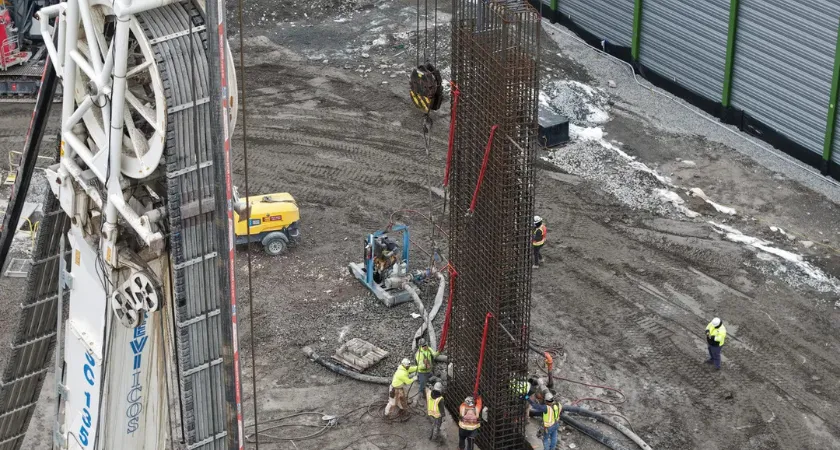
Construction crews have returned to worksites along the Hudson River as activity resumes on the $16 billion Hudson Tunnel Project, one of the largest transportation infrastructure efforts in the United States. However, officials warn the restart could be temporary if federal funding disputes persist.
.webp)
According to the Gateway Development Commission, contractors have resumed full construction activities across project sites in both New York City and New Jersey after a pause earlier this year caused by a federal funding dispute.
Excavation and preparation work restarted this week, including stabilization of the riverbed and preliminary tunnel preparation work on both sides of the Hudson River.
“The Hudson Tunnel Project is the most urgent passenger rail project in the country, and GDC’s mission is to deliver it as soon as possible,” said GDC CEO Tom Prendergast in the update. “Our workers are back, and we are moving full steam ahead across all our construction sites.”
Yet the commission cautioned that without reliable federal funding payments, construction progress may not last.
“We will have no choice but to stop work again if the federal government does not continue to disburse the funds that are committed to the project,” said Prendergast. “This project is too important to delay.”
The recent restart follows weeks of uncertainty surrounding federal payments tied to the Gateway infrastructure program.
Earlier this year, contractors halted work after the U.S. Department of Transportation paused certain funding reimbursements related to the project. The pause was linked to a review of contracting practices under the federal Disadvantaged Business Enterprise program, part of the administration’s broader scrutiny of diversity-related contracting policies.
The dispute escalated when the Gateway Development Commission filed a breach-of-contract lawsuit after hundreds of millions of dollars in reimbursements went unpaid. A federal judge later ordered the DOT to resume payments, allowing construction activities to restart.
Despite that ruling, uncertainty around the long-term flow of federal funds continues to cast doubt over future project milestones.
Several major contracts tied to the project’s next phases — including work on the new Hudson River rail tunnel itself and the New Jersey surface alignment — remain on hold as officials wait for greater funding certainty.
Even during the funding turbulence, contractors have managed to advance several parts of the megaproject.
One major milestone includes the completion of the Tonnelle Avenue Bridge and Utility Relocation Project in North Bergen. The bridge structure, largely completed in late 2025, clears space beneath the roadway for the tunnel boring machines that will eventually excavate the new rail tunnels.
Project teams have also begun preparing components for the first tunnel boring machine at the North Bergen site. Equipment shipments have already arrived, and assembly work is underway. Components for a second machine are expected to arrive later this month.
Elsewhere in New Jersey, crews recently completed installation of the slurry wall surrounding the Hudson County access shaft. The watertight barrier will allow excavation crews to dig deep underground without groundwater intrusion once excavation begins later this year.
On the Manhattan side of the project in New York City, workers have poured more than 11,000 cubic yards of concrete to form the tunnel’s invert slab, the base structure that supports the future rail tunnel lining.
Construction of tunnel segments connected to that slab is currently underway.
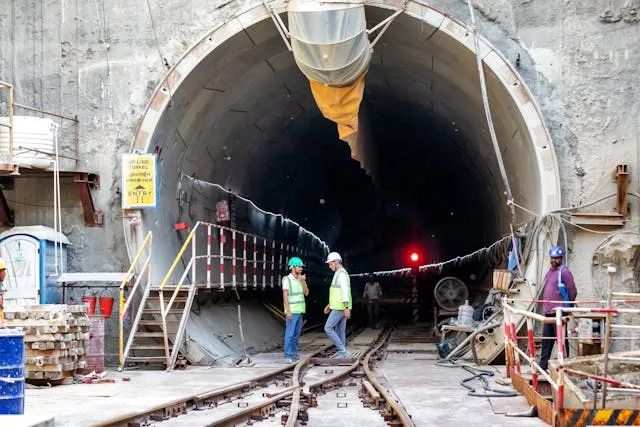
The Hudson Tunnel Project is considered a cornerstone of the broader Gateway Program, a multibillion-dollar effort designed to modernize passenger rail service between New York and New Jersey.
The existing rail tunnels beneath the Hudson River, which opened in 1910, have suffered significant damage over time, particularly after flooding caused by Hurricane Sandy. Engineers say a new tunnel is necessary to maintain reliable rail service along the Northeast Corridor, the busiest passenger rail route in North America.
Once completed, the new tunnel will allow officials to rehabilitate the aging existing tunnels while maintaining uninterrupted rail traffic between the two states.
Transportation planners say the project is essential for avoiding future disruptions that could affect hundreds of thousands of daily commuters and regional freight operations.
Still, without stable funding flows, officials warn that progress on the massive infrastructure effort could stall once again, potentially delaying one of the country’s most critical rail modernization projects.
Originally reported by Sebastian Obando, Reporter in Construction Dive.