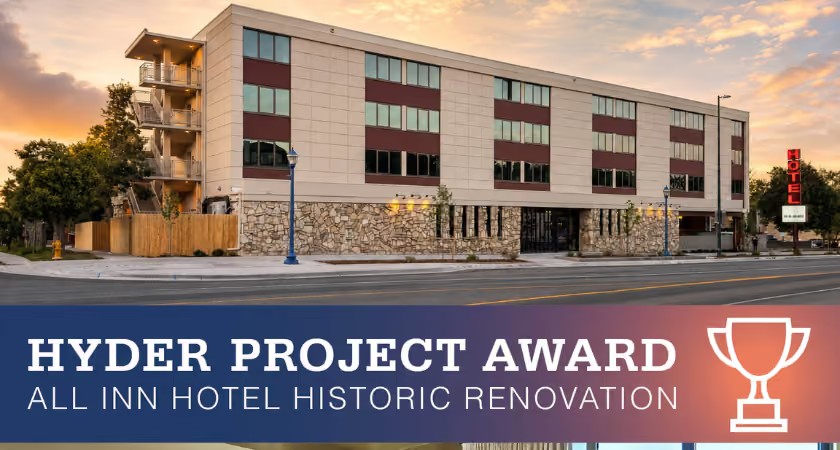
For construction owners and developers, adaptive reuse can provide a path to reinvest in aging properties while retaining architectural features and community identity. Hyder Construction’s All Inn Hotel project in Denver has received two awards recognizing its renovation, restoration and preservation work.
The project earned a 2026 ENR Mountain States Merit Award in the Renovation/Restoration category and was selected as the inaugural recipient of Historic Denver’s Alan Gass Award for adaptive reuse, renovation and preservation of mid-century modern architecture.
Originally constructed in 1959 as the Fountain Inn, the property was transformed into a 54-room boutique hotel and restaurant.
The redevelopment retained several elements associated with the building’s original mid-century identity, including its neon signage and exposed rock wall. Preserving these features allowed the renovation to incorporate modern hospitality uses while maintaining the property's connection to its history as a Colfax landmark.
The project illustrates how existing commercial properties can be repositioned through renovation rather than replaced entirely, particularly when architectural features contribute to a property's identity.
The ENR Mountain States recognition places the project among regional work recognized for renovation and restoration. Historic Denver’s Alan Gass Award further highlights the project's approach to preserving mid-century modern architecture through adaptive reuse.
For project teams working on older properties, such recognition underscores the technical and planning challenges involved in integrating updated building uses while retaining historically significant elements.
Adaptive reuse is an important strategy for owners seeking to extend the useful life of existing buildings while preserving distinctive architectural assets. Projects such as the All Inn Hotel demonstrate how renovation can combine hospitality development with historic preservation.
For contractors, successful adaptive reuse also requires careful assessment of existing conditions, coordination between design and construction teams, and planning around elements that owners intend to preserve.
Source: Hyder Construction.