In Santa Ana Pueblo, an empty parcel of land is finally set to become a long-promised federal medical facility for Native American communities—more than three decades after it was first proposed.
.webp)
Leaders recently toured the future site alongside officials from the Indian Health Service and the Department of Health and Human Services, where a 235,000-square-foot healthcare center is expected to break ground in 2027.
"This will definitely change the game for healthcare in our area,” said Santa Ana Pueblo Gov. Myron Armijo.
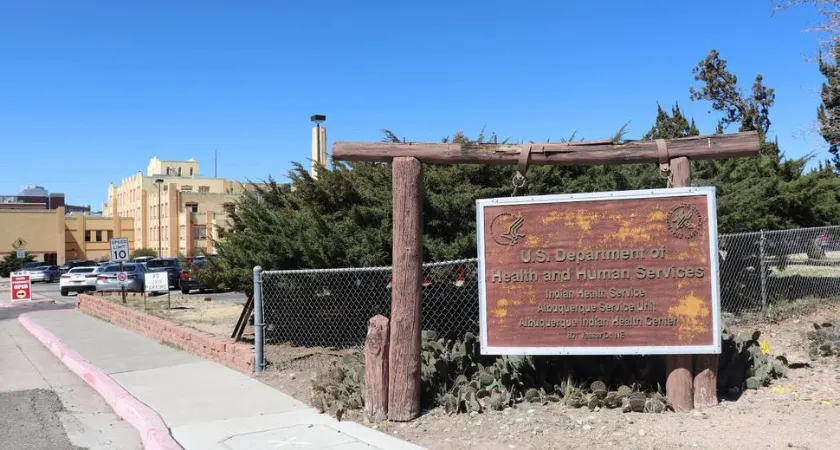
The new facility is intended to ease the burden on the aging Albuquerque Indian Health Center, a nearly 90-year-old building where patients report extended wait times and limited access to care.
Across the country, the Indian Health Service serves approximately 2.8 million Native American and Alaska Native patients, but its infrastructure is struggling to keep pace. Many of its 21 hospitals and 78 clinics are decades old, with about one-third considered in poor condition.
Patients like Theresa Nelson describe outdated equipment and long delays for essential services.
“It felt like going back in time,” she said.
Even routine care can be difficult to access. Nelson reported waiting eight weeks for approval of a referral for a 3D mammogram—despite such technology being widely available elsewhere.
Facilities such as the Gallup Indian Medical Center, which serves the Navajo Nation, are operating in fragmented conditions due to piecemeal upgrades over decades.
“These are Band-Aid fixes,” said tribal lawmaker Vince James. “Eventually the GIMC campus will become unsafe.”
The federal government has begun to address the issue, with Robert F. Kennedy Jr. recently pledging $1 billion toward long-delayed healthcare construction projects.
However, the scale of the problem remains far greater. The Indian Health Service estimates it needs roughly $8 billion to complete projects identified as far back as 1993—many of which are still unfinished due to funding constraints and regulatory requirements.
“It’s a drop in the bucket in terms of what’s needed to modernize these facilities,” said A.C. Locklear, CEO of the National Indian Health Board.
A major challenge lies in federal law, which requires the agency to complete its original 1993 priority list before pursuing newer construction needs—even as population growth and shifting healthcare demands create new pressures.
Senior adviser Mark Cruz highlighted the issue during the recent site visit.
“It’s really unacceptable that we’re still working off of that 33-year-old construction list,” Cruz said.
He warned that without additional congressional funding, it could take another 40 years to complete the backlog.
“I can’t get to additional projects that have merit across Indian Country or Alaska because I have a statutory obligation to get through the 1993 list first,” Cruz said.
Recent progress offers a glimpse of what modernized infrastructure can achieve. In Rapid City, the replacement of the outdated Sioux San Hospital with the new Oyate Health Center has significantly improved care delivery.
.webp)
The upgraded facility is three times larger and equipped with modern technology, but even it is already facing capacity challenges.
“That’s what happens when you work from a backlog,” said Jerilyn Church, CEO of the Great Plains Tribal Leader’s Health Board. “In the time between identifying the need and the money finally becoming available, the population grows.”
The Indian Health Service’s construction backlog underscores longstanding disparities in healthcare access for Native American communities. Aging facilities, outdated equipment, and regulatory hurdles continue to limit care quality and availability.
While new investments signal renewed federal attention, experts say sustained funding, policy reform, and faster project delivery will be essential to close the infrastructure gap.
Without those changes, the cycle of delayed construction and rising demand may continue—leaving critical healthcare needs unmet for years to come.
Originally reported by Associated Press in US News.