The LGE Design Build Q4 2025/Q1 2026 Construction Delivery Outlook Report finds the Phoenix market entering 2026 in a more balanced and strategic position, with industrial and retail sectors leading activity while data center expansion reshapes labor and procurement dynamics.
.webp)
“Phoenix has transitioned from an overheated growth cycle into a more measured and strategic phase,” said Blake Wells, vice president of preconstruction at LGE Design Build. “Industrial demand has improved, retail remains exceptionally tight and office is beginning to regain momentum. At the same time, the surge in data center and AI infrastructure is reshaping labor availability and procurement timelines, making early planning and tight coordination more important than ever as we move into 2026.”
Industrial performance strengthened considerably in the second half of 2025. Net absorption accelerated while new project deliveries slowed, pushing vacancy rates down by year-end. Leasing remained historically strong, driven by logistics operators, advanced manufacturing users and technology firms expanding in the region.
Despite healthy demand, speculative construction starts declined significantly year over year, reflecting a more disciplined development environment. Builders and developers appear to be prioritizing pre-leased or need-based projects rather than broad speculative growth.
The office sector also showed signs of renewed life. The market recorded its strongest quarterly net absorption since 2019, signaling greater tenant engagement after years of muted performance. Vacancy declined in the fourth quarter, particularly in Class A and Class B properties, while older inventory continued to face leasing challenges. Construction in this segment remains concentrated on tenant improvements rather than large-scale new builds.
Retail remains the tightest segment in the Phoenix market. Although construction activity ticked up modestly, development continues to trail demand, suggesting that new retail projects are largely driven by necessity and population growth rather than speculation.
Phoenix’s rapid expansion in data centers and AI-driven infrastructure is influencing the broader construction ecosystem. While hyperscale facilities represent a specialized asset class, their impact extends across commercial development.
The region continues to attract AI and high-performance computing investments due to land availability and proximity to major semiconductor and technology manufacturing hubs. However, power capacity has emerged as a central constraint. Utility availability, substation development timelines and long-lead electrical components are increasingly dictating project feasibility and delivery schedules.
Data center construction is drawing electricians and specialty trades away from traditional commercial and tenant improvement projects. Demand for switchgear, uninterruptible power supply (UPS) systems, generators and advanced cooling technologies has intensified, extending lead times and influencing pricing across sectors.
Even projects unrelated to data centers are feeling ripple effects through tighter labor markets and extended procurement timelines.
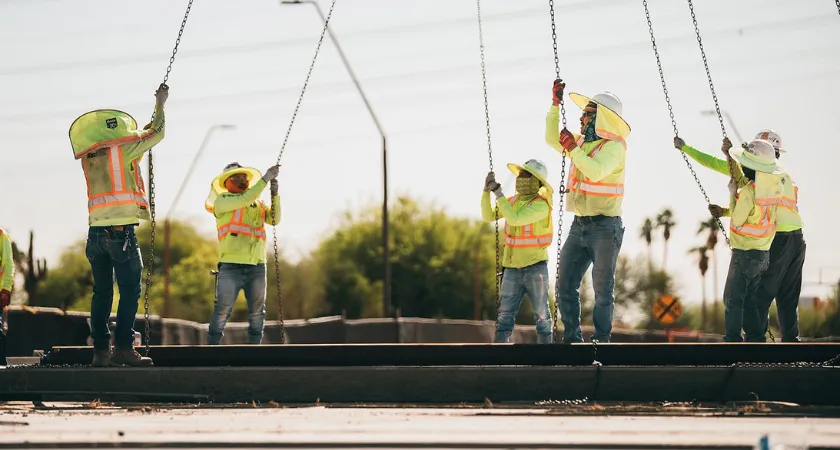
Arizona’s construction workforce grew to 226,800 jobs in December, marking a 1,200-job increase month over month and nearly 6,000 jobs year over year. Gains were concentrated in building construction and specialty trades, particularly within the Phoenix metro area.
However, heavy construction segments and the Tucson market experienced modest year-over-year declines, underscoring uneven regional momentum.
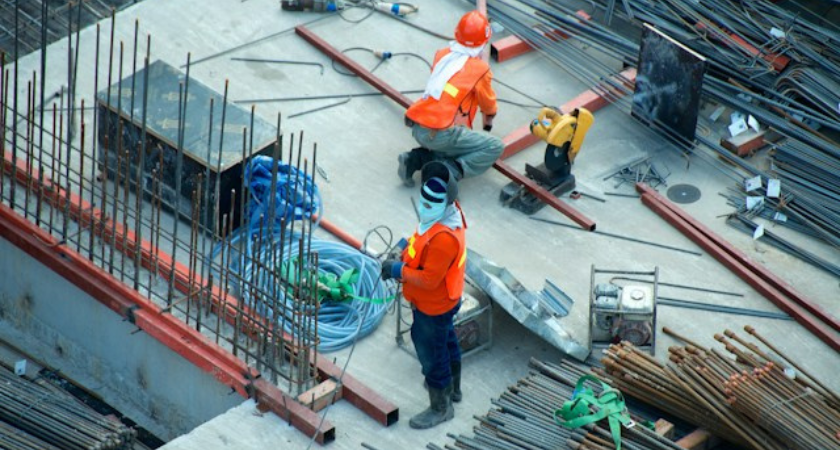
Labor remains the most persistent constraint cited in the report. Workforce shortages continue to pose schedule risks, particularly for projects requiring specialized electrical and mechanical trades.
Heading into 2026, the supply chain environment appears more stable compared to the volatility of recent years. Reduced stockpiling, easing transportation bottlenecks and improved logistics reliability have minimized surprise disruptions.
Rail volumes increased approximately 2% to 3% year over year, reinforcing rail as a dependable long-haul option. Ocean freight demand remained relatively flat, while trucking activity cooled following the earlier tariff-driven shipping surge.
Clarification around tariffs has improved forecasting and procurement planning, though elevated duties continue to shape sourcing strategies and encourage reshoring initiatives.
.webp)
Material pricing has largely stabilized after years of significant swings. Overall construction input costs rose modestly in the fourth quarter of 2025.
Metals — including steel, conduit and copper — continue to experience upward pressure due to tariff impacts, constrained production and sustained demand from infrastructure and data center projects. In contrast, framing lumber, concrete block and insulation materials have remained stable or declined slightly, helping offset volatility in higher-risk categories.
The report underscores a broader shift in Phoenix construction: growth is no longer defined by rapid expansion alone but by strategic alignment between demand, labor capacity and infrastructure readiness.
As industrial demand strengthens, retail remains constrained and office stabilizes, developers and contractors are increasingly focused on early coordination, power planning and workforce management to ensure projects remain viable in a competitive environment shaped by AI-driven infrastructure growth.
Originally reported by AZ Big Media.