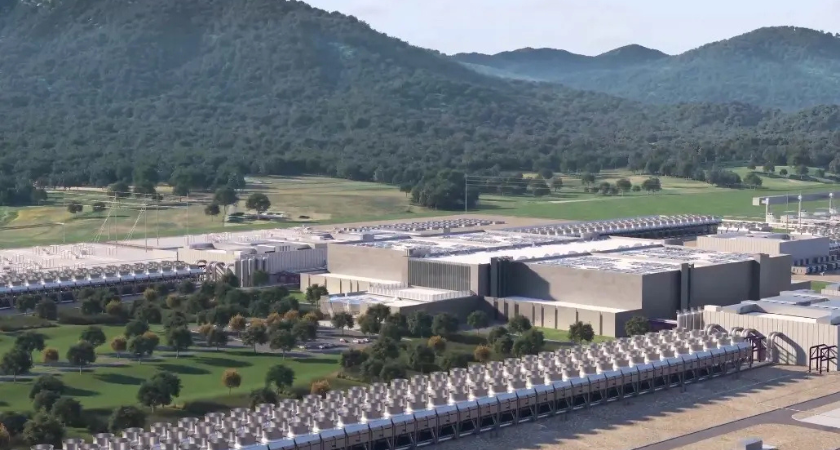
The rapid expansion of AI computing is increasing the need for data center operators to coordinate power, cooling and infrastructure performance in increasingly complex facilities. Jacobs has secured a three-year agreement with NVIDIA to deploy its Data Center Digital Twin at a large-scale research and development facility in the United States.
The platform will create a real-time digital environment for analyzing facility conditions and testing operating scenarios. Jacobs will integrate engineering models, operational technology and live facility information into a single platform intended to provide operators with greater visibility into infrastructure performance.
The system is built using NVIDIA Omniverse libraries and is designed to support simulation and operational planning. Facility teams will be able to model changes in AI computing workloads and evaluate their potential effects on power availability and cooling performance.
The agreement expands Jacobs' existing work with NVIDIA on digital twin applications for AI infrastructure and advanced data center environments.
The digital twin will support several operational applications, including dynamic power load balancing, energy forecasting, liquid coolant leak detection, predictive maintenance and operator training.
The platform is also being developed to use AI agents that can analyze facility data, identify operating conditions and provide recommendations for infrastructure management. Jacobs said the longer-term development is intended to move digital twin technology beyond visualization and simulation toward more automated data center operations.
Jacobs has also worked on high-performance computing environments for projects involving Hut 8 in the United States, Start Campus' SINES DC Campus in Portugal and PsiQuantum's quantum computing facility in Australia.
The deployment demonstrates how digital twin technology is being applied to data center operations where power demand, cooling capacity and equipment performance must be managed together. For data center owners and operators, integrating live facility data with engineering models can provide a way to evaluate operating scenarios without relying solely on physical testing.
The use of simulation, predictive maintenance and workload modeling also connects digital infrastructure management with the operational requirements of increasingly compute-intensive AI facilities.
Source: Jacobs.