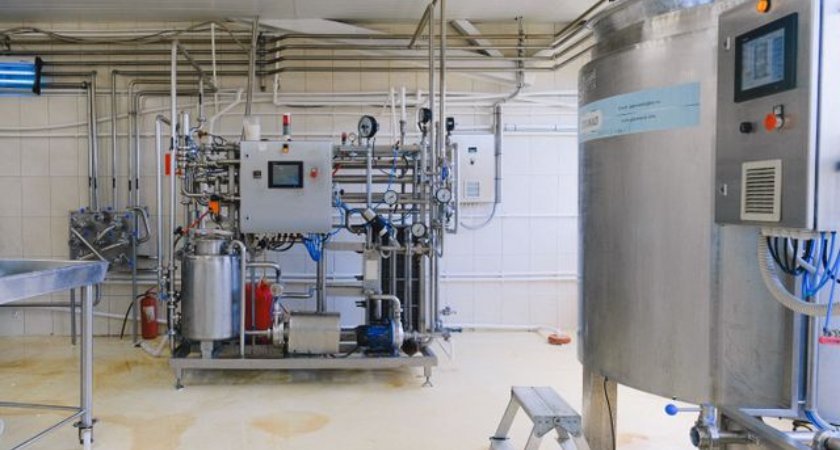
Industrial food processing facilities could reduce energy consumption by reusing thermal energy generated by refrigeration systems rather than relying entirely on separate heating equipment. Addressing this opportunity, Johnson Controls has launched a packaged industrial heat pump designed to connect refrigeration operations with hot water requirements across manufacturing facilities.
The FRICK HeatPAC Reciprocating Ammonia Heat Pump captures waste heat from ammonia refrigeration systems and upgrades it for applications requiring high-temperature water, including pasteurization, sanitation and space heating.
According to Johnson Controls' internal performance modelling, the system can achieve up to seven times the energy efficiency of a natural gas boiler in typical food and beverage applications. Actual performance will depend on operating conditions and application requirements.
The HeatPAC system has a heating capacity range of 200 to 2,000 kW and can deliver hot water at temperatures between 130 F and 190 F.
The packaged equipment incorporates a Mark 5 Sabroe reciprocating compressor platform, making it the first FRICK product developed around this configuration. Its factory-assembled and pre-tested design includes a welded plate-and-shell condenser, an integrated desuperheater and a two-stage oil separation system.
Additional equipment features include a crankcase ventilation system to protect against liquid slugging and a variable-frequency drive with a standard 4:1 turndown ratio. The system can operate at varying load levels to accommodate changing facility heating requirements. Its ammonia charge can be as low as 87 pounds.
The standardized configuration is intended to simplify equipment selection and installation planning while reducing the engineering requirements associated with custom-built industrial heat pump systems.
Each HeatPAC unit includes a FRICK Quantum HD controller with Unity architecture, allowing integration with a range of plant control systems. A 15-inch touchscreen interface supports equipment monitoring, coordinated operation with other refrigeration systems and remote access.
Johnson Controls also provides FRICK Coolware selection software to help facility operators evaluate equipment performance before purchasing. Users can enter application requirements to estimate waste heat demand, heating output, efficiency and potential operating costs.
In a modelled example involving a cheese manufacturer requiring 2,000 kW of hot water at 140 F, the system projected annual energy cost savings of up to 40% compared with natural gas boilers. The estimate is based on energy pricing and operating assumptions entered into the software rather than guaranteed project performance.
The launch adds another equipment option for food and beverage manufacturers seeking to improve energy utilization within existing industrial refrigeration infrastructure.
For facility owners and engineering teams, the standardized package, integrated controls and pre-purchase performance modelling provide factors to consider when evaluating industrial heat recovery investments. The technology also connects refrigeration and process heating requirements within a single thermal management strategy, potentially reducing dependence on separately generated heat.
For contractors involved in industrial refrigeration, mechanical systems and food processing facility upgrades, the equipment introduces an additional solution for projects involving energy efficiency improvements and thermal system integration.
Source: Johnson Controls.