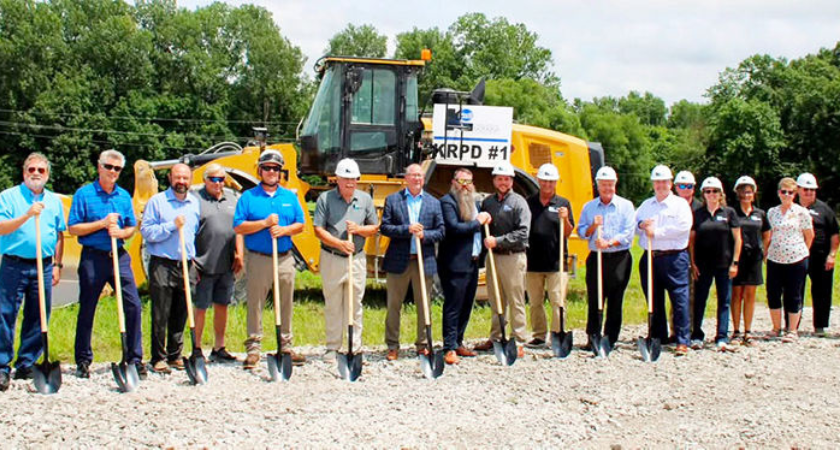
Rail and waterway connectivity is a critical component of freight movement for agricultural and industrial markets, making investments in port infrastructure important to regional supply chains. Construction has begun on a $14 million rail infrastructure project at the Kaskaskia Regional Port District in New Athens, Illinois.
The project is supported by a $10 million grant from the Illinois Department of Transportation through the Rebuild Illinois Port Facilities Capital Investment Grant Program. The Kaskaskia Regional Port District is funding the remaining portion of the $14 million investment.
The KRPD No. 1 Rail Loop improvement project will add a new rail loop and outbound conveyor system at Terminal No. 1.
The infrastructure is intended to expand rail capacity at the port and improve the movement of commodities between rail and river transportation. The improvements will support the handling of agricultural products and other freight moving through Southern Illinois.
The rail loop and conveyor system are expected to improve the movement of materials within the terminal, providing additional infrastructure for transferring goods through the multimodal facility.
The project represents an investment in the connection between rail and inland waterway freight networks. By expanding rail infrastructure at the port, the project will increase the facility's capacity to move commodities through multiple transportation modes.
The development is also part of a broader state investment strategy that includes port infrastructure alongside highway and other transportation improvements. IDOT's grant program provides funding for capital projects intended to improve Illinois port facilities and their role in the state's freight network.
For agricultural producers, shippers and other freight users, expanded rail and port infrastructure can provide additional capacity for moving commodities through Southern Illinois. The Kaskaskia Regional Port project also illustrates how public funding can be combined with local port investment to advance multimodal transportation infrastructure.
The $14 million project adds rail and material-handling capacity at an established river port, strengthening the infrastructure available for regional freight movement as construction progresses.